New Age Auto Painting Blog · April 10, 2026
Automotive Painting and Refinishing Explained
Learn how automotive painting and refinishing restores damage, improves appearance, and protects your vehicle with professional repair in Lakeland.
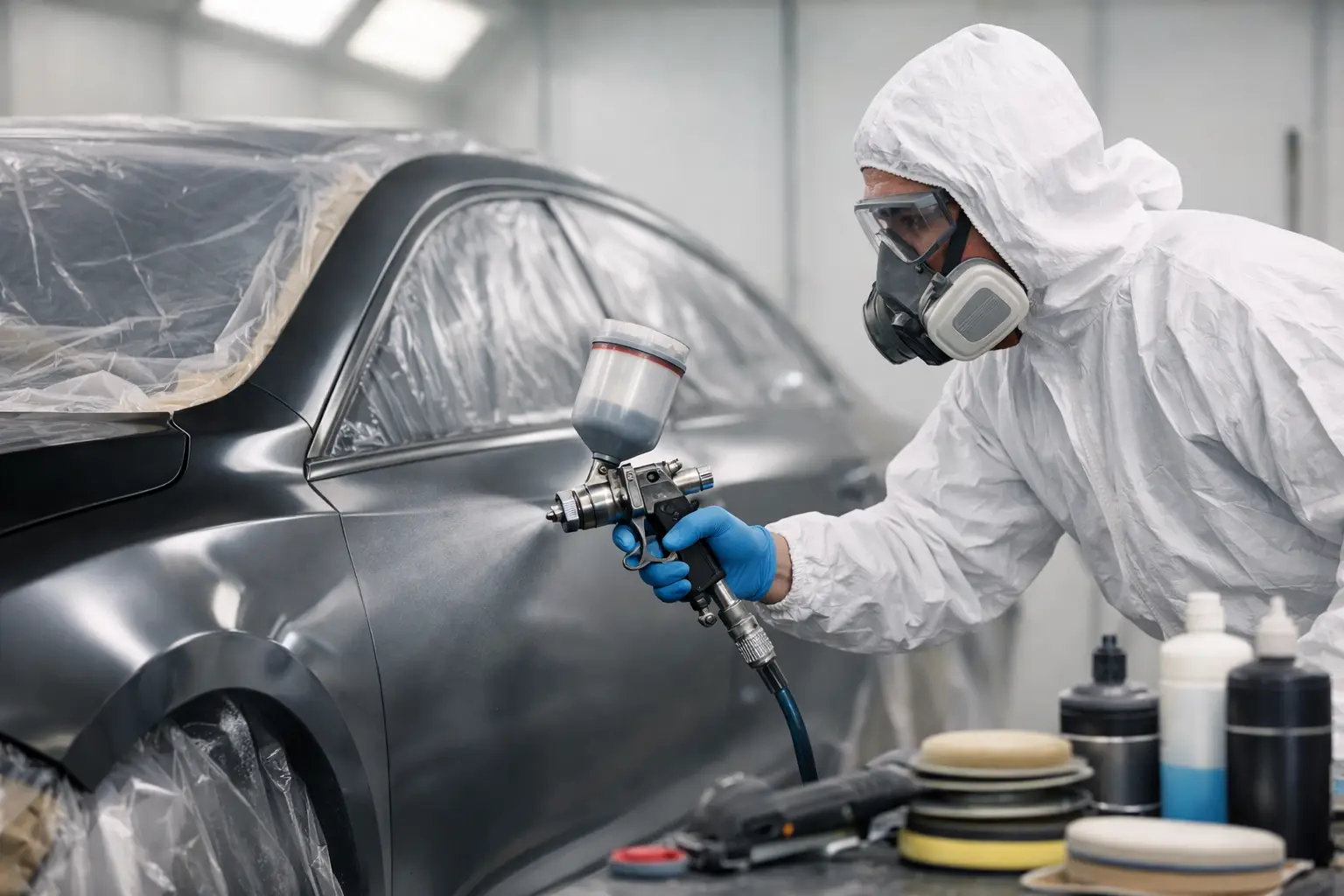
A bad paint job stands out fast in Florida. Under bright sun, every mismatch, sanding mark, dull spot, and rough edge becomes easier to see. That is why automotive painting and refinishing is not just about making a vehicle look better. It is also about correcting damage properly, protecting exposed surfaces, and restoring a clean, consistent finish that holds up in daily driving.
For many vehicle owners in Lakeland, the process starts after something goes wrong. It may be a collision, a scraped bumper, peeling clear coat, door dings, or sun-faded panels that make the rest of the vehicle look older than it is. In some cases, the damage seems minor until you look closer and realize the paint failure is tied to dents, cracked filler, rust spots, or poorly repaired bodywork from the past. A professional refinishing job addresses the surface appearance, but it also depends on what is happening underneath.
What automotive painting and refinishing really includes
People often use the term as if it means spraying new color on a car. In practice, automotive painting and refinishing is a repair process. The goal is to return a damaged or worn area to a finished condition that looks right, matches the surrounding panels, and protects the vehicle from further deterioration.
That process usually starts well before paint is applied. A technician has to inspect the damaged area, identify whether the issue is limited to the finish or extends into the panel, and determine what level of repair is needed. A scratched bumper cover, for example, may need sanding, filling, primer, color, and clear coat. A dented fender may need body repair and alignment work before any refinishing begins. If there is rust or previous poor-quality repair, the prep work becomes even more important.
This is one reason customers often prefer a shop that handles both body repair and paint work. When structural correction, panel repair, and refinishing happen together, the result is usually more consistent than splitting the job across multiple vendors.
Why prep work matters in automotive painting and refinishing
Most of the visible quality in a final paint job comes from steps the customer never sees. Surface preparation affects adhesion, smoothness, color consistency, and long-term durability. If the panel is not straight, the finish will not hide it. If contaminants remain on the surface, the paint may not bond correctly. If primer is applied over unstable material, the topcoat can fail early.
Proper preparation can include cleaning, stripping damaged material, sanding, feathering edges, applying filler where needed, block sanding, priming, and sealing. Each step builds on the one before it. Skipping or rushing those stages may save time in the short term, but it often creates problems later such as peeling, dieback, uneven texture, or visible repair lines.
That matters even more in Lakeland, where heat, UV exposure, rain, road grime, and daily use put constant stress on a vehicle’s finish. A good-looking repair on day one is not enough. The work needs to hold up after the car is back on the road.
Color match is more than picking the right paint code
Many drivers assume color matching is simple because every vehicle has a factory paint code. The code is only the starting point. Sun exposure, age, oxidation, and production differences can all affect how the current finish looks compared to the original formula.
That is why experienced refinishing work often involves tinting, spray-out testing, and blending into adjacent panels when needed. Metallic and pearl colors are especially sensitive. The same formula can look different depending on spray technique, panel angle, film build, and lighting conditions. A professional result depends on both the materials and the technician’s judgment.
When a vehicle needs refinishing instead of a full repaint
Not every car needs a complete paint job. In fact, many vehicles are better served by targeted refinishing. If the damage is limited to one or two areas, spot repair or panel refinishing may restore the appearance without repainting the whole vehicle.
This is common after accidents, parking lot damage, bumper scrapes, and localized paint failure. A full repaint may make sense when the damage is widespread, the clear coat is failing across multiple panels, or previous repairs have left the finish inconsistent. The right approach depends on the condition of the vehicle, the owner’s goals, and the cost compared to the value of the car.
A daily commuter with a damaged rear quarter panel has different needs than a newer family SUV with multiple faded panels or a vehicle being repaired after a more serious collision. Good shops do not force every car into the same solution. They assess what needs to be repaired, what can be preserved, and what will deliver the best practical result.
Common problems automotive refinishing can correct
Automotive painting and refinishing can address a wide range of appearance issues, but the cause of the problem affects the repair plan. Surface scratches may be straightforward. Deep gouges, cracked paint, dents, and peeling clear coat usually require more involved work.
Common reasons owners bring in a vehicle include collision damage, bumper scrapes, chipped paint, sun fading, oxidation, peeling clear coat, minor rust development, and poor prior repairs. In each case, the visible finish problem may only be part of the issue. For example, a bumper that looks scraped may also be distorted. A blistered paint spot may indicate corrosion below the surface. A panel with mismatched paint may reveal previous body filler or improper primer use.
This is why estimates can vary. Two vehicles may appear to have similar damage from a distance, yet one needs much more labor once the panel is cleaned and inspected closely.
The difference between cosmetic repair and proper restoration
Some repairs are done just to make damage less noticeable. Proper restoration aims higher. It focuses on correcting the panel, rebuilding the surface correctly, and applying finish materials in a way that looks consistent with the rest of the vehicle.
That does not always mean perfection in every case. It depends on the age of the car, the extent of the damage, and the customer’s budget. But there is a clear difference between covering a problem and repairing it correctly. Shops that explain that difference up front help customers make better decisions.
What to expect from the repair process
A professional refinishing job usually begins with an estimate and inspection. The shop looks at the visible damage, checks adjacent panels, and considers whether the repair involves body work, parts replacement, or paint blending. Once the work starts, additional damage may occasionally appear after parts are removed or the panel is sanded down.
After repairs are completed, the surface is prepared for primer and paint. The color is then matched and applied using controlled techniques designed to create even coverage and proper finish. Clear coat adds gloss and helps protect the color beneath it. Once cured, the surface may be polished or refined further to achieve a consistent appearance.
Timing depends on the size and complexity of the repair. A single panel is different from a collision repair that affects multiple areas. Material cure times, parts availability, and the condition of the existing finish all play a role. The best results usually come from doing the process correctly rather than forcing speed where precision matters more.
Choosing a local shop for automotive painting and refinishing
For Lakeland drivers, convenience matters, but so does repair coordination. When body repair and refinishing are handled in one place, communication is simpler and the final result is easier to manage. That is especially helpful after an accident, when customers are already dealing with enough.
A strong local shop should be able to explain the repair plan clearly, set realistic expectations, and identify whether the issue is cosmetic, structural, or both. It should also understand how to restore appearance without losing sight of the practical goal - getting the vehicle back to a road-ready condition that looks right and performs as it should.
At New Age Auto Painting, that combination of body repair and paint refinishing is central to the work. For customers in Lakeland and nearby communities, that means one shop can address exterior damage from the panel repair stage through the finished paint surface.
Automotive paint damage rarely improves with time. Chips spread, clear coat failure grows, and exposed surfaces become harder to restore if they are ignored too long. If your vehicle has visible damage, fading, or accident-related paint issues, the right repair now can save you from a larger correction later and help your car look like something you are comfortable driving again.