New Age Auto Painting Blog · July 12, 2026
Best Car Paint Repair Options for Lakeland Drivers
Compare the best car paint repair options for Lakeland drivers, from touch-ups to full refinishing, and know when professional body repair is needed.
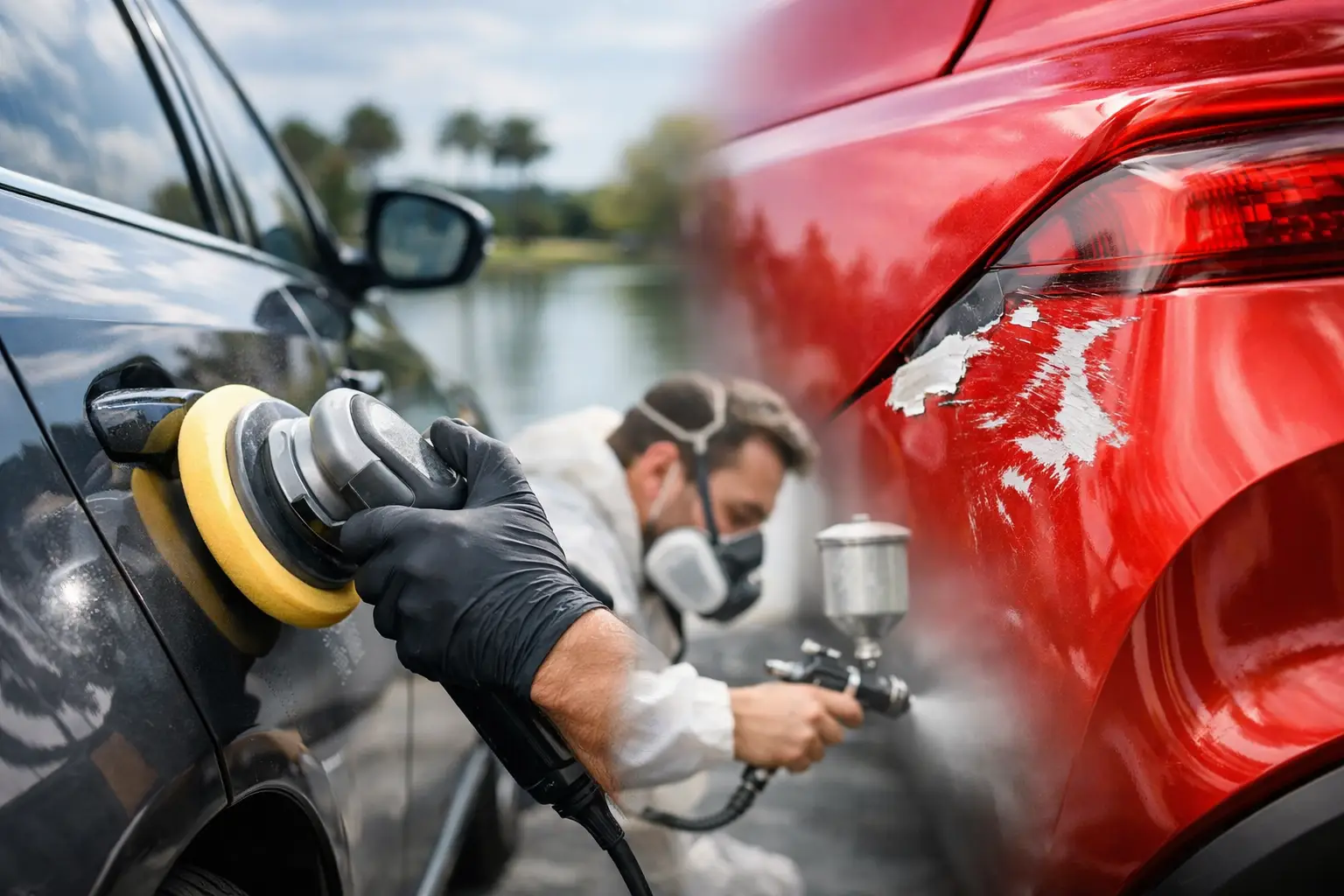
A scratch that catches your fingernail, a white scuff on a dark bumper, or clear coat peeling under the Florida sun can make an otherwise dependable vehicle look neglected. The best car paint repair options depend on how deep the damage goes, where it is located, and whether there is body damage underneath. Choosing the wrong fix can leave a visible color mismatch, trap moisture against exposed metal, or turn a small repair into a larger repaint later.
For Lakeland drivers, paint condition is more than a cosmetic detail. Strong sun, heat, rain, road debris, and daily driving all affect exterior finishes. A practical repair plan starts by identifying what has actually been damaged before deciding whether a touch-up, spot repair, panel repaint, or collision repair is the right answer.
Best Car Paint Repair Options by Damage Type
Paint transfer and light surface scuffs
Paint transfer often looks worse than it is. This happens when another vehicle, shopping cart, pole, or painted object leaves material on your bumper or door. If the mark sits on top of your vehicle's clear coat, a professional cleaning and polishing process may remove most or all of it without repainting the panel.
Light scuffs and very shallow scratches can also respond well to polishing. The key question is whether the scratch is only in the clear coat. A repair technician can inspect the surface, safely correct the affected area, and determine whether the surrounding finish has enough remaining clear coat for polishing. Aggressive DIY rubbing compounds can create dull spots, swirl marks, or uneven gloss, especially on darker colors.
This is usually the lowest-cost paint repair option when it applies, but it is not a solution for scratches that have reached the color coat, primer, or metal.
Small chips and narrow scratches
Rock chips on the hood, bumper, mirrors, and front fenders are common on Florida roads. A touch-up repair can protect the exposed area and improve its appearance when damage is small and isolated. This option works best when the panel is straight, the chip has clean edges, and rust has not started.
Touch-up paint is designed for protection first and appearance second. Even when the color code is correct, the repaired spot may remain visible up close because factory paint has weathered over time. Metallic, pearl, tri-coat, and bright red finishes are especially difficult to blend with a simple brush or paint pen.
For a vehicle you plan to keep, prompt touch-up is often worthwhile because it helps prevent moisture from reaching bare metal. For a highly visible chip on a newer vehicle, professional spot repair may provide a cleaner result than a do-it-yourself kit.
Deep scratches through the paint
A scratch that exposes gray primer, white substrate, or bare metal needs more than polish. The damaged area may need cleaning, sanding, corrosion treatment if metal is exposed, primer, color application, and clear coat. On many panels, the best result comes from refinishing the damaged section and blending color into adjacent areas as needed.
Professional color matching matters here. Your vehicle's paint code identifies the original formula, but it does not account for years of sun exposure and fading. A qualified paint shop adjusts the formula and tests the match so the repair blends with the existing finish instead of looking like a separate patch.
Do not wait on bare-metal scratches. Even a small break in the paint can allow rust to begin, particularly around wheel openings, lower doors, and areas that hold water after rain.
Bumper scratches and cracks
Modern bumpers are usually plastic, which changes the repair approach. A scraped bumper may only need refinishing, but a dented, torn, or cracked bumper cover may require plastic repair before paint can be applied. If mounting points are broken or impact damage affects components behind the bumper, replacement may be the safer choice.
A quick aerosol repair can hide damage temporarily, but bumpers require proper cleaning, flexible repair materials, adhesion promoters, and refinishing products. Without them, paint may peel or crack as the bumper flexes. A shop that handles both body work and painting can assess the cover, repair it where appropriate, and refinish it as one coordinated job.
Peeling clear coat and fading paint
Clear coat failure does not polish away. If the clear coat is peeling, flaking, or turning cloudy, the affected panel must usually be sanded and refinished. Spraying new clear coat over failing material will not create a lasting repair because the damaged layers underneath are no longer stable.
Fading is similar. Oxidized paint may improve with paint correction if the clear coat is intact. Once the finish has worn through or developed widespread failure, repainting is the dependable option. Hoods, roofs, trunks, and upper door surfaces commonly show this damage first because they receive the most sun exposure.
Panel repainting can restore the vehicle's appearance without committing to a full repaint. A full vehicle repaint makes more sense when deterioration is widespread, prior repairs are failing in several areas, or an owner wants a complete color change. It is a larger investment, and proper preparation is what determines how long the new finish lasts.
When Paint Repair Needs Auto Body Work First
Paint cannot hide a dent, crease, distorted body line, or damaged panel edge. If a collision left a dent in the door, pushed in a fender, or misaligned a bumper, the panel needs to be repaired or replaced before refinishing. Attempting to paint over poor body preparation only makes uneven surfaces more noticeable once the gloss returns.
Paintless dent repair may be an option for small dents where the paint is still intact. It is especially useful for door dings and shallow hail-style damage. However, it will not correct torn paint, sharp creases, stretched metal, or damage near reinforced panel edges. In those cases, conventional body repair and paint are the better route.
Collision damage can also involve more than the visible panel. A bumper impact may affect brackets, lights, sensors, wheel alignment, or structural components. If your vehicle was in an accident, have the full damage inspected rather than treating the paint scrape as the only issue.
How to Choose the Right Repair for Your Vehicle
Start with the location and depth of the damage. A small chip low on a rocker panel has different risks than a scratch across a front door or peeling clear coat on the roof. Also consider your vehicle's age, color, overall condition, and how long you intend to keep it.
A do-it-yourself touch-up may be reasonable for a minor chip on an older daily driver. Professional refinishing is usually the stronger choice for damage on a visible panel, deep scratches, metallic or pearl colors, collision damage, and any repair where resale value matters. A proper estimate should explain whether the shop plans to polish, touch up, repair and blend, repaint a panel, or replace a damaged part.
Ask how color matching will be handled and whether adjacent panels may need blending. Blending is not an unnecessary extra when it is needed to create a consistent appearance. It helps prevent a repaired door, fender, or bumper from looking noticeably different in direct sunlight.
It also helps to ask about preparation. Long-lasting paint work depends on cleaning, sanding, priming where required, masking, color application, clear coat, and controlled curing. The visible paint is only the final layer of a repair process that should begin with a sound surface.
Protecting the Repair After the Work Is Done
Once paint repair is complete, regular washing helps remove road film, pollen, bird droppings, and contaminants that can dull the finish. Use gentle automotive wash products and clean microfiber towels rather than household cleaners or abrasive brushes. Florida sun is hard on any finish, so covered parking, shade when available, and a quality protective product can help preserve gloss.
Avoid waxing or sealing fresh paint until the repair facility gives you the appropriate timing. Newly refinished panels need time to cure, and using the wrong product too soon can interfere with that process. If you notice a new chip or scratch, address it while it is still small.
For Lakeland vehicle owners, New Age Auto Painting can inspect paint damage alongside any needed body repair, so the repair plan addresses both the vehicle's appearance and the condition of the panel underneath. Before trying a quick fix, get the damage evaluated and choose the repair that will still look right after the next season of sun and rain.