New Age Auto Painting Blog · August 11, 2026
Best Ways to Fix Dented Doors Without Making It Worse
Learn the best ways to fix dented doors, when paintless repair works, and when Lakeland drivers need body repair and repainting for lasting results now.
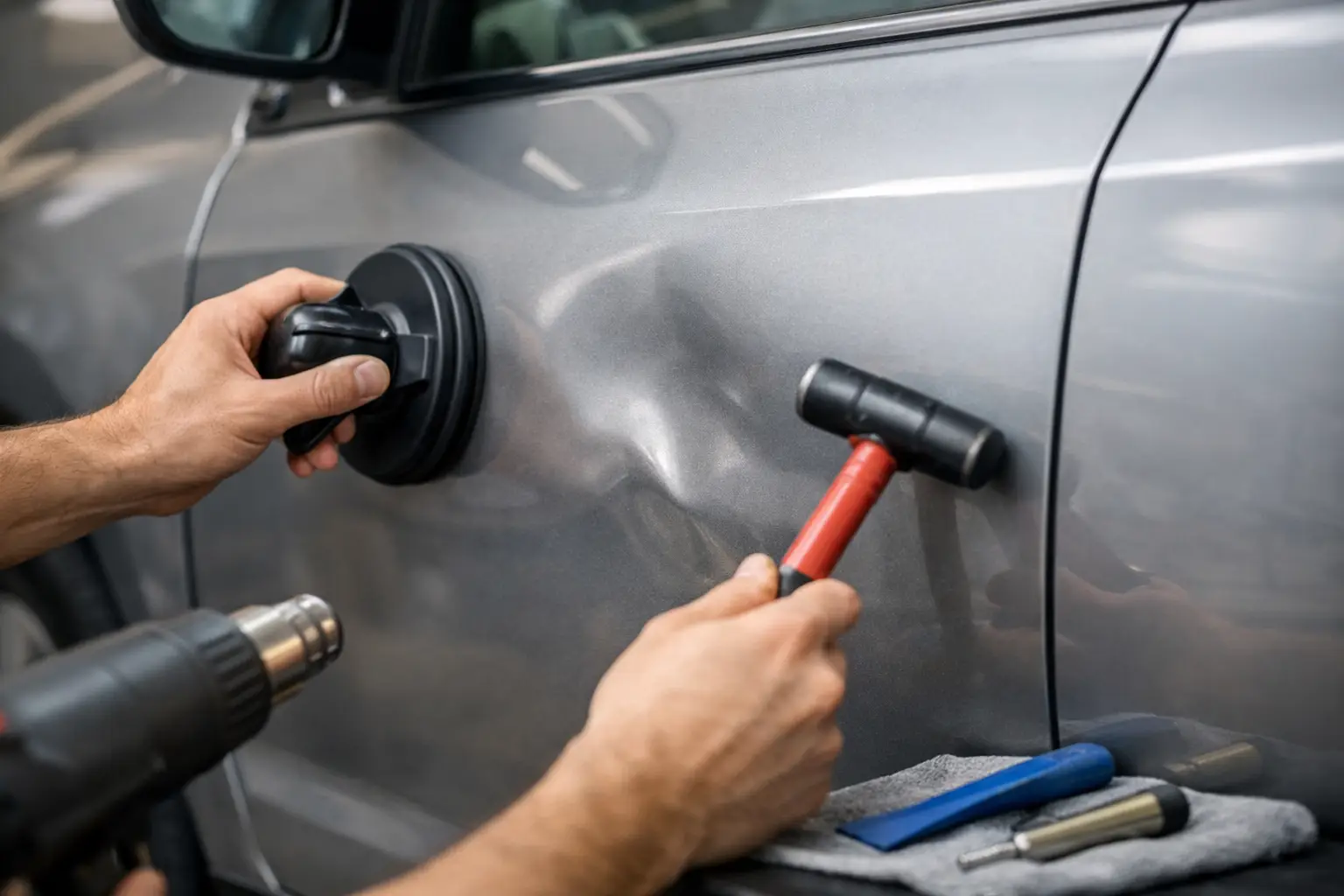
A door dent can look minor in a parking lot, then become impossible to ignore every time you walk up to your vehicle. The best ways to fix dented doors depend on where the dent sits, whether the paint is damaged, and whether the impact affected the door’s structure or operation. A careful repair protects both the appearance of your vehicle and its long-term value.
For Lakeland drivers, Florida heat, busy parking lots, shopping carts, and tight driveways create plenty of opportunities for side-door damage. The right solution is not always the fastest-looking one. Some dents can be corrected without repainting, while others require professional bodywork and color matching to avoid a visible repair line.
Start by Assessing the Door Dent
Before attempting a repair, inspect the dent in good lighting. Look at it from several angles and run your hand lightly over the panel. A shallow, smooth dent in the middle of the door is very different from a sharp crease near an edge, body line, handle, or lower rocker area.
Also check the paint. If the clear coat and color coat are intact, paintless dent repair may be an option. If the paint is cracked, chipped, stretched, or scraped down to primer or bare metal, pulling the dent alone will not produce a finished result. The damaged area will still need preparation, primer, color, and clear coat.
Door function matters just as much as appearance. Open and close the door slowly. Listen for rubbing, check panel gaps, and make sure the window, lock, latch, and power accessories work normally. A door that binds, sags, or will not latch correctly may have more than cosmetic damage.
Paintless Dent Repair for Clean, Shallow Dents
Paintless dent repair, often called PDR, is one of the best ways to fix dented doors when the metal is not sharply creased and the factory finish remains intact. A technician accesses the back of the panel when possible and uses specialized tools to gradually massage the metal back into shape. In other situations, carefully placed adhesive tabs are used to pull the surface outward.
The biggest advantage is that PDR preserves the original paint. There is no filler, repainting, or color-matching process when the repair is appropriate. It can also be a more efficient choice for small door dings caused by carts, another vehicle’s door, or light impact.
PDR is not a cure-all. It becomes less predictable when the dent has a hard center point, a pronounced crease, damaged paint, or stretched metal. Dents on a door edge or directly across a sharp body line can require conventional auto body repair even if the paint initially appears unbroken.
Why DIY Dent Pulling Can Create More Work
Consumer dent-pulling kits, suction cups, glue tabs, and heat-based methods are heavily advertised, but they carry real risks. A suction cup may do nothing on a dent with a crease. Glue tabs can pull unevenly or lift weakened clear coat. Applying heat to modern painted panels can damage the finish, especially under Florida sun exposure where paint has already endured years of high temperatures and UV rays.
A common DIY result is a dent that is partially raised but no longer smooth. The panel may develop high spots, low spots, or a wavy reflection that is obvious in direct sunlight. Fixing an unsuccessful attempt often requires more labor than repairing the original damage.
If the dent is very small and the vehicle is older, a DIY solution may be acceptable to an owner looking for a temporary cosmetic improvement. For a newer vehicle, leased vehicle, or one you plan to sell, professional assessment is usually the more economical decision.
Conventional Body Repair for Creases and Paint Damage
When a dent has broken paint or distorted the door panel, conventional body repair is the dependable path. This process begins with measuring and restoring the damaged metal. Technicians may use controlled pulling methods and metal finishing techniques to return the panel as close as possible to its original shape.
The repair area is then prepared with body filler only as needed to refine the surface. The goal is not to cover a deep dent with excessive material. Proper repair restores the panel first, then uses finishing materials in thin, controlled layers. After sanding and priming, the area is ready for color and clear coat application.
Professional refinishing is especially important on door panels because they sit at eye level and catch light from every direction. A repair can be structurally sound but still look poor if the color, metallic pattern, gloss, or texture does not match the surrounding panels. A quality paint process accounts for those details.
Blending Paint Usually Produces a Better Match
Many drivers expect a body shop to paint only the damaged spot. That is sometimes possible, but a small panel repair can still show if the color has faded or the finish is metallic, pearl, or tri-coat. In those cases, the shop may blend color into the adjacent area of the panel or neighboring panel to create a natural transition.
This adds time and material cost, but it often prevents the patch-like appearance that comes from a hard color edge. The correct approach depends on the vehicle’s paint color, condition, repair location, and how closely the surrounding finish can be matched.
When Door Replacement Makes More Sense
Not every dented door should be repaired. Replacement may be the better option when the outer skin is severely crushed, the inner door structure is bent, or the impact has affected side-impact protection, hinges, window tracks, or latch alignment. Rust around a damaged area can also complicate repair and make a replacement panel more practical.
A replacement door is not automatically a shortcut. Used doors may have hidden damage, incorrect trim provisions, or a paint color that looks close but does not truly match. New or recycled replacement panels often still need preparation and professional painting to match the vehicle.
The decision comes down to repair quality, safety, availability, and cost. A qualified auto body shop can inspect the damage and explain whether repairing the existing door or replacing it will deliver the better result.
Watch for Hidden Damage After an Impact
A dent from a low-speed parking incident is usually cosmetic, but a larger collision can affect more than the visible outer skin. Check for uneven gaps between the door and fender, difficulty closing the door, wind noise while driving, water leaks, or a window that moves slowly or makes unusual sounds.
Modern doors may also contain wiring for speakers, locks, mirrors, window controls, and side-impact sensors. If the impact was strong enough to deploy an airbag or damage the mirror, glass, or door frame, avoid treating it as a simple dent repair. The vehicle should be inspected for safe operation before it returns to daily use.
Choosing a Repair Shop in Lakeland
Ask a body shop how it plans to repair the dent, not just what the final price will be. A clear estimate should identify whether the work involves paintless dent repair, metal repair, filler and refinishing, or door replacement. It should also address paint matching and whether adjacent panels need blending.
Photos can help start an estimate, but an in-person inspection is often necessary for accurate recommendations. Lighting can hide a crease, and damage behind the panel is not always visible in a photo. If another driver caused the damage, keep photos of the vehicle, incident details, and insurance information before repairs begin.
New Age Auto Painting helps Lakeland-area vehicle owners evaluate door dents, collision damage, body repair needs, and paint restoration in one place. A proper repair should leave the door looking clean, operating correctly, and holding up to regular use rather than merely disguising the damage for a few weeks.
A dented door rarely improves on its own, and exposed paint damage can eventually lead to corrosion. Getting the panel evaluated early gives you more repair options and helps keep a small problem from becoming a more expensive restoration.