New Age Auto Painting Blog · August 15, 2026
Best Ways to Fix Dents Without Ruining Paint
Learn the best ways to fix dents, when paintless repair works, and when professional body and paint restoration is right for Lakeland drivers after damage.
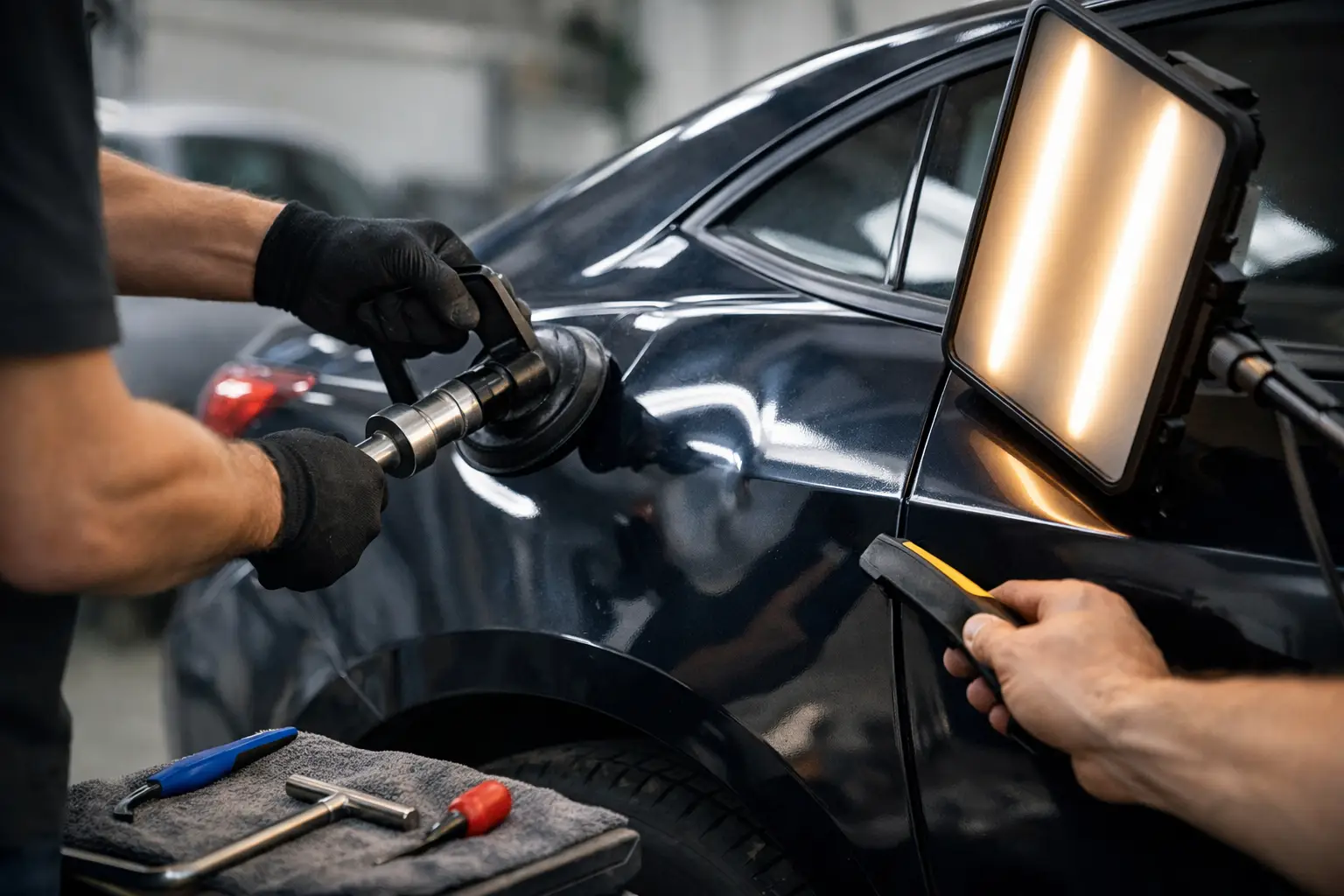
A shopping cart crease in a parking lot, a door ding at work, or a dent after a low-speed accident can make an otherwise dependable vehicle look neglected. The best ways to fix dents depend on more than the dent’s size. The location, depth, sharpness of the impact, condition of the paint, and material behind the panel all affect whether a repair can be simple or requires bodywork and refinishing.
For Lakeland drivers, the goal is not just to make a dent less visible. A proper repair should restore the panel’s shape, protect the vehicle from future paint failure or corrosion, and leave the finish looking consistent with the rest of the car.
Start by Identifying the Type of Dent
Not every dent should be handled the same way. A small, shallow round dent in the middle of a door is very different from a sharp crease along a body line or damage near the edge of a panel. Looking closely before choosing a repair method can prevent wasted money and a worse result.
A dent with intact paint is often a candidate for paintless dent repair. This process reshapes the metal from behind the panel or uses controlled pulling techniques from the outside. Since the original finish remains in place, there is no need for filler, primer, or paint when the repair is successful.
Paint damage changes the situation. If the impact cracked, chipped, stretched, or scraped the paint, simply pushing the metal back into shape is not enough. Moisture can reach exposed metal and eventually lead to corrosion. In that case, the panel usually needs professional body repair followed by color matching and refinishing.
The material matters as well. Steel and aluminum panels respond differently to repair pressure and heat. Modern vehicles may also have sensors, wiring, reinforcement bars, and safety equipment behind exterior panels. That is one reason a quick-looking dent can require a careful inspection.
Best Ways to Fix Dents Based on the Damage
Paintless dent repair for minor, intact dents
Paintless dent repair, often called PDR, is one of the best options for small dents where the paint has not been damaged. It works especially well for door dings, hail damage, and shallow impacts on broad, accessible areas of a panel.
A technician uses specialized tools to gradually move the metal back to its original position. The work requires controlled pressure and careful use of reflected light to identify high and low spots. Done correctly, PDR preserves the factory finish and can be faster than conventional repair.
There are limits. PDR may not be the right choice if the metal is sharply creased, badly stretched, located on a hard body line, or too close to a panel edge. Access is also a major factor. If a brace, window mechanism, or internal structure blocks the back of the dent, the repair may be more involved.
Conventional body repair when paint is damaged
When a dent includes scratches, cracked clear coat, chipped paint, or exposed metal, conventional auto body repair is usually the more reliable solution. The damaged area is reshaped, then repaired as needed with body filler applied in thin, controlled layers. The surface is sanded smooth, primed, sealed, painted, and clear-coated.
This approach takes more time than PDR because paint preparation and curing are part of the process. It is also the better option when the panel needs more than a cosmetic push back into place. A quality repair restores the contour of the body panel before paint is applied, rather than using heavy filler to hide poor metalwork.
Color matching is critical, especially in Florida sun. Paint can fade over time, and metallic or pearl colors can look different depending on how they are sprayed. A professional shop may blend color into adjacent panels when necessary so the repair does not stand out under bright daylight.
Panel replacement for severe or unsafe damage
Some dents are too severe for a lasting repair. This is common when a panel has deep folds, torn metal, severe stretching, corrosion, or damage around mounting points. A crushed door, quarter panel, hood, or bumper may also hide damage behind the visible surface.
Replacement can be the better value when repairing the original panel would require extensive labor and still leave concerns about fit, strength, or appearance. The new or replacement panel must be properly aligned, prepared, painted, and blended to match surrounding areas. On collision-damaged vehicles, a shop should also inspect for damage to reinforcements, hinges, lights, sensors, and underlying structural components.
When DIY Dent Fixes Make Sense, and When They Do Not
Many drivers search for do-it-yourself methods involving suction cups, glue tabs, hot water, hair dryers, compressed air, or tapping tools. These methods can occasionally improve a very shallow dent, but they are not a substitute for professional auto body work.
A simple suction tool may help with a broad, soft dent on a flat metal area if the paint is in excellent shape. Even then, it can leave the panel uneven or pull only part of the dent. Glue-pulling kits require technique. Too much force can pull off weakened clear coat or paint, turning a minor dent into a refinishing job.
Heat-based fixes are particularly risky. Modern vehicle panels, paint systems, plastic bumpers, adhesives, and nearby electrical components are not designed for uncontrolled heat. High temperatures can damage paint, distort plastic, or create a repair problem that costs more than the original dent.
Avoid DIY attempts if the dent has a sharp crease, cracked paint, a damaged body line, exposed metal, or signs of collision impact. The same applies to dents near cameras, parking sensors, door handles, fuel doors, wheel openings, and panel edges. Those areas often require professional disassembly and inspection.
Why Dent Location Matters
The center of a large door panel is usually easier to repair than its edges. Metal near an edge is stronger and less flexible, which makes it harder to reshape cleanly. Body lines are also difficult because they create intentional contours that need to be restored precisely.
Dents on a bumper deserve special attention. Bumpers are typically plastic covers over energy-absorbing components and reinforcement structures. What looks like a small dent or scuff may involve broken brackets, damaged absorbers, or sensor issues behind the cover. A bumper may be repairable, but an inspection helps determine whether appearance and safety systems can both be restored.
Hoods, trunks, and roof panels can present another challenge because they may have bracing underneath. Paintless repair is possible in some cases, but access and the location of the impact determine the best method. Hail damage, for example, often involves many small dents across a roof or hood and may be a strong candidate for PDR if the paint remains intact.
Don’t Ignore Scratches Around a Dent
A dent and a scratch often arrive together. Even if the scratch appears minor, inspect it for bare metal or cracked paint. Florida humidity and frequent rain can accelerate corrosion once metal is exposed. Rust can spread underneath surrounding paint, making the eventual repair larger and more expensive.
Temporary touch-up products may help protect a tiny chip until it can be repaired, but they rarely produce an invisible cosmetic result. They should not be used to cover damaged metalwork, deep creases, or collision damage. Proper preparation and refinishing provide better appearance and longer-term protection.
Consider Insurance After Collision Damage
For a small door ding, paying out of pocket may be more practical than opening an insurance claim. For a collision, multiple damaged panels, bumper damage, or suspected structural issues, it is worth documenting the damage with photos and reviewing your coverage.
Do not judge the repair strictly by what is visible from the outside. A low-speed impact can affect panel gaps, brackets, lighting components, sensor mounts, or internal reinforcement areas. A thorough estimate identifies visible damage and may also note where further inspection is needed after disassembly.
Choose Repair Quality Over a Quick Cover-Up
The lowest estimate is not always the best repair. A dent can be concealed with excessive filler, poor sanding, or mismatched paint, but those shortcuts may become obvious in sunlight or after normal vehicle use. Look for a repair approach that fits the damage, whether that means PDR, conventional bodywork, or replacement.
For Lakeland vehicle owners, New Age Auto Painting can assess dent damage and recommend the repair method that protects both the vehicle’s appearance and its finish. Address the damage before a small paint break, dent, or misaligned panel has the chance to become a larger restoration project.