New Age Auto Painting Blog · June 30, 2026
Bumper Paint Repair Lakeland FL Guide
Need bumper paint repair Lakeland FL? Learn what causes bumper paint damage, when spot repair works, and how a local body shop restores finish.
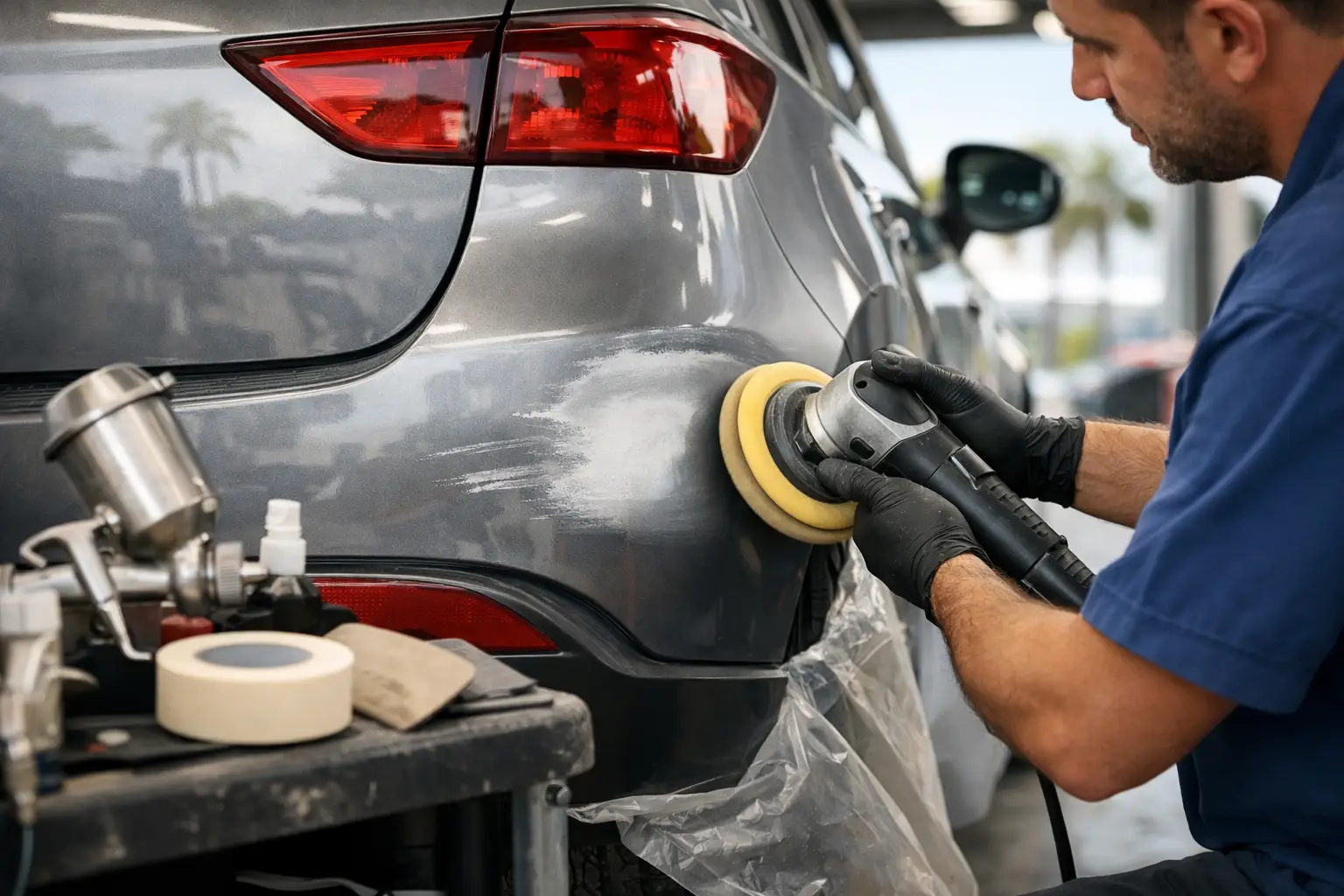
That scraped corner in a grocery store parking lot usually looks minor until you see it in daylight. A bumper can go from clean to scuffed, chipped, or peeling fast, and once the paint is damaged, the whole front or rear of the vehicle looks worn. If you are searching for bumper paint repair Lakeland FL, you are probably not looking for theory. You want to know whether the damage can be fixed, how the repair should be done, and what kind of result to expect.
Bumper paint repair is more specific than many drivers realize. Modern bumpers are typically plastic, not metal, and they flex, absorb light impact, and require a different repair process than a door or fender. A quick touch-up may hide damage for a short time, but a proper repair is about more than putting color over a scratch. The surface has to be cleaned, corrected, prepared, refinished, and blended so the bumper looks right and holds up in Florida conditions.
What bumper paint damage usually looks like
Most bumper paint issues fall into a few categories. The most common is surface scuffing from low-speed contact with another vehicle, a pole, a curb, or a garage wall. This may leave transferred paint, light scratches, or dull marks in the clear coat. In some cases, the damage is only cosmetic and the bumper structure is fine.
The next level is deeper scratching or gouging. This happens when the impact cuts through the paint layers and into the plastic surface. Once that happens, the repair is more involved because the damaged area has to be leveled before paint is applied.
Then there is peeling, cracking, or flaking paint. Sometimes this comes from age, sun exposure, or a past repair that was not prepped correctly. In Lakeland, heat, UV exposure, rain, and daily driving all work against the finish. A bumper that already has compromised paint will usually continue to fail until the loose material is removed and the surface is refinished correctly.
Bumper paint repair in Lakeland FL is not always a one-step job
One reason drivers get mixed results from bumper repairs is that not every scratch needs the same process. A light scuff may be polished out or repaired with localized refinishing. A deeper scratch may require sanding, filler work, primer, base coat, and clear coat. If the bumper is cracked, bent, or pulled out of alignment, body repair may need to happen before the paint work even starts.
That matters because paint only looks as good as the surface underneath it. If the bumper face is distorted or rough, new paint will not hide it. This is why a professional body shop looks at both the finish and the actual condition of the bumper cover before recommending a repair.
There is also a practical trade-off between spot repair and repainting a larger section. Spot repair can be efficient and cost-effective when the damage is small and isolated. But if the paint is peeling in multiple areas or the damage sits in a high-visibility section, refinishing the full bumper often produces a more even result.
How a professional bumper paint repair should be done
The repair starts with inspection. A technician checks whether the damage is limited to the paint or whether the bumper has structural issues, torn mounting points, cracking, or deformation. This helps determine whether the bumper can be repaired or whether replacement makes more sense.
If the bumper is repairable, the damaged section is cleaned and stripped of contaminants. Any transferred paint, road film, wax, or residue has to be removed first. Then the damaged area is sanded to eliminate loose material and smooth the transition between damaged and intact paint.
If the scratch or gouge is deep, the surface may need plastic repair materials or filler designed for flexible bumper covers. After that, primer is applied where needed and sanded smooth. Only then does the color-matching and refinishing stage begin.
Matching the color is one of the most important parts of the job. Factory paint codes help, but they are only a starting point. Age, sun exposure, and slight production variations can affect the final appearance. A good repair aims to make the new finish blend naturally with the surrounding panels rather than look like a fresh patch on an older vehicle.
Finally, the repaired area receives clear coat for gloss and protection. Once cured and finished properly, the bumper should have a consistent appearance and a surface that stands up better to normal driving conditions.
When a bumper can be repaired instead of replaced
Many customers assume a damaged bumper has to be replaced, but that is not always true. If the issue is limited to paint scuffs, scratches, small gouges, or minor cosmetic damage, repair is often the practical option. Even some small cracks or surface distortions can be repaired depending on location and severity.
Replacement usually becomes the better route when the bumper has significant tearing, major cracks, broken tabs, severe deformation, or internal damage that affects fit and function. On newer vehicles, sensors, trim, and driver-assist components can also affect the repair decision. A bumper may look like it only needs paint, but hidden damage behind the cover can change the scope.
This is where working with a body shop instead of treating it like a simple cosmetic touch-up makes a difference. The right answer depends on the actual condition of the bumper, not just how bad the paint looks from ten feet away.
Why local conditions matter for bumper paint repair Lakeland FL
Lakeland drivers put vehicles through a mix of sun, heat, heavy rain, road debris, and daily stop-and-go traffic. Those conditions do not just cause paint damage. They also expose weak repairs quickly. If the prep work is poor or the materials are wrong, you may see peeling, edge lifting, fading, or uneven texture sooner than expected.
That is why process matters as much as appearance. A bumper repair should not only look good when you pick up the car. It should stay stable through weather, washing, and regular use. Shops that handle both auto body repair and paint work in one place are often in a stronger position to control that result because the repair and refinishing process is managed together.
For drivers in this area, convenience matters too. When the same shop can inspect the damage, repair the bumper surface, and complete the paint refinishing, there is less guesswork and less back-and-forth between vendors. That can make the entire repair process more efficient.
What to expect when you bring your vehicle in
Most bumper paint repairs begin with a visual estimate and a closer inspection once the vehicle is on site. Some damage appears simple in photos but turns out to be deeper in person. Other times, what looks severe is mostly paint transfer and surface scuffing that can be corrected without extensive repair.
You should expect a shop to explain whether the damage is cosmetic only or whether the bumper itself needs body repair. You should also expect some honesty about limits. Not every bumper can be made to look factory-new without more extensive work, especially if there is older damage, prior repairs, or widespread paint failure.
A professional shop will focus on what delivers the best finish for the condition of your vehicle. At New Age Auto Painting, that means looking at the bumper as part of the full vehicle appearance and repair picture, not as an isolated scratch that just needs paint sprayed over it.
Should you wait or fix bumper paint damage now?
It depends on the damage. A very light scuff is mostly an appearance issue, and some drivers choose to live with it for a while. But if the paint is chipped through, gouged, peeling, or cracking, waiting usually does not improve anything. Damaged areas collect dirt, stand out more over time, and can lead to a rougher repair later if the surface continues to fail.
There is also the value issue. A damaged bumper affects first impressions every time you walk up to the vehicle, and it is one of the first things other people notice. If you plan to keep the car, trade it in, or simply want it to look cared for again, repairing the bumper sooner is usually the cleaner move.
If your bumper has visible paint damage, the next step is simple. Get it inspected by a local shop that handles both body repair and paint refinishing, ask what level of repair the damage really needs, and make the fix before a small cosmetic problem turns into a bigger one.