New Age Auto Painting Blog · April 29, 2026
Bumper Repair vs Replacement: What Makes Sense
Comparing bumper repair vs replacement? Learn when damage can be fixed, when a new bumper is smarter, and what affects cost and safety.
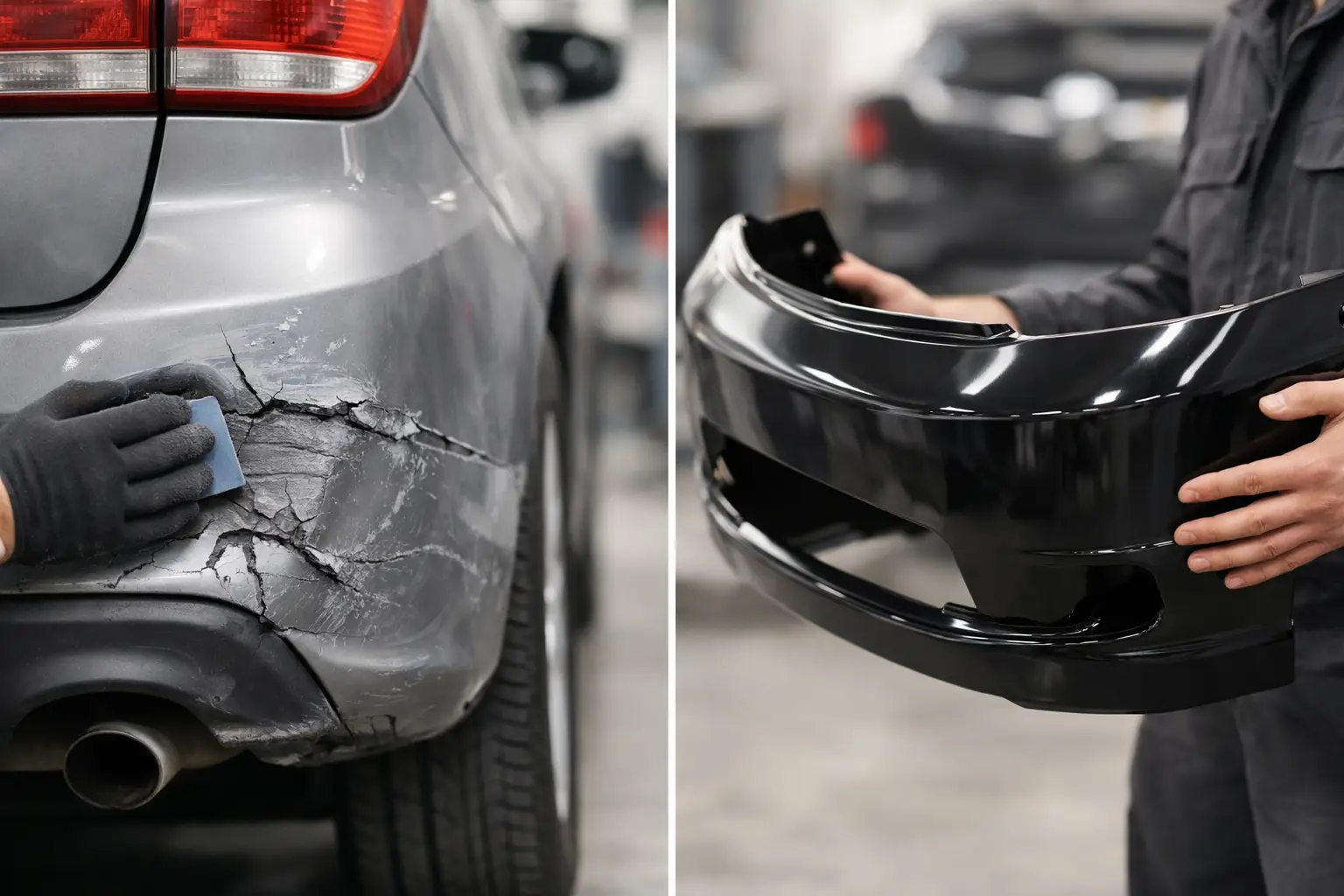
A cracked corner after backing into a post is one thing. A bumper pushed inward after a rear-end collision is another. When drivers in Lakeland start comparing bumper repair vs replacement, the right answer usually comes down to three factors: the type of damage, the condition of the parts behind the bumper, and whether the repair will hold up safely and look right after paint.
Modern bumpers do more than cover the front or rear of your vehicle. They help manage minor impact energy, support the vehicle’s appearance, and often work around sensors, brackets, clips, grilles, and trim pieces. That is why a bumper decision should not be based on visible damage alone.
Bumper repair vs replacement: the real difference
Bumper repair means restoring the existing bumper cover and any salvageable related parts. That may involve filling gouges, sanding scratches, reshaping minor dents or warping, repairing small cracks, and refinishing the surface so the color and gloss match the rest of the vehicle.
Bumper replacement means removing the damaged bumper assembly or cover and installing a new or reconditioned part. Depending on the impact, replacement can also involve brackets, absorbers, reinforcements, retainers, sensor mounting points, and paint work to match the vehicle.
The key difference is not just cost. It is whether the original bumper can be restored to proper fit, finish, and function. A cheap repair that leaves poor alignment, weak mounting points, or visible distortion usually stops being a bargain pretty quickly.
When bumper repair usually makes sense
Repair is often the better option when the damage is cosmetic or limited. Surface scratches, paint scuffs, light indentations, and minor punctures can often be corrected without replacing the full bumper cover. In many cases, this saves money and shortens downtime.
Small cracks can sometimes be repaired as well, especially if they are not spreading through mounting areas or high-stress sections. Plastic bumper materials can be repaired successfully, but the location and severity matter. A crack near an edge or a mounting tab may be less reliable than a crack in a lower-stress area.
Repair also makes sense when the bumper still fits the vehicle correctly. If panel gaps are even, the bumper is securely attached, and the damage is mostly on the surface, repair is often worth considering. A good repair should restore the shape and allow for proper prep and paint, not just cover the damage.
For many drivers, this is the sweet spot. The bumper keeps its original fit, the finish is restored, and the vehicle gets back on the road without the added expense of a full replacement.
When bumper replacement is the smarter move
Replacement becomes the better call when the damage is too severe, too widespread, or too close to critical attachment points. If the bumper is badly cracked, torn, crushed, or pulled out of shape, repair may not produce a durable or clean-looking result.
A bumper that no longer lines up with the fenders, trunk, hood, or headlights often signals more than surface damage. The underlying brackets, absorber, or reinforcement may also be bent or broken. In that case, replacing the bumper cover alone may not be enough, but trying to repair a badly distorted cover usually is not the best use of time or money either.
Replacement is also common when mounting tabs are broken beyond practical repair. Those tabs help hold the bumper securely in place. If they fail, you can end up with loose edges, sagging corners, vibration, or recurring fit issues.
Sensor-equipped bumpers deserve extra attention. If your vehicle has parking sensors, blind spot components, or other driver-assistance features integrated around the bumper, damage can affect both the visible exterior and the systems underneath it. A bumper may look repairable at first glance, but if the sensor mounting area is compromised, replacement may be the more reliable option.
Safety matters more than the surface
One of the biggest mistakes vehicle owners make is assuming a bumper is only cosmetic. The painted outer cover is the part you see, but there can be impact-related damage behind it that changes the repair decision completely.
After a collision, a shop should inspect the bumper reinforcement, absorber, brackets, and attachment points. Even a low-speed hit can shift or crack parts that are not obvious from the outside. If those parts are damaged, the bumper system may not perform as intended in another impact.
This is where bumper repair vs replacement becomes less about preference and more about condition. If the cover can be repaired but the support structure behind it cannot, the job is no longer just a surface fix. A proper repair plan has to address the full assembly.
Cost depends on more than the bumper itself
Most people start with one question: which option costs less? Repair is usually less expensive than replacement, but not always by as much as expected.
A simple repair can be cost-effective when the damage is limited and the prep work is straightforward. But if a technician has to reshape plastic, repair multiple cracks, rebuild damaged areas, and spend significant time blocking and refinishing the surface, labor can add up. At a certain point, replacing the bumper may make more financial sense.
Replacement has its own cost factors. The price depends on whether the part is OEM, aftermarket, or reconditioned, how much paint work is required, and whether trim, sensors, brackets, or adjacent parts also need attention. If the new bumper comes bare, it still needs preparation, priming, painting, and blending as needed for a proper match.
That is why estimates can vary. Two bumpers may look similarly damaged, but one may need a straightforward repair while the other needs a new cover, new retainers, recalibration work, and paint refinishing.
Paint matching can affect the decision
For a body shop, appearance matters just as much as structural soundness. A bumper sits in a highly visible area, and poor paint match or surface texture stands out right away.
If the bumper damage is isolated and the existing part can be repaired cleanly, refinishing that part may produce an excellent result. If the bumper is heavily distorted or the surface has been compromised in multiple places, replacement may create a better foundation for paint.
Florida sun is another factor. Over time, color can fade differently across panels. A professional shop has to account for that when refinishing a repaired or replaced bumper. The goal is not just to paint the part. It is to make the repaired area look right on the vehicle as a whole.
What a body shop looks at before recommending either option
A proper inspection usually answers the question faster than online advice ever will. A technician will look at the visible damage, but also check fitment, mounting points, hidden impact components, material condition, and whether the bumper can be restored to pre-accident appearance.
They will also consider the age and value of the vehicle, the availability of replacement parts, and whether insurance is involved. On an older vehicle with minor bumper damage, a repair may be the practical choice. On a newer vehicle with advanced sensor systems and a torn bumper cover, replacement may be the more dependable path.
At a local shop serving Lakeland drivers, the goal should be simple: recommend the option that restores the vehicle correctly, not just the option that sounds cheaper at first.
How to tell if you should get it checked right away
If your bumper is hanging loose, rubbing a tire, pushing into a light assembly, or visibly separated from the body, do not wait. The same goes for impact damage near parking sensors or if the trunk, hood, or nearby panels no longer open and close normally.
Even if the damage seems small, a prompt inspection can prevent a minor issue from becoming a bigger one. Loose attachments can worsen with daily driving, heat, rain, and vibration. A crack that looked manageable at first can spread, especially around stress points.
New Age Auto Painting works with drivers in Lakeland who need clear answers after collision and cosmetic damage. In many cases, the best next step is not guessing whether the bumper should be saved or swapped. It is having the damage evaluated by a shop that can handle both body repair and paint refinishing under one roof.
If you are weighing bumper repair vs replacement, look past the scrape and think about fit, safety, and how the finished vehicle will look six months from now, not just the day it leaves the shop.