New Age Auto Painting Blog · May 15, 2026
Can a Body Shop Match Paint Accurately?
Can a body shop match paint after damage or repainting? Learn how color matching works, what affects results, and what to expect.
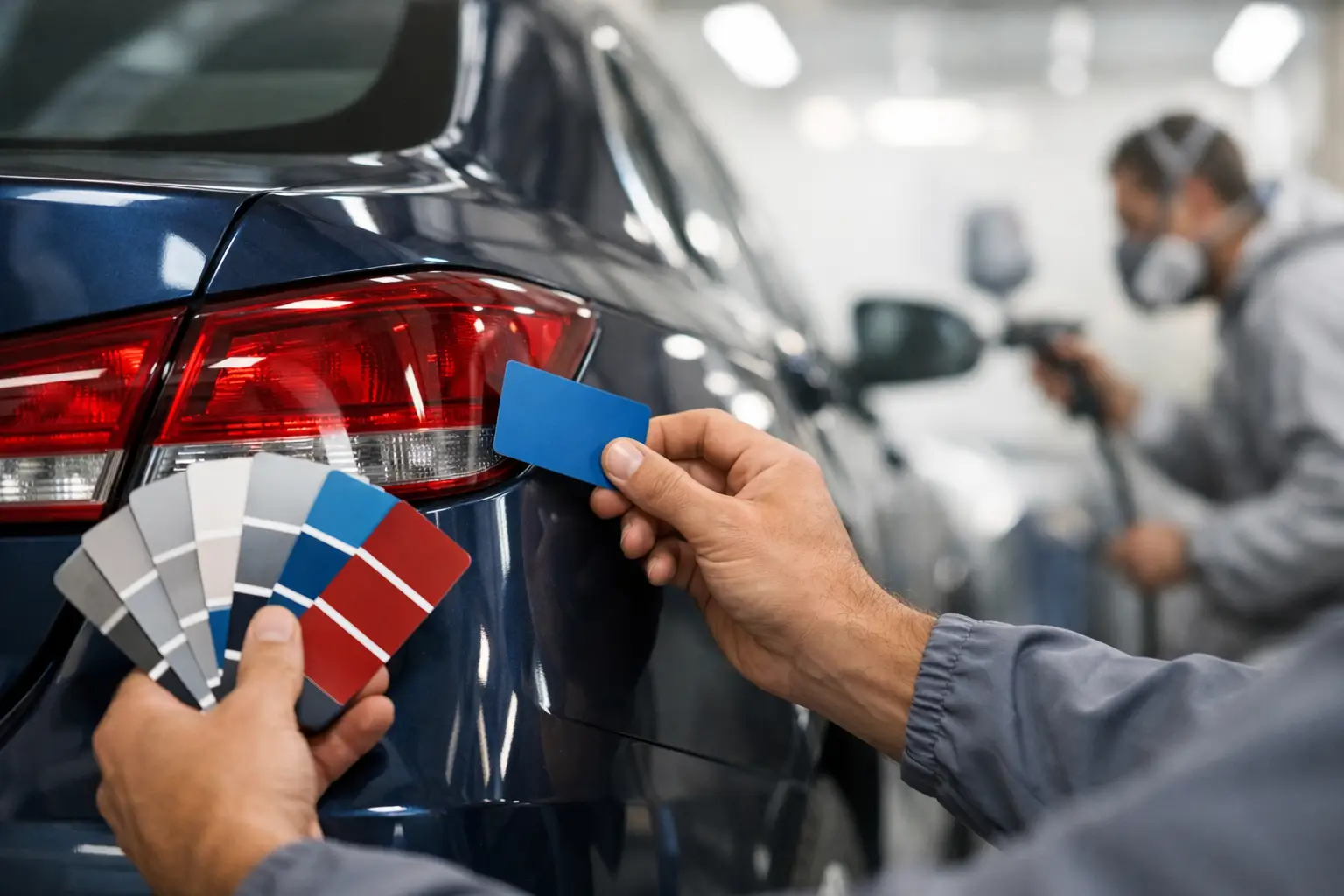
If your fender was repaired but the new paint looks a shade off in the sun, you already know why people ask, can a body shop match paint? The short answer is yes, a qualified shop can usually match your vehicle’s paint very closely. The better answer is that paint matching depends on the color, the condition of your existing finish, and how the repair is handled from prep to final blending.
For drivers in Lakeland, this matters after everything from a parking lot scrape to more serious collision damage. You do not just want fresh paint on a repaired panel. You want the repair to look natural next to the rest of the vehicle.
Can a body shop match paint on any car?
In most cases, yes. Modern body shops use a combination of manufacturer paint codes, computerized color-matching systems, spray-out test panels, and technician experience to get a close match. That process works well for most vehicles, whether the job involves a bumper, door, quarter panel, or a larger refinishing area.
That said, not every paint match is equally simple. Solid colors like basic white, black, or red can sometimes be straightforward, but they can also be surprisingly tricky because even a small difference is easy to see. Metallic, pearl, tri-coat, and tinted finishes usually require more time and more adjustment because light reflects off those finishes differently depending on viewing angle.
A shop is not matching only the factory formula on paper. It is matching the way your vehicle looks today. That is a big difference.
Why exact paint matching is harder than it sounds
Every vehicle starts with a factory paint code, usually found on a label inside the door jamb, glove box, trunk area, or under the hood. That code gives the shop a starting formula. But the code alone does not guarantee a perfect visual match.
Over time, paint changes. Florida sun, heat, moisture, road debris, washing habits, and oxidation can all affect the finish. Even two vehicles with the same original paint code may not look identical years later. If your car has spent a lot of time outdoors in Lakeland, the paint may have faded enough that a fresh mix based only on the code will look too rich or too clean beside the older finish.
Production differences can also affect color. Manufacturers often have multiple formula variants for the same paint code. That means one silver or white from the factory may differ slightly from another run of the same color. A professional shop checks those variants instead of assuming the code is the whole answer.
How body shops actually match paint
A professional paint match is part technology and part workmanship. The process usually starts with the paint code, but it does not end there.
Paint code lookup
The shop identifies the original manufacturer color and any known formula variants. This gives the painter a base formula to work from.
Color scanning and visual evaluation
Many shops use a spectrophotometer or digital color-matching camera to read the color on your vehicle. That tool helps identify the closest formula and whether the color needs adjustment. It is useful, but it is not automatic. A technician still has to evaluate the result in real lighting conditions.
Spray-out test panels
Before painting the vehicle, the shop may spray a sample card or test panel. This lets the technician compare the color against the car in sunlight, shade, and shop lighting. If the metallic content, flop, or tint looks off, the formula can be adjusted before it ever reaches the repaired panel.
Blending into adjacent panels
This is one of the biggest reasons quality repairs look better. Instead of painting only the damaged panel and stopping hard at the edge, the shop may blend color into the neighboring panel. That soft transition helps hide slight differences and creates a more natural finish.
Clear coat and final finish
After the color coat is applied, clear coat affects gloss, depth, and the way the color is perceived. Even a good base color can look wrong if the clear coat application is uneven or the texture does not match the rest of the car.
When the match may not be perfect
A good shop aims for a match that looks right in normal viewing conditions, not just under one overhead light in the booth. Still, there are cases where a repaired area may show some difference.
Very old paint can be difficult to duplicate because the surrounding finish has aged so much. Bright whites, silvers, and some grays can show small changes in tone or metallic orientation. Three-stage pearl colors are another challenge because the final appearance depends on the number of mid-coat passes, application technique, and light angle.
Plastic bumpers can also look slightly different from metal panels, even from the factory. That is because paint lays differently on different materials. If your bumper was repaired and repainted, a small variation may not mean the shop did poor work. It may reflect the way that material accepts paint.
Can a body shop match paint after collision repair?
Yes, and this is one of the most common reasons for paint matching. After collision repair, the shop has to restore both the structure and the appearance of the damaged area. If the panel is repaired or replaced, refinishing is what ties the repair together.
This is where having body repair and paint work handled in one place can help. The technicians repairing the panel and the painters finishing it are working toward the same result. Panel alignment, body filler finishing, primer surfacing, sealer choice, color application, and blending all affect how natural the final repair looks.
For example, a door that is repaired but not blocked properly can show texture or waviness under fresh paint. The color may be correct, but the repair can still stand out. Paint matching is not just about the formula. Surface prep matters just as much.
What customers should ask before approving paint work
If you are comparing repair shops, ask how they handle color matching. A shop should be able to explain its process clearly. You want to know whether they rely only on the paint code or also use scanning, test panels, and blend techniques when needed.
It also helps to ask whether adjacent panels may need blending for the best result. Some estimates look lower because they only include paint on the repaired panel, even when blending would produce a better match. That does not always mean the estimate is wrong, but it is worth understanding what is included.
Ask about the condition of your existing paint too. If the rest of the vehicle has significant sun fade, peeling clear coat, or previous repaint work, the shop should tell you upfront how that may affect the final appearance. A straight answer is better than a promise that ignores real-world paint conditions.
Signs of a quality paint match
When a vehicle is repaired properly, the finish should not draw attention to the repaired area. In consistent lighting, the color should flow naturally from one panel to the next. Metallic particles should appear even, not cloudy or patchy. The gloss level should be consistent, and the texture should not look rougher or flatter than surrounding panels.
You should also look at the vehicle outdoors. Shop lighting can hide differences that become obvious in sunlight. A reliable shop knows this and checks its work accordingly.
Local conditions matter in Lakeland
Lakeland drivers deal with strong UV exposure, heat, rain, and daily road use. Those conditions affect how paint ages and why matching older finishes can take more effort. A local body shop that regularly works on Florida vehicles understands what sun fade, oxidation, and environmental wear do to color over time.
That local experience matters when the goal is not just to paint a part, but to restore your vehicle so it looks right on the road, in a parking lot, and under Florida sun. At New Age Auto Painting, that is part of the job - not an extra detail.
So, can a body shop match paint? In most cases, yes, and a skilled shop can get results that look clean and consistent to the average driver and careful observer alike. The real question is whether the shop has the tools, process, and refinishing experience to match the paint your vehicle has now, not just the paint it left the factory with. If you want the repair to disappear instead of announce itself, that is where good body and paint work make the difference.