New Age Auto Painting Blog · July 22, 2026
Can a Dented Door Be Repaired? What to Expect
Can a dented door be repaired without replacing it? Learn how auto body shops assess damage, repair dents, match paint, and restore your vehicle properly.
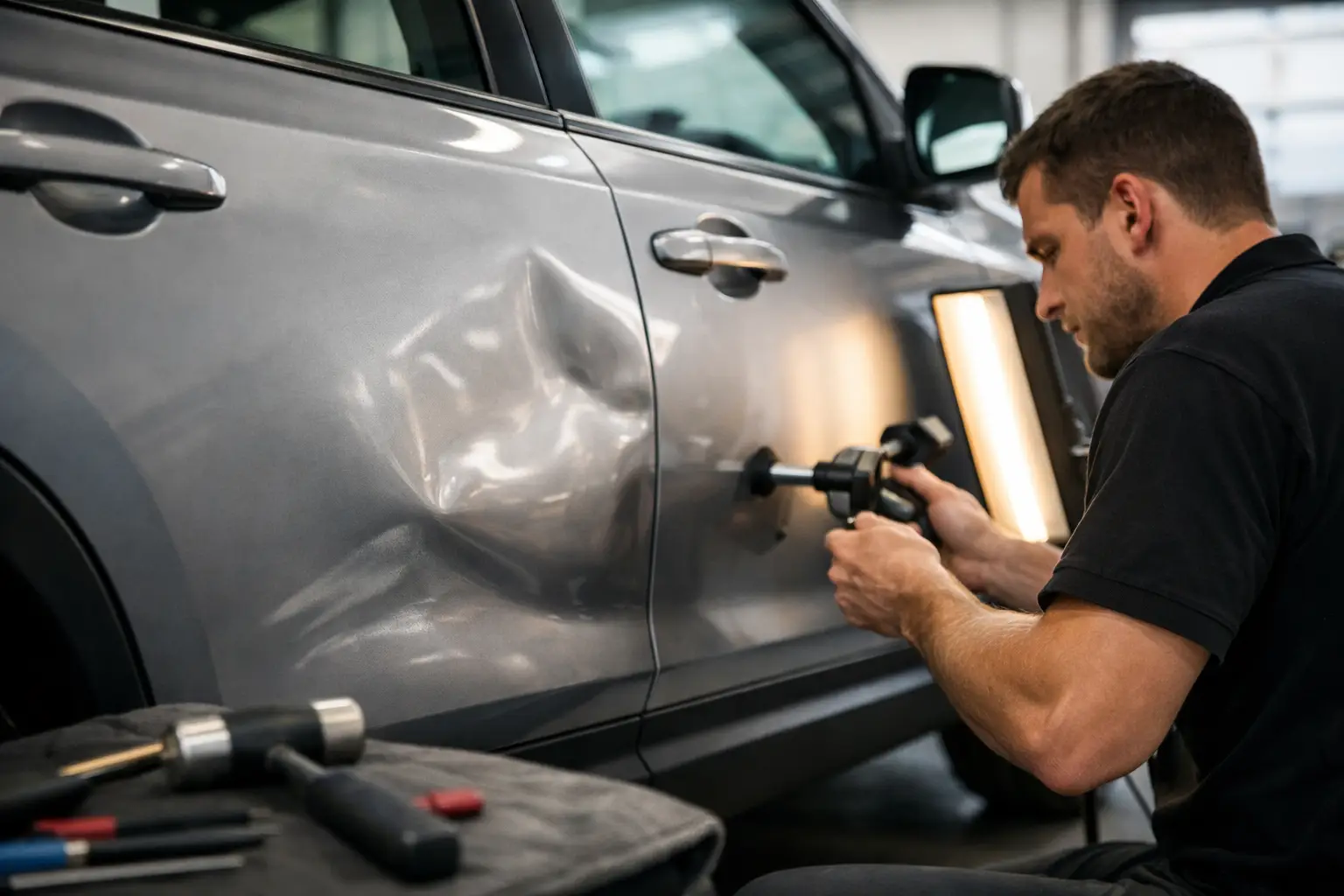
A parking-lot impact, a runaway shopping cart, or a low-speed collision can leave a vehicle door looking far worse than it may actually be. Can a dented door be repaired? In many cases, yes. A qualified auto body shop can often reshape the damaged metal, repair the finish, and restore proper door operation without replacing the entire door.
The right repair depends on more than the size of the dent. Its location, depth, paint condition, body-line damage, and effect on the door’s internal structure all matter. For Lakeland drivers, a professional inspection is the fastest way to determine whether repair is practical or whether replacement will provide the better long-term result.
Can a Dented Door Be Repaired Without Replacement?
A dented door can usually be repaired when the outer metal panel is stretched but not severely torn, crushed, or rusted. Technicians assess whether the damage is limited to the exterior skin or whether it extends into the door frame, hinges, latch area, window components, or side-impact reinforcement.
Small and moderate dents commonly qualify for repair. The technician gradually brings the metal back into shape, levels any low or high areas, applies body filler only where needed, then primes and refinishes the repaired area. When the work is done correctly, the goal is a smooth panel, consistent body lines, and a color match that blends with the surrounding finish.
Replacement may make more sense when the door is deeply folded, the edge is crushed, the inner structure is damaged, or corrosion has weakened the metal. A door that no longer opens, closes, latches, or seals correctly needs more than cosmetic attention. In those cases, repairing the visible dent alone can leave underlying problems unaddressed.
What Determines Whether a Door Dent Is Repairable?
The first consideration is the location of the damage. A shallow dent in the broad, flat center of a door is generally easier to correct than a dent on a sharp body line, near a door edge, or around the handle and mirror mounting area. Body lines give a vehicle its shape, but they also make metal repair more precise and time-consuming.
Depth also matters. A simple inward depression may be repaired with minimal metal work. A deep impact can stretch the metal and create creases that require more extensive reshaping. The longer a crease is and the sharper its edges are, the more likely the repair will require conventional bodywork and refinishing.
Paint condition is another deciding factor. If the paint has not cracked or chipped, paintless dent repair may be an option for certain dents. If bare metal is exposed, the damaged section needs preparation and paint protection to prevent rust. Florida heat, rain, and humidity can accelerate corrosion once the factory finish has been broken.
Finally, a technician checks door operation. The gaps between the door and the fender, quarter panel, and rocker panel should remain even. The door should latch securely, the window should move correctly, and weatherstripping should seal against wind and water. These details are especially important after collision damage.
Paintless Dent Repair vs. Conventional Auto Body Repair
Paintless dent repair, often called PDR, is a specialized technique for dents that have not damaged the paint. A technician uses controlled pressure from behind the panel or carefully pulls the dent from the outside to restore the metal’s shape. It can be a good solution for minor door dings, hail damage, and shallow dents with intact paint.
PDR is not the right answer for every damaged door. It is less suitable when the paint is cracked, the dent has a sharp crease, the metal is heavily stretched, or access behind the panel is limited by reinforcement components. Attempting a quick do-it-yourself pull on this type of damage can worsen the panel, distort body lines, or cause paint to split.
Conventional auto body repair is used when the panel needs more substantial correction. The repair process may include removing trim or interior panels, straightening the metal, treating exposed areas, applying filler in thin layers where appropriate, sanding, priming, and repainting. This process takes longer than PDR, but it addresses both the shape of the panel and the protection of its finish.
When Door Replacement Is the Better Repair
Replacement is not automatically the expensive or unnecessary option. Sometimes it is the most reliable way to restore a vehicle after major damage. A replacement door may be recommended if the impact bent the window frame, damaged intrusion beams, distorted hinge mounts, or caused significant damage near the latch.
A severely rusted door may also be a poor candidate for repair. Body filler and paint can improve appearance temporarily, but they cannot restore solid metal that has deteriorated from inside the panel. Replacing the door can prevent recurring rust and provide a better foundation for a durable paint finish.
Even with a replacement door, proper body and paint work remains essential. The door has to be aligned to the vehicle, fitted with the correct hardware, checked for window and lock function, primed if necessary, and painted to match. A used door that appears to be the same color can still differ because vehicle paint fades over time, especially under Central Florida sun.
Why Professional Color Matching Matters
Door repairs often require paint work beyond the exact dented area. Modern automotive finishes can vary with age, weather exposure, metallic flake orientation, and the original manufacturing process. Painting only one small section without blending can leave a noticeable difference in shade or gloss.
Professional refinishing begins with surface preparation. The repaired panel is cleaned, sanded, primed, and sealed as needed before color is applied. Depending on the vehicle and damage location, the color may be blended into an adjacent panel to make the transition visually consistent. Clear coat is then applied and cured to protect the new finish.
This is where a full-service body and paint shop provides practical value. The metal repair and paint process are handled as one coordinated job, rather than sending the vehicle to separate vendors and hoping the work aligns. New Age Auto Painting helps Lakeland-area drivers address both the damaged panel and the finish required to make the repair look complete.
Can You Drive With a Dented Door?
A minor cosmetic dent that does not affect the latch, hinges, window, mirror, or visibility may not prevent you from driving. However, it is still wise to schedule an inspection, particularly if paint is chipped or metal is exposed. Small damage can develop into rust, and a dent may be hiding damage behind the door skin.
Do not delay repairs if the door will not close securely, has sharp exposed edges, allows water into the cabin, interferes with the window, or creates unusual wind noise. These symptoms can indicate alignment issues or damage to the seal and internal components. If the impact was significant, the vehicle should also be checked for damage to nearby body panels and safety-related components.
What to Expect During a Door Dent Repair Estimate
An accurate estimate starts with a hands-on inspection. The shop will look at the visible dent, paint damage, panel gaps, door function, and any related damage around the impact area. In some cases, the full extent of the damage is only visible after interior trim, molding, or the door panel is removed.
Repair time can range from a same-day PDR service for a simple dent to several days for conventional bodywork, paint curing, part ordering, and reassembly. Insurance coverage may apply if the dent resulted from a collision or another covered event, though deductibles and policy terms vary.
The best repair is not always the fastest-looking fix. A door should leave the shop opening and closing correctly, protected from corrosion, and finished in a way that suits the rest of the vehicle. If the paint is cracked, the dent is creased, or the door does not operate normally, having it evaluated early can keep a manageable repair from becoming a larger restoration later.