New Age Auto Painting Blog · July 26, 2026
Can Collision Damage Affect Alignment and Handling?
Can collision damage affect alignment? Learn the signs, causes, and repair steps Lakeland drivers should know after an accident or curb impact safely.
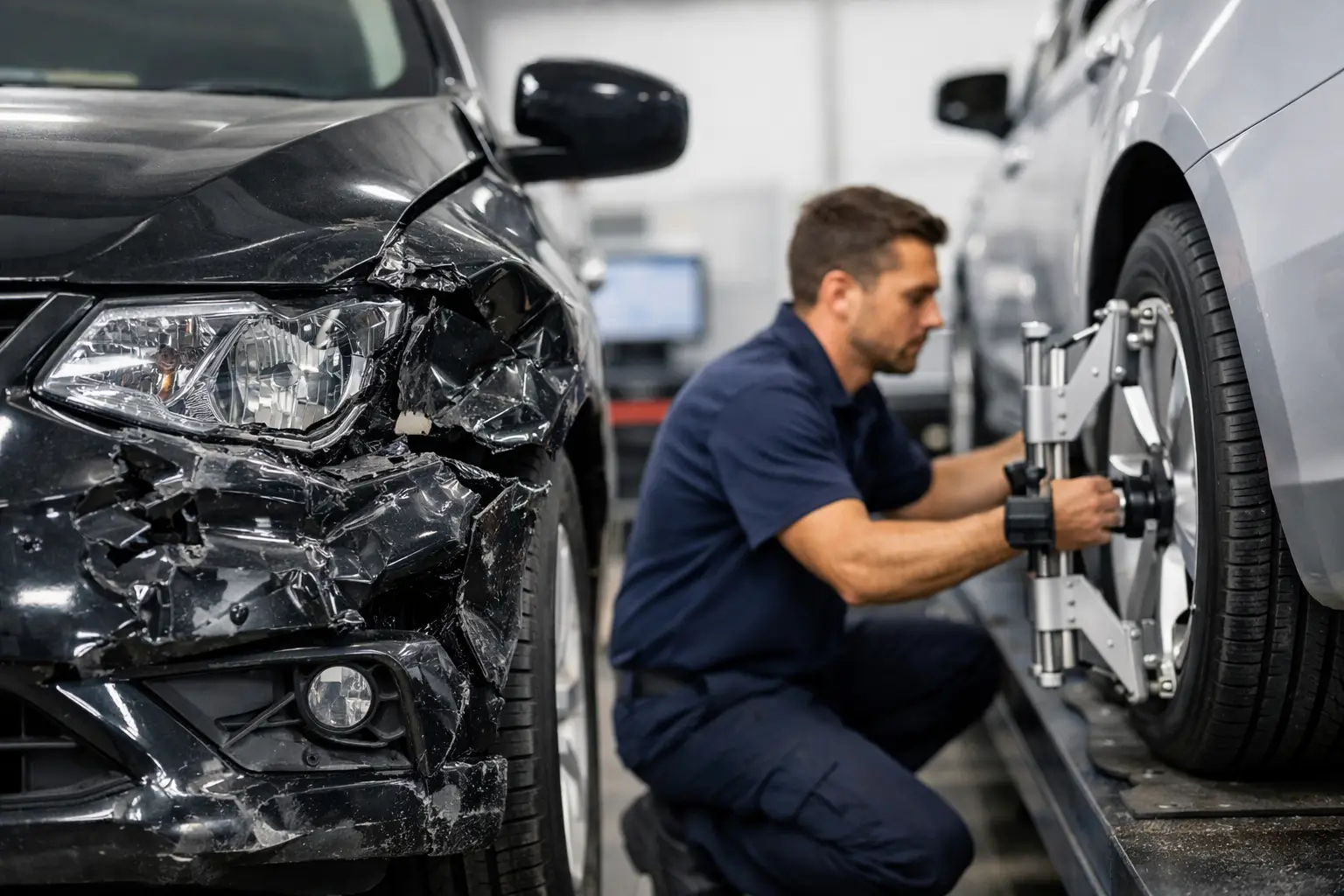
A low-speed impact can leave a vehicle looking mostly fine while changing the way it tracks down the road. So, can collision damage affect alignment? Yes. A hit to a wheel, curb, bumper, suspension area, or underside can alter wheel angles or damage the components that hold those angles in place. The result may be a vehicle that pulls, wanders, shakes, or wears through tires far sooner than it should.
For Lakeland drivers, alignment concerns should be part of the repair conversation after any collision, not only major accidents. Proper body repair restores appearance, but a road-ready vehicle also needs steering, suspension, and structural components checked for damage that may affect control and tire wear.
Can Collision Damage Affect Alignment? Absolutely.
Wheel alignment is the adjustment of the angles at which the tires meet the road. A technician measures and adjusts angles called toe, camber, and caster so the vehicle tracks correctly, responds predictably, and wears its tires evenly.
A collision can change those angles directly, such as when a wheel takes the force of a curb strike or side impact. It can also change them indirectly by bending or shifting a suspension, steering, wheel, or structural component. Even a minor angle change can be noticeable over time because tires travel thousands of miles while carrying the weight of the vehicle.
The severity of the accident does not always tell the full story. A light parking-lot impact to a bumper may have no effect on alignment. A seemingly minor curb hit at the right angle can bend a wheel or suspension part enough to create a real problem. The location and direction of the impact matter more than how dramatic the exterior damage appears.
The collision damage that commonly causes alignment problems
Front-end impacts are a common source of alignment issues because the steering and suspension systems are located behind and beneath the front body panels. Damage to a control arm, tie rod, steering knuckle, strut, subframe, or wheel can prevent the vehicle from holding its specified alignment angles.
Side impacts can be just as concerning, particularly when the impact reaches a wheel or lower body area. A bent rear suspension component can cause rear-wheel misalignment, which may make the vehicle feel as if it is steering from the back. Rear damage can also affect vehicles with independent rear suspension, where several links work together to position each rear wheel.
A hard impact to a pothole, curb, parking barrier, or road debris can produce similar issues. These events are not always reported as collisions, but the inspection needs are similar if the vehicle begins pulling or vibrating afterward.
Structural damage is another consideration. On many modern vehicles, the unibody structure provides mounting points for suspension and mechanical components. If those mounting areas are moved or distorted, an alignment adjustment alone may not correct the problem. The underlying damage must be identified and repaired first.
Signs Your Car May Need an Alignment Check After a Collision
The clearest sign is a vehicle that pulls left or right on a level road when you briefly relax your grip on the steering wheel. Road crown, wind, and tire pressure can cause slight movement, so a pull should be evaluated alongside other symptoms rather than assumed to be alignment immediately.
A steering wheel that sits off-center while the vehicle travels straight is also worth checking. If the wheel was centered before the accident and now points slightly left or right, the vehicle may have an alignment issue or damaged steering component.
Uneven tire wear is often a slower warning sign. Excessive wear on the inside or outside edge of a tire can point to camber problems, while a feathered or saw-tooth feel across the tread may indicate incorrect toe. Tires can wear unevenly for other reasons, including worn suspension parts or improper inflation, but collision-related alignment should be ruled out after an impact.
Pay attention to vibrations, loose steering feel, clunking sounds over bumps, or a vehicle that wanders within its lane. These symptoms can indicate damage beyond a basic alignment setting. A bent wheel, tire damage, worn or damaged suspension hardware, or steering-system issue may require repair before alignment can be completed accurately.
Why an Alignment Adjustment Is Not Always the Entire Repair
Alignment equipment can measure wheel angles with great precision, but it cannot straighten a bent control arm, repair a damaged knuckle, or restore a shifted suspension mounting point. If a component is bent, loose, cracked, or otherwise compromised, forcing an adjustment may not be possible or safe.
This is why a proper post-collision inspection starts with the condition of the vehicle, not just an alignment printout. The technician should inspect the tires and wheels, steering linkage, suspension parts, mounting locations, and visible structural areas. Measurements help determine whether the vehicle can be adjusted to factory specifications or whether damaged parts must be repaired or replaced first.
There is also a difference between a vehicle that can be aligned and a vehicle that remains aligned. If an impact damaged a component that is beginning to fail, the numbers may look acceptable after an adjustment but drift again as the part moves under driving load. Addressing the cause protects the tires and helps restore predictable handling.
Modern vehicles may require additional attention after collision repairs. Depending on the model and the area of impact, driver-assistance cameras, radar sensors, steering-angle sensors, or other systems may need inspection and calibration. These systems rely on the vehicle being structurally sound and correctly aligned to function as intended.
What to Do After an Accident or Curb Strike
If the vehicle is pulling sharply, vibrating heavily, making grinding noises, or has a visibly damaged tire or wheel, avoid continued driving when possible. These symptoms can signal a condition that affects safe control. Arrange for an inspection rather than trying to drive through the problem.
For less obvious concerns, take note of when the symptoms began. Tell the repair professional whether the impact involved the front, rear, driver side, passenger side, or a specific wheel. Mention whether the steering wheel changed position, whether the vehicle pulls at highway speed, and whether you struck a curb or pothole after the original accident. Details like these help direct the inspection.
Do not judge the need for alignment solely by how the paint or bumper looks. Cosmetic damage and mechanical damage can occur separately. A scratched bumper may be only a finish repair, while a clean-looking wheel can still have a bent rim or a damaged suspension component behind it.
Protecting Tires, Handling, and Repair Results
Ignoring an alignment issue can become expensive because tires are often the first parts to suffer. Incorrect toe can scrub tread off quickly, sometimes before the driver notices a major handling problem. A vehicle may also use more effort to track straight, making routine driving less comfortable and less predictable.
Prompt inspection helps separate collision-related concerns from ordinary maintenance needs. Tire pressure, tire condition, brakes, suspension wear, and wheel balance should all be considered when diagnosing a pull or vibration. The right repair depends on what the inspection finds, not on a one-size-fits-all alignment recommendation.
For collision-related body damage in Lakeland, New Age Auto Painting can help assess the visible repair needs and identify when further structural, suspension, or alignment evaluation should be part of the restoration process. Repairing the vehicle correctly means looking beyond the surface finish.
If your car started pulling, shaking, or wearing tires unevenly after an impact, treat that change as useful information. A timely inspection can help preserve your tires, restore confident handling, and ensure the damage behind the body panels does not get overlooked.