New Age Auto Painting Blog · May 27, 2026
Car Clear Coat Failure Repair Options
Learn when car clear coat failure repair needs polishing, spot refinishing, or a full repaint, and how Lakeland drivers can avoid repeat damage.
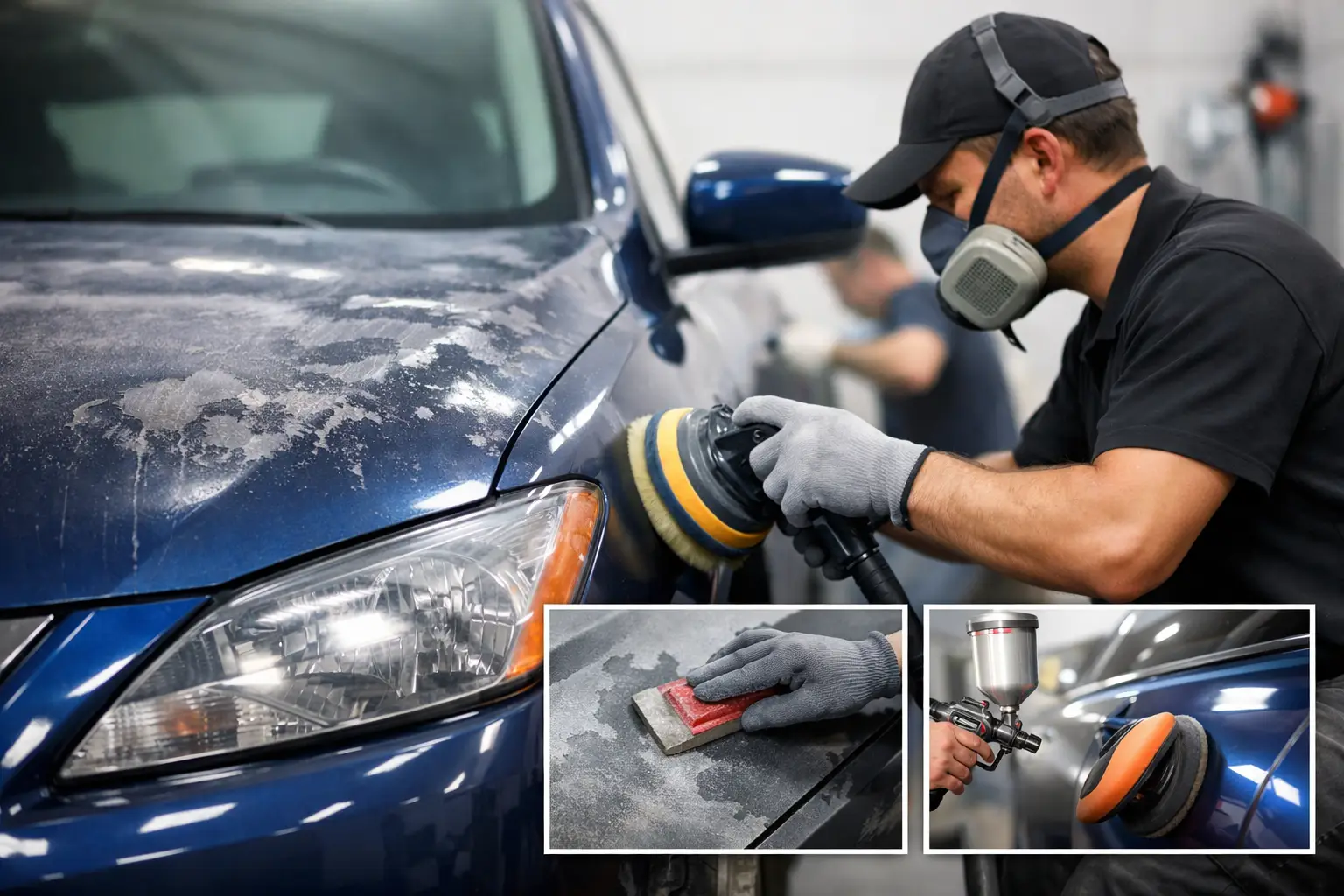
Clear coat peeling usually starts small - a dull patch on the hood, a chalky area on the roof, or edges that look like they are lifting. Once that top layer starts breaking down, car clear coat failure repair becomes less of a cosmetic detail and more of a timing issue. Wait too long, and the color coat underneath can fade, oxidize, or lose adhesion too.
What clear coat failure actually looks like
Clear coat is the transparent protective layer applied over your vehicle’s base color. Its job is to protect the paint from UV exposure, moisture, road debris, and normal wear. When it fails, the finish no longer looks deep and glossy. Instead, it turns cloudy, flakes, peels, or develops rough, uneven areas.
A lot of drivers first notice it on horizontal panels like the hood, roof, and trunk. That is not random. In Florida, those surfaces take the most direct sun exposure, and UV damage is one of the biggest reasons clear coat breaks down. Over time, the bond between layers weakens. Once that happens, washing, heat, and weather speed up the problem.
Clear coat failure can also be confused with oxidation or surface contamination. If the paint just looks dull, there may still be enough intact material to restore some gloss. If the finish is peeling or lifting in sheets, polishing will not fix it. At that point, the damaged material has to be removed and refinished correctly.
Why car clear coat failure repair is not always a simple buffing job
One of the biggest misconceptions about car clear coat failure repair is that it can be corrected with compound, wax, or ceramic spray. Those products can improve shine on paint that is weathered but still structurally sound. They cannot reattach failing clear coat.
In fact, aggressive buffing on peeling areas often makes things worse. It can remove more of the remaining finish, expose the color coat, and create a patchy look that is harder to blend later. If the clear coat is already separating, the repair usually involves sanding away unstable material and refinishing the panel.
That is why the right repair depends on the stage of failure. Mild fading may allow for correction and protection. Peeling, cracking, or widespread delamination usually points to repainting.
What causes clear coat to fail
Sun exposure is the most common factor, especially in places where vehicles spend long hours outside. Heat and UV rays slowly dry out and weaken the finish. Over time, that protective layer loses flexibility and adhesion.
Poor previous paintwork is another major cause. If a panel was repainted with low-quality materials, rushed prep work, or improper cure time, clear coat problems can show up earlier than expected. That matters for used vehicles and prior collision repairs. Sometimes the issue is not the factory finish at all - it is an older aftermarket repaint that is now breaking down.
Neglected maintenance can contribute too. Dirt, bird droppings, tree sap, and harsh chemicals all add stress to the finish. Automatic car washes with abrasive brushes do not usually cause full failure on their own, but they can accelerate wear on already weakened paint.
Can you repair just the damaged spot?
Sometimes, but not as often as people hope.
Localized damage can occasionally be addressed on a single panel if the failure is limited and the surrounding finish is still stable. For example, if only part of the hood is affected, a shop may be able to sand, prep, and refinish that panel. The goal is to remove all compromised material, not just the obvious peeling section.
Spot repairs inside one panel are more limited. Clear coat does not always blend invisibly when failure has irregular edges or widespread UV breakdown. If the surrounding finish is already weak, repairing only the center of the problem can lead to more peeling around the new work later.
That is why professional assessment matters. The visible damage is not always the full damage. A panel that looks repairable from ten feet away may have broader adhesion failure once sanding begins.
The professional repair process
Proper car clear coat failure repair starts with inspection. A technician needs to determine whether the issue is isolated to the clear coat, whether the base color is damaged, and whether the panel has been repainted before. That affects both labor and final appearance.
If refinishing is needed, the damaged clear coat is sanded down until unstable material is removed. If the base coat is still intact and consistent, the repair may move directly into sealer and new topcoat prep. If the color layer has faded, burned through, or lost adhesion, the panel may need fresh base coat and clear coat.
Surface prep is where quality shows. The panel has to be properly feathered, cleaned, and primed where needed so the new finish bonds correctly. Then the color is matched, applied, and protected with a new clear coat layer. After curing, the finish may be sanded and polished to improve gloss and consistency.
When neighboring panels affect color match, blending may be recommended. This is especially common on metallic or pearl finishes, where slight differences in tone are easier to spot in sunlight.
When a full repaint makes more sense
If clear coat failure appears on multiple panels, trying to patch each area individually can cost more in the long run and still leave the vehicle looking uneven. A hood, roof, and trunk with widespread peeling usually point to overall finish deterioration rather than one isolated defect.
In that case, a more complete repaint plan often makes better sense. It provides a consistent appearance and addresses the full extent of the failing material. This is especially true when the vehicle has severe sun damage, prior low-quality paintwork, or noticeable fading across several panels.
There is a trade-off, of course. A larger refinishing job costs more than a single-panel repair. But repeated patchwork on unstable paint can turn into wasted money if additional panels fail soon after.
Why DIY repairs usually fall short
DIY clear coat kits are easy to find, and they can sound appealing when the damage seems minor. The problem is that aerosol clear coat over peeling factory finish rarely holds up well. If the failed material underneath is not fully removed and the surface is not prepared correctly, the new product will not bond the way it should.
There is also the appearance issue. Texture mismatch, overspray, edge lines, and uneven gloss are common with driveway repairs. On darker colors or panels at eye level, those flaws stand out quickly.
For a vehicle you want to keep looking presentable, especially one with visible sun damage, professional refinishing usually delivers the better result. That is not just about shine. It is about adhesion, color match, and durability.
How Lakeland drivers can slow future clear coat damage
Florida vehicles deal with intense sun for most of the year, so prevention matters even after a quality repair. Parking in a garage or shaded area helps. If that is not possible, a car cover can reduce direct UV exposure, though it needs to be used carefully on a clean vehicle to avoid rubbing the finish.
Regular washing also helps because contaminants sitting on hot paint accelerate wear. Use products made for automotive finishes, not household cleaners or harsh degreasers. Periodic wax or paint sealant can add a sacrificial layer, although it does not replace the clear coat itself.
If you notice dulling, chalkiness, or rough spots, get the paint checked before peeling starts. Early action can preserve more of the original finish and keep the repair smaller.
Choosing the right shop for car clear coat failure repair
This kind of work sits at the intersection of body shop prep and paint shop finish quality. You want a shop that understands both. That means evaluating the condition of the panel, identifying prior repairs, preparing the substrate correctly, and applying a finish that matches the rest of the vehicle.
For drivers in Lakeland, that local experience matters. A shop working on Florida vehicles every day understands how sun exposure affects paint and where failure usually spreads first. At New Age Auto Painting, the focus is on straightforward repair planning and professional refinishing that restores appearance without cutting corners.
If your clear coat is already peeling, the best next step is not another bottle of polish. It is getting a real assessment before the damage moves deeper into the paint system.