New Age Auto Painting Blog · May 23, 2026
Car Dent Repair Guide for Florida Drivers
Use this car dent repair guide to understand dent types, repair options, paint concerns, and when to choose a local body shop in Lakeland.
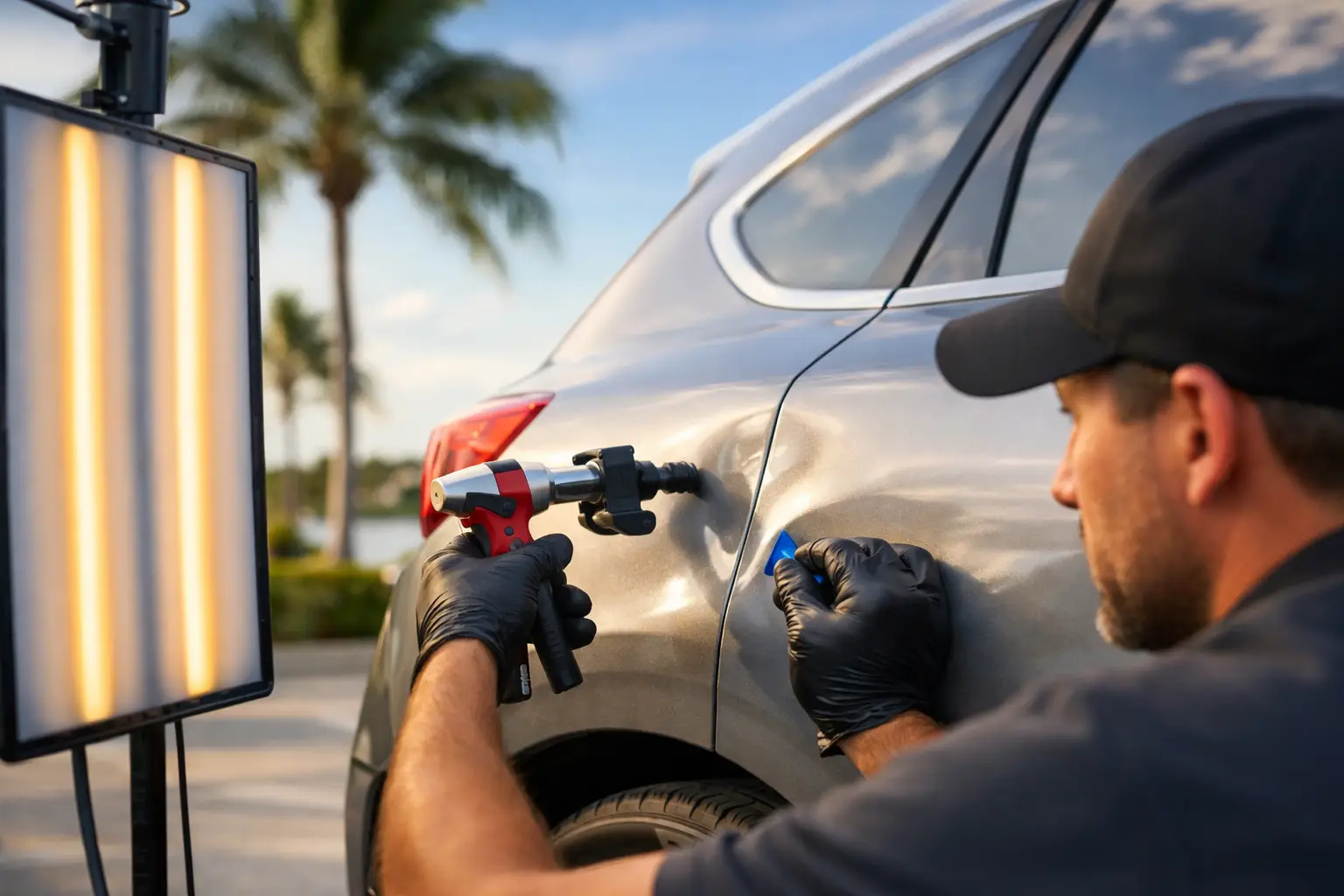
A shopping cart rolls across a parking lot, a hailstorm passes through, or someone opens a door a little too hard. Suddenly, you are looking at body damage that was not there yesterday. This car dent repair guide is built for drivers who want a clear answer on what happens next, what can be fixed, and when it makes sense to bring the vehicle to a professional body shop in Lakeland.
What a dent really tells you
Not every dent is just cosmetic. Some are minor surface impressions that can be corrected without major refinishing. Others stretch the metal, crack the paint, or affect a body line, which means the repair is more involved. The location matters too. A small dent in the middle of a door is very different from a dent on a panel edge, near a wheel opening, or across a crease.
That is why a quick visual check from a distance is only part of the story. A proper inspection looks at the panel shape, paint condition, depth of impact, and whether the metal or bumper material has been distorted. If the dent happened during a collision, there may also be hidden damage behind the panel.
A car dent repair guide starts with dent type
The first step is identifying what kind of dent you are dealing with. This helps determine whether the repair can be relatively simple or if the panel needs body filler, repainting, or replacement.
Small round dents are often caused by hail, shopping carts, or door impacts. These may be good candidates for paintless dent repair if the paint is still intact and the metal has not been sharply creased.
Creased dents are more difficult. When a dent runs along a line or fold in the panel, the metal usually stretches, and restoring the original shape takes more than pushing the dent out from behind.
Large shallow dents can look minor at first, but they often cover more surface area than expected. If the panel has flexed broadly, the repair may require reshaping and refinishing to get the reflection and contour right.
Bumper dents are a category of their own because many modern bumpers are plastic, not metal. Some can be heated and reshaped. Others are torn, gouged, or too distorted to restore cleanly.
When paintless dent repair works and when it does not
Paintless dent repair, often called PDR, is a strong option in the right situation. It works best on smaller dents where the paint surface has not been broken. The technician uses specialized tools to gently massage the panel back into shape from behind or pull the dent outward in a controlled way.
The benefit is that the original factory finish stays in place. That usually means less repair time and lower cost than traditional body work. For minor dents, it can be an efficient solution.
But PDR is not the answer for every vehicle. If the paint is chipped or cracked, the metal is sharply creased, or the panel is stretched too far, the dent may need conventional repair. The same goes for damage near edges, reinforced areas, or complex curves where access is limited. A good shop will tell you quickly whether PDR is realistic or whether a more complete repair is the better route.
Traditional dent repair and refinishing
When a dent cannot be corrected with paintless methods, the repair usually moves into standard auto body work. That process may include pulling the dent, reshaping the panel, smoothing the surface, priming, and repainting the affected area.
This matters because the goal is not just to make the dent less visible. The goal is to restore the panel so it looks correct under daylight, parking lot lighting, and direct sun. In Florida, strong sunlight tends to expose uneven reflections, low spots, sanding marks, and mismatched paint quickly.
A proper repair also takes color match seriously. Even if the damage seems small, blending and refinishing may be necessary to get a consistent result across adjacent panels. That is one reason many drivers prefer a shop that handles both body repair and paint work in one place.
What affects repair cost and turnaround time
One of the most common questions is how much dent repair will cost. The honest answer is that it depends on more than dent size. Depth, location, paint damage, panel material, and access all affect labor time and materials.
A small door ding with no paint damage may be fairly simple. A dent across a body line with chipped paint is not. If the panel needs removal, if trim pieces must come off, or if sensors and modern vehicle features are involved, complexity goes up. Bumper repairs can also vary widely depending on whether the damage is a light distortion or a full crack with paint damage.
Turnaround time follows the same pattern. Some repairs are straightforward. Others take longer because the panel needs body work, curing time, paint matching, and quality checks. If replacement parts are involved, timing can depend on availability.
Why DIY dent repair is risky
A lot of drivers search for quick fixes and see suction tools, hot glue kits, or internet videos that make dent removal look easy. Sometimes a very minor dent can improve with a DIY method. But there is a difference between improving a dent and repairing it correctly.
The risk is that a temporary fix can make professional repair harder later. Pulling unevenly can stretch the metal further. Excess heat can damage paint. Low-cost tools often leave the panel wavy or create high spots that stand out even more than the original dent.
This is especially true when the paint has already been compromised. Once the finish is cracked or chipped, the problem is no longer just the dent. Now you are dealing with moisture exposure, finish failure, and the need to restore both the panel and the protective coating.
The role of paint condition in any dent repair guide
Paint damage changes the repair plan immediately. If the impact broke the surface, bare metal may be exposed. That is a concern anywhere, but Florida heat, rain, and daily road use can accelerate deterioration. What starts as a small chipped area can lead to corrosion and more visible paint failure over time.
Even if rust has not started, damaged paint usually means the panel needs refinishing after the dent is corrected. A professional process includes surface prep, primer where needed, color application, and clear coat. The finish should match not only in color but also in gloss and texture.
For customers who want the vehicle to look right again, this step matters as much as the dent removal itself. A smooth panel with a poor paint match is still an incomplete repair.
Choosing a local body shop for dent repair
If you are comparing shops, ask direct questions. Will they inspect for hidden panel damage. Can they handle both body work and paint. Will they explain whether PDR or conventional repair is the better option. Do they work on the type of damage your vehicle has, not just general cosmetic fixes.
Local experience matters too. A shop serving Lakeland drivers understands the everyday damage common in this area, from parking lot dents to weather-related issues and collision-related body damage. That local focus helps when you need practical recommendations, not guesswork.
For drivers who want one repair path from dent correction through refinishing, a full-service body and paint shop is usually the simplest choice. New Age Auto Painting is one example of that approach, handling both the structural and appearance side of vehicle restoration under one roof.
When to schedule the repair
If the dent is minor and the paint is intact, you may have some flexibility. But if the panel is cracked, the paint is broken, or the damage came from a collision, waiting is usually not the best move. Hidden issues do not improve with time, and exposed surfaces can lead to more expensive repair later.
There is also the practical side. A dent on a door edge, fender, or bumper can interfere with panel fit or become more noticeable as dirt and light catch the damage. If the vehicle matters to your daily routine, getting an estimate sooner helps you plan around the repair instead of living with avoidable damage.
A good repair does more than remove a dent. It restores the shape, finish, and overall appearance of the vehicle in a way that holds up after the car leaves the shop. If you are looking at a dent and wondering whether it is small enough to ignore or serious enough to fix, the safest next step is a professional evaluation from a local shop that knows how to make the repair look right the first time.