New Age Auto Painting Blog · May 9, 2026
Car Dent Repair Lakeland FL: What to Expect
Need car dent repair Lakeland FL? Learn what causes dents, how repairs work, when paint is needed, and how to choose the right local shop.
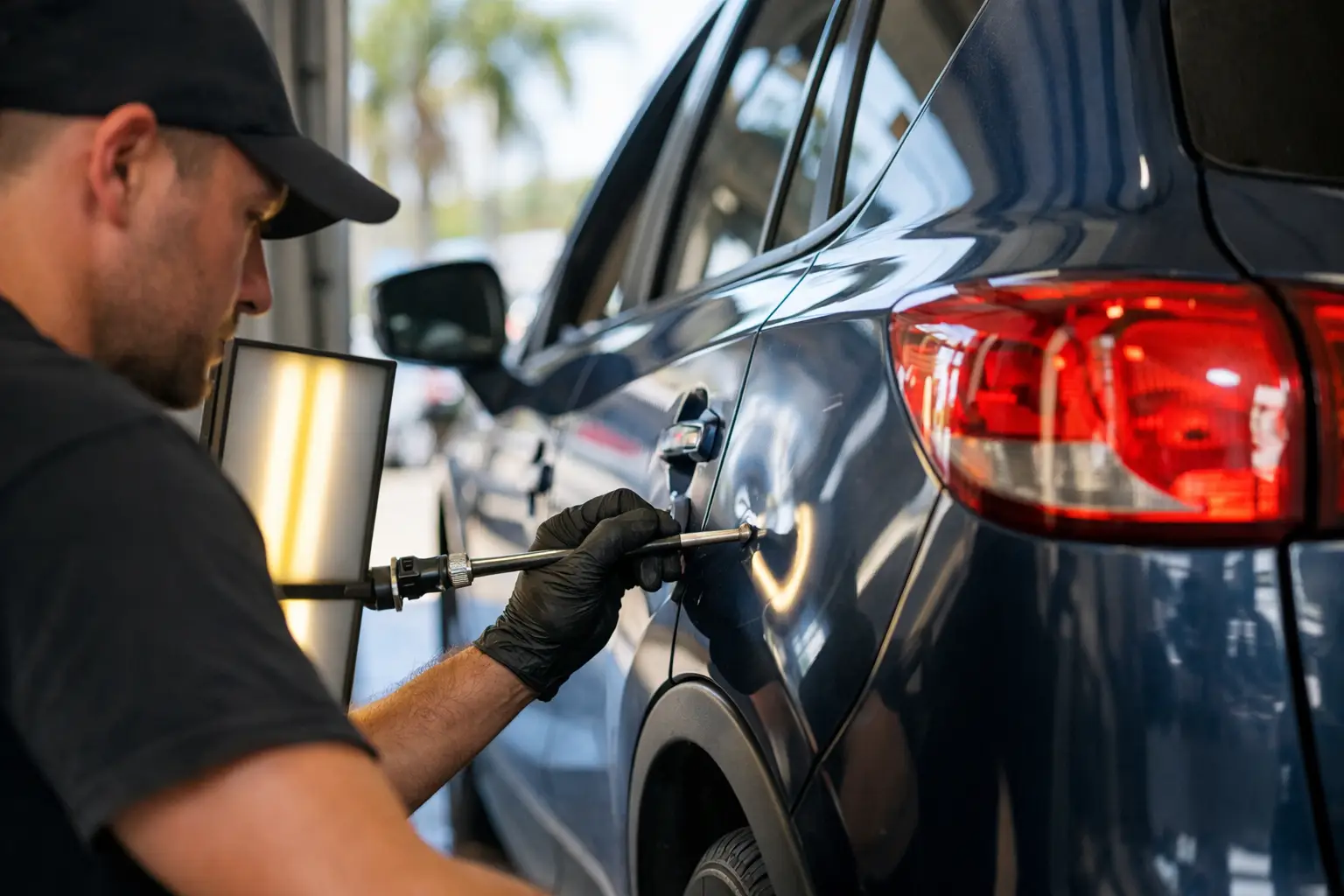
A shopping cart crease in a parking lot. A door ding at work. A low-speed bump that leaves the panel pushed in and the paint scuffed. These are the kinds of problems that send drivers searching for car dent repair Lakeland FL, and the right fix depends on more than the size of the damage. The panel location, paint condition, metal stretch, and whether there is hidden body damage all matter.
Some dents are mostly cosmetic. Others are the first visible sign of a larger repair issue underneath the surface. That is why a professional inspection matters, especially if the damage happened during a collision or affected a bumper, fender, door, quarter panel, or hood. A proper repair should do more than make the dent less noticeable. It should restore the panel shape, protect the finish, and help your vehicle look road-ready again.
When car dent repair in Lakeland FL is simple - and when it is not
Not every dent needs the same process. A shallow door ding on a flat section of metal is very different from a sharp crease along a body line. The first may be a straightforward repair. The second may require more labor, filler work, refinishing, and panel blending to get the result right.
Paint condition is one of the biggest factors. If the paint is still intact, the repair path may be more limited and efficient. If the finish is cracked, chipped, or scraped through, the damaged area usually needs body repair and repainting. Once the protective paint layer is broken, leaving it alone can lead to corrosion and a more noticeable appearance over time.
Material also matters. Steel and aluminum do not behave exactly the same during repair. Bumpers add another variable because they are not repaired like metal body panels. In some cases, what looks like a dent is actually distortion in a plastic bumper cover or damage to mounting points behind it.
What a quality dent repair process should include
A good repair starts with evaluation, not guesswork. The shop should inspect the damaged area, identify whether the panel can be repaired, and check for related damage nearby. If the impact affected panel gaps, trim pieces, lights, or bumper alignment, those details need attention too.
From there, the repair method depends on the damage. Minor dents may be reshaped without major refinishing if the paint and panel condition allow it. More involved damage often requires pulling the dent, reshaping the metal, smoothing the surface, applying filler where needed, sanding, priming, and refinishing the panel.
Color match is a major part of the final result. Even a technically correct dent repair can still look off if the paint does not match the surrounding panels. That is why professional paint work matters. The goal is not just to cover the repaired area, but to restore a consistent appearance across the vehicle.
Dry time, curing, and final inspection also count. Rushing the process can leave texture problems, uneven finish, or visible repair lines. A complete job should leave the area looking clean, properly aligned, and ready for normal use.
Why paint and body work often go together
Many drivers start out looking for dent repair only to find out they also need paint correction or panel refinishing. That is common. A dent often comes with scratches, scuffs, chipped paint, or stress cracks in the finish. Fixing the shape without fixing the surface leaves the repair incomplete.
This is where a full-service body shop has an advantage. When body repair and automotive painting are handled under one roof, the process is usually more efficient and more consistent. There is less back-and-forth between separate vendors, and the repair plan can be built around both structure and appearance from the beginning.
For Lakeland drivers, that matters after anything from a parking lot incident to more serious collision damage. A vehicle should not just be drivable. It should also look properly repaired, with panels that match and paint that holds up in Florida conditions.
Common dent areas and what they can involve
Doors are one of the most frequent problem spots because they are exposed in tight parking spaces. Door dents can be minor, but if they land on a body line or near the edge of the panel, the repair becomes more technical. The inner bracing behind the panel can also affect access and repair options.
Fenders often get damaged in low-speed front-end impacts and side contact. Depending on the location, a fender may be repairable, but some damage is severe enough that replacement makes more sense. The best route depends on labor, finish quality, and the condition of adjacent parts.
Quarter panels are usually more involved because they are integrated into the body structure. A dent there may take more time to repair correctly, especially if the damage extends into the wheel opening, trunk area, or body contour.
Hoods and roofs present their own challenges due to panel size and visibility. Even small imperfections can stand out in reflected light. Bumpers are different again, since cracks, gouges, and deformation in plastic often require a separate repair approach from metal dents.
How to know if a dent may hide bigger damage
If the impact was more than a simple ding, pay attention to signs that the damage goes deeper. Uneven gaps around doors, trunk lids, or hoods can point to panel shift. Difficulty opening or closing a door may indicate alignment problems. Loose trim, damaged lights, or bumper movement can suggest broken mounts or underlying structural issues.
You should also be cautious if the dent came from a collision rather than a parked-car incident. Even when the outside damage looks moderate, the force of impact can travel beyond the visible panel. In that situation, a repair estimate should consider more than the dent alone.
This is one reason many local drivers prefer a shop that handles collision repair, body work, and refinishing together. It reduces the chance that cosmetic damage gets treated in isolation when the vehicle may need a more complete restoration plan.
Choosing a shop for car dent repair Lakeland FL
Price matters, but it should not be the only factor. The lowest estimate is not always the best value if it leaves visible imperfections, poor color match, or unresolved damage. A good shop should be clear about what the repair includes, whether paint work is required, and how the final finish will be handled.
Look for a provider that regularly performs auto body repair and paint restoration, not just quick cosmetic fixes. Dent repair is often tied to panel straightening, surface prep, primer, color application, and finish work. Experience across that full process usually leads to better results.
Local knowledge helps too. In Lakeland, drivers often need practical solutions that fit daily use, weather exposure, and the realities of commuting, family vehicles, and keeping a car presentable without unnecessary delay. A shop serving this market should understand that customers want straightforward communication, reliable turnaround, and workmanship that lasts.
New Age Auto Painting fits that need by combining collision repair, body work, and professional automotive painting for drivers who want the repair handled in one place.
What affects repair time and cost
There is no one-size-fits-all price for dent repair because the damage itself varies so much. Size matters, but depth, panel location, paint damage, material type, and access all affect labor. A small sharp crease can take more effort than a larger shallow dent.
Refinishing adds time and cost because prep and paint work are detailed steps, not add-ons that should be rushed. If adjacent panels need blending for a proper color match, that affects the estimate as well. Replacement parts, if necessary, can also change the timeline.
The best approach is an in-person assessment. Photos can help start the conversation, but they do not always show paint fractures, panel distortion, or hidden damage behind the impact area. A proper estimate should reflect the actual condition of the vehicle, not a guess based on appearance alone.
A good dent repair should leave you with more than a panel that looks better from ten feet away. It should restore the damaged area in a way that holds up, matches the rest of the vehicle, and lets you get back on Lakeland roads with confidence.