New Age Auto Painting Blog · July 24, 2026
Car Door Repainting: What a Proper Repair Takes
Car door repainting can restore damaged panels and protect your vehicle. See what affects repair quality, paint matching, timing, and cost in Lakeland.
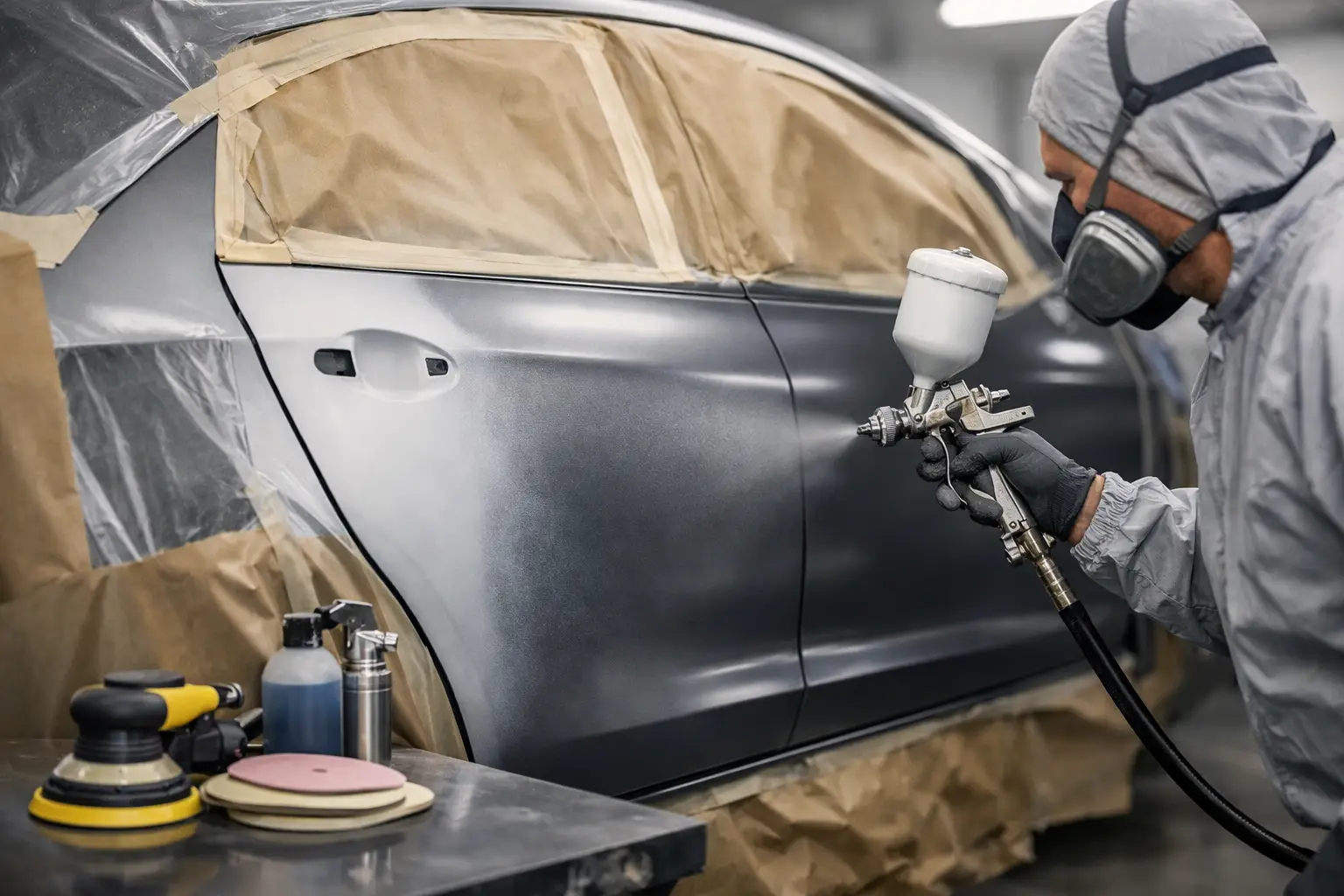
A door scratch can look small from the driveway and far worse under Lakeland’s bright Florida sun. Scuffed paint, a shopping-cart dent, peeling clear coat, or collision damage can make an otherwise well-kept vehicle look neglected. Professional car door repainting addresses more than the visible color problem. The repair has to restore the panel’s surface, protect the metal or plastic beneath it, and blend the finish so the repaired area does not stand out.
For many drivers, the question is not simply whether to repaint a door. It is whether the damage can be repaired without replacing the panel, whether the paint will match, and whether there is collision damage behind the door skin. The right answer depends on the condition of the vehicle and the quality of the preparation before paint is applied.
When Car Door Repainting Is the Right Repair
Paint work is often the right solution when the door has scratches that reach through the clear coat, paint chips, fading, oxidation, or surface rust beginning around damaged paint. Repainting may also be part of a dent repair after a minor accident, provided the metal can be reshaped properly and the door still functions as it should.
Not every mark requires a full repaint. Light clear-coat scratches may respond to polishing, while a shallow paint transfer can sometimes be removed without refinishing. However, if the scratch exposes primer, bare metal, or plastic, polishing will not restore the protective paint layers. A touch-up product may cover a small chip, but it rarely produces the uniform finish most owners expect on a highly visible door panel.
A professional inspection can determine whether a localized repair is practical or whether the complete door needs refinishing. Color, damage location, panel shape, and the vehicle’s existing paint condition all matter. A dark metallic color, for example, can show a poor blend more easily than a solid white finish.
The Repair Starts Before Any Paint Is Sprayed
High-quality paint work is built on preparation. Spraying new color over a dent, cracked finish, or contaminated surface may look acceptable briefly, but the flaws often return through the new coating. Proper repair begins by cleaning the panel and assessing the full extent of the damage.
If the door is dented, the damaged area is repaired first. Depending on the severity, that can involve metal shaping, body filler applied in thin layers, sanding, and careful contour work. On a door with rust, the affected material must be removed and treated correctly before refinishing. Painting over active corrosion only hides the problem temporarily.
The technician then sands and feathers the surrounding finish so the repair transitions smoothly into the original panel. Primer is used where needed to seal the repair and provide a stable surface for color. Each stage must cure and be sanded correctly. This is where a repair either gains long-term durability or starts down the path toward peeling, edge lines, and visible texture.
Why Door Edges and Hardware Matter
A vehicle door has more than one flat painted surface. There are edges, handles, mirror mounts, trim pieces, weatherstripping, and jamb areas that may need attention depending on the damage. A careful repair plan identifies what should be removed, masked, or blended to avoid hard paint lines and overspray.
Damage near a handle or mirror can require more labor than a similar-sized scratch in the center of the panel. The goal is not just to put color on the damaged spot. It is to return the door to a clean, factory-like appearance while preserving the operation of locks, windows, mirrors, and seals.
Paint Matching Is More Than Finding the Color Code
Every vehicle has a factory paint code, usually found on a label in the door jamb, glove box, trunk area, or under the hood. That code gives a paint supplier the correct starting formula, but it is not a guarantee that a freshly sprayed panel will look identical to the rest of the vehicle.
Paint changes over time. Florida heat, sun exposure, repeated washing, road film, and previous repairs can alter how the finish looks. Metallic and pearl colors add another challenge because the orientation of the flakes affects the shade and brightness. Two panels can use the same formula and still look different if the material is sprayed or blended improperly.
For that reason, a professional repair may include color tinting and blending into the adjacent fender or rear door. Blending does not always mean repainting large areas unnecessarily. It means creating a controlled transition so the color change cannot be seen in normal viewing conditions. This step can be especially valuable on newer vehicles with metallic, tri-coat, or pearl finishes.
What a Durable Door Refinish Includes
Automotive paint is a system of layers, not a single coat of color. After panel repair and primer preparation, the basecoat provides the vehicle’s color. Clear coat is then applied to provide gloss, depth, UV resistance, and protection from everyday exposure.
The final appearance depends on several details: a clean spray environment, correct material mixing, proper flash times between coats, and controlled curing. Dust, moisture, silicone contamination, or poor masking can affect the result. A skilled body and paint shop also inspects the finish after curing and completes any necessary polishing to refine the surface.
A low-cost spot repair may seem attractive when the damage is minor, but the trade-off can be a visible color difference, weak clear coat, rough texture, or paint that fails early. The lowest estimate is not always the lowest long-term cost if the panel must be redone later.
Collision Damage Can Change the Scope of the Job
After a side impact, a damaged door may need more than cosmetic refinishing. The door shell can be bent, hinges can shift, the latch may no longer align correctly, and window components or side-impact protection may be affected. A door that closes with excessive force, rubs against the fender, lets in wind noise, or has a window that moves poorly should be inspected before any paint decision is made.
In some cases, repair is the best option. In others, replacing the door shell or complete assembly produces a safer and more reliable result. Replacement does not eliminate paint work, since the replacement panel usually needs to be color matched and refinished. The key is repairing the vehicle in the correct order: structural and functional concerns first, appearance restoration second.
How Long Does Car Door Repainting Take?
The timeline depends on whether the repair is limited to surface damage or includes body work, part removal, color blending, or insurance approval. A straightforward cosmetic door repair can often move through the shop more quickly than a collision repair involving multiple panels. Drying and curing time are also part of the process, so a faster job is not always a better job.
When requesting an estimate, provide clear photos if possible, but expect the shop to inspect the vehicle in person. Photos do not always reveal dent depth, cracked paint, door-edge damage, or misalignment. An accurate estimate should account for repair labor, refinishing materials, necessary blending, and any related body or mechanical concerns.
Protecting the New Finish After Repair
Once the work is complete, follow the shop’s care instructions. Fresh automotive paint needs time to fully cure, even when it is dry to the touch. Avoid abrasive washing, harsh chemicals, and automatic car washes with aggressive brushes during the recommended initial curing period.
Keep the door clean, remove bird droppings and tree sap promptly, and use a quality wash method that does not grind dirt into the clear coat. Wax or sealant can help protect the finish after the paint has cured for the period recommended by the refinishing professional. Parking in shade or using covered parking when available also reduces the UV exposure that contributes to fading over time.
A properly repaired and refinished door should not draw attention for the wrong reasons. It should close correctly, align with surrounding panels, match the vehicle’s color, and hold up to daily use. For Lakeland drivers dealing with door damage, New Age Auto Painting can evaluate both the body repair and refinishing needs so the vehicle returns to the road looking clean, presentable, and properly restored.