New Age Auto Painting Blog · May 11, 2026
Clear Coat Repair Lakeland FL: What to Fix
Need clear coat repair Lakeland FL drivers can trust? Learn what causes peeling, when spot repair works, and when full refinishing is the better fix.
That dull, chalky patch on your hood usually starts small. Then the peeling spreads, the paint loses depth, and your vehicle starts looking older than it is. If you are searching for clear coat repair Lakeland FL vehicle owners can rely on, the real question is not just how to make it look better. It is how to fix the damage the right way before Florida sun and weather make the problem more expensive.
Clear coat failure is common in this part of the state. Strong UV exposure, heat, moisture, and everyday wear all work against your vehicle’s finish. Once the clear coat starts breaking down, waxing over it will not solve it, and quick cosmetic products rarely hold up for long. A proper repair depends on how far the damage has gone and whether the underlying paint is still in good condition.
What clear coat damage actually looks like
Many drivers notice the issue only after the finish turns cloudy or rough. In the early stage, clear coat failure can look like fading, loss of gloss, or small edges lifting on the hood, roof, trunk, or tops of the doors. Later, it becomes obvious peeling, flaking, or white, oxidized-looking patches.
The clear coat is the transparent protective layer over your vehicle’s base color. Its job is to seal the paint, provide gloss, and help defend against UV rays, moisture, road debris, and contaminants. When that layer fails, the color coat underneath becomes exposed and more vulnerable.
This is why timing matters. If the clear coat is only starting to fail, the repair may be more limited. If the base coat is already faded, stained, or damaged, refinishing usually needs to go deeper.
Why clear coat repair in Lakeland FL is so common
Lakeland drivers deal with conditions that are hard on automotive paint. Park outside long enough in direct sun, and the finish takes a beating. Add heat cycles, rain, road grime, and inconsistent maintenance, and the top layer starts to break down.
Certain panels usually show damage first. Hoods, roofs, and trunk lids see the most direct sun, so they are often the first areas to peel. Older vehicles are especially prone to this, but newer ones are not immune if they spend a lot of time outdoors.
Poor prior paintwork can also speed up failure. If a vehicle was repainted with weak prep work or low-quality materials, the clear coat may not bond properly or last as long as it should. That is one reason professional refinishing matters. The surface preparation, material quality, and application process all affect how the finish holds up over time.
When a simple fix will not work
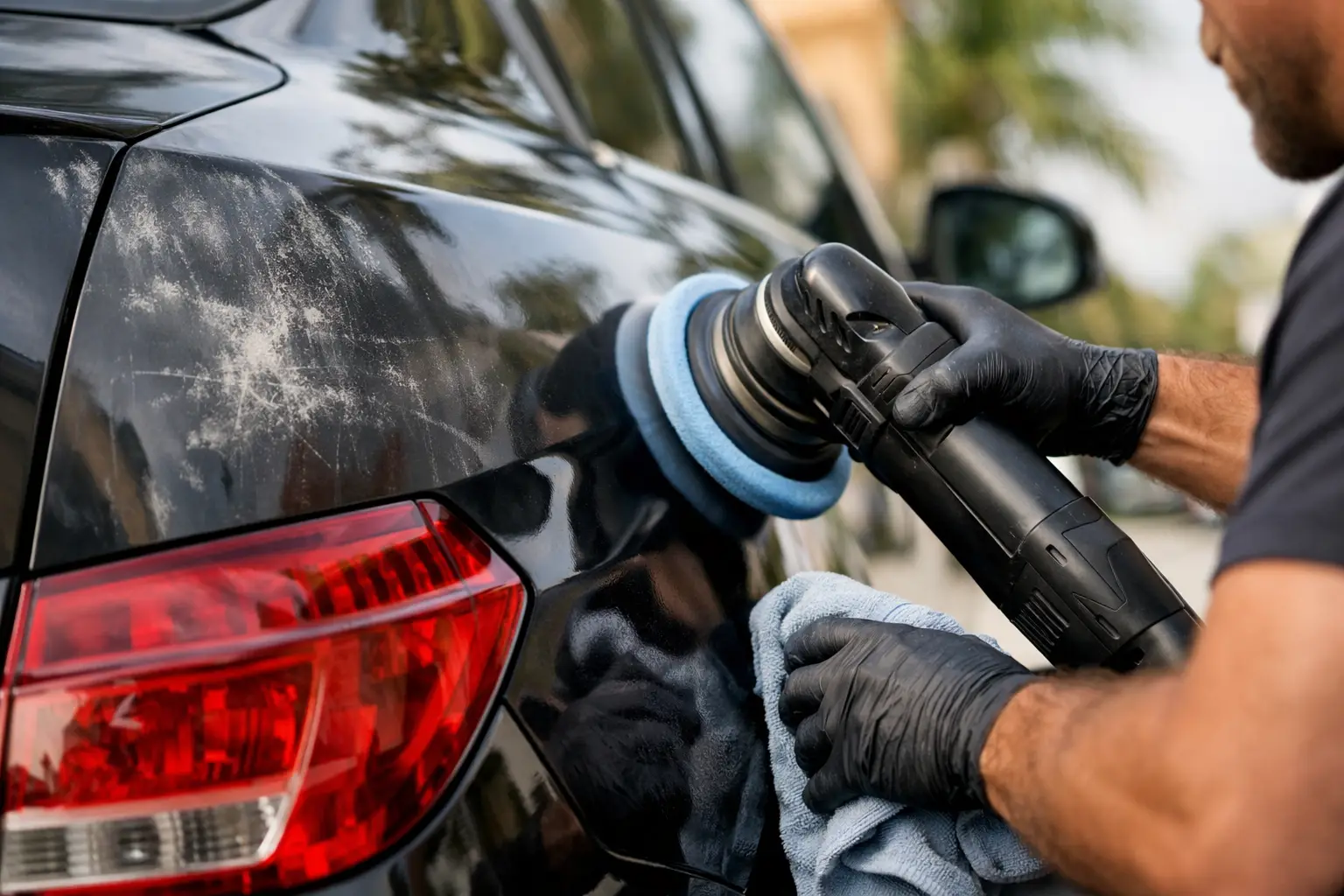
This is where many vehicle owners lose time and money. Once clear coat is peeling, it generally cannot be restored by polishing. Buffing may temporarily improve gloss in surrounding areas, but it will not reattach failed material. In fact, aggressive polishing can make damaged sections worse.
Spray-on consumer products are another common detour. They may look better for a short time from a distance, but they usually do not match the original finish or durability of a professional repair. If the damaged area was not sanded and prepared correctly, the new coating will not last.
It depends on the severity of the damage, but true clear coat repair usually means removing the failed material, correcting the surface, and refinishing the panel properly. If the base color is still stable, some repairs can stay more localized. If the color coat is compromised, a more complete repaint is often the better long-term result.
Clear coat repair Lakeland FL drivers should expect from a professional shop
A proper repair starts with inspection. The goal is to determine whether the issue is limited to the clear coat or whether the base coat and primer are affected too. That changes the scope of work.
In many cases, the damaged panel needs to be sanded down to remove all failing clear coat. The shop then feathers the edges, addresses any surface defects, and prepares the panel for refinishing. If the color layer remains sound, the repair may focus on rebuilding the finish over that area. If not, the panel may need base coat and clear coat application to restore color and protection together.
Color match also matters. Even when only one panel is being repaired, the finish has to blend correctly with surrounding panels. Metallic paints, pearl finishes, and older paint that has weathered in the sun can all make matching more technical. A repair that is structurally correct but visually off still leaves the vehicle looking unfinished.
A professional body and paint shop also looks at the full condition of the panel. If there are dents, scratches, collision-related issues, or prior repair problems, those should be addressed before the final paint work goes on. That is one advantage of working with a shop that handles both body repair and refinishing instead of splitting the job between vendors.
Spot repair vs. repainting the panel
Vehicle owners often ask whether a small peeling area can be touched up without repainting the whole panel. Sometimes the answer is yes, but often the better answer is no.
Spot repair can work when the damage is limited, the surrounding finish is stable, and the panel allows the repair to blend cleanly. It is usually more practical on smaller affected sections where the failure has not spread far.
Full panel refinishing is often the better option when peeling is widespread, the panel has oxidation across a large area, or the existing finish is inconsistent. It costs more than a quick spot fix, but it typically delivers a cleaner appearance and better durability. The trade-off is straightforward: a smaller repair may save money now, while a full refinish often produces a more uniform and lasting result.
What happens if you wait too long
Clear coat failure is not just a cosmetic annoyance. Once the protective layer is gone, the paint underneath is exposed to more sun, moisture, and contamination. That can lead to fading, staining, and deeper finish breakdown.
If the damage continues long enough, the repair may require more sanding, more material, and more labor than it would have earlier. In some cases, what could have been a targeted refinishing job turns into a complete panel repaint. If other damage is present, the scope can increase even more.
There is also the resale factor. Peeling paint gives buyers the impression that a vehicle has been neglected, even if the mechanical condition is solid. For many owners, fixing the finish is about preserving the vehicle’s overall condition and appearance, not just making it shiny again.
Choosing a shop for clear coat repair in Lakeland FL
Not every paint problem needs collision repair, but every clear coat repair needs proper paint knowledge. The right shop should be able to evaluate whether the issue is isolated finish failure, prior repaint failure, or part of a larger body and paint problem.
Ask practical questions. Is the damaged area being sanded and refinished correctly, or just covered? Will the color be matched to the rest of the vehicle? Is the repair limited to the visible peeling, or is the shop checking for surrounding weak clear coat that may fail next?
A local provider with experience in paint restoration and body repair is usually in the best position to give a realistic answer. At New Age Auto Painting, that matters because customers are often dealing with more than one issue at once - peeling clear coat, surface scratches, dents, or prior cosmetic damage on the same vehicle.
Getting the right result the first time
Good clear coat repair is about more than restoring shine. It is about removing failed material, protecting the paint system underneath, and leaving the panel with a finish that looks right and holds up. The cheapest shortcut is rarely the repair that lasts.
If your hood, roof, trunk, or other panels are starting to peel, early inspection gives you more options. A professional assessment can tell you whether the damage is still limited or whether full refinishing is the smarter route. For Lakeland drivers, acting sooner usually means a cleaner repair, better appearance, and less chance of larger paint failure later.