New Age Auto Painting Blog · April 16, 2026
Collision Repair Hourly Rate Explained
Learn what affects a collision repair hourly rate, how labor is calculated, and what Lakeland drivers should expect from a quality body shop quote.
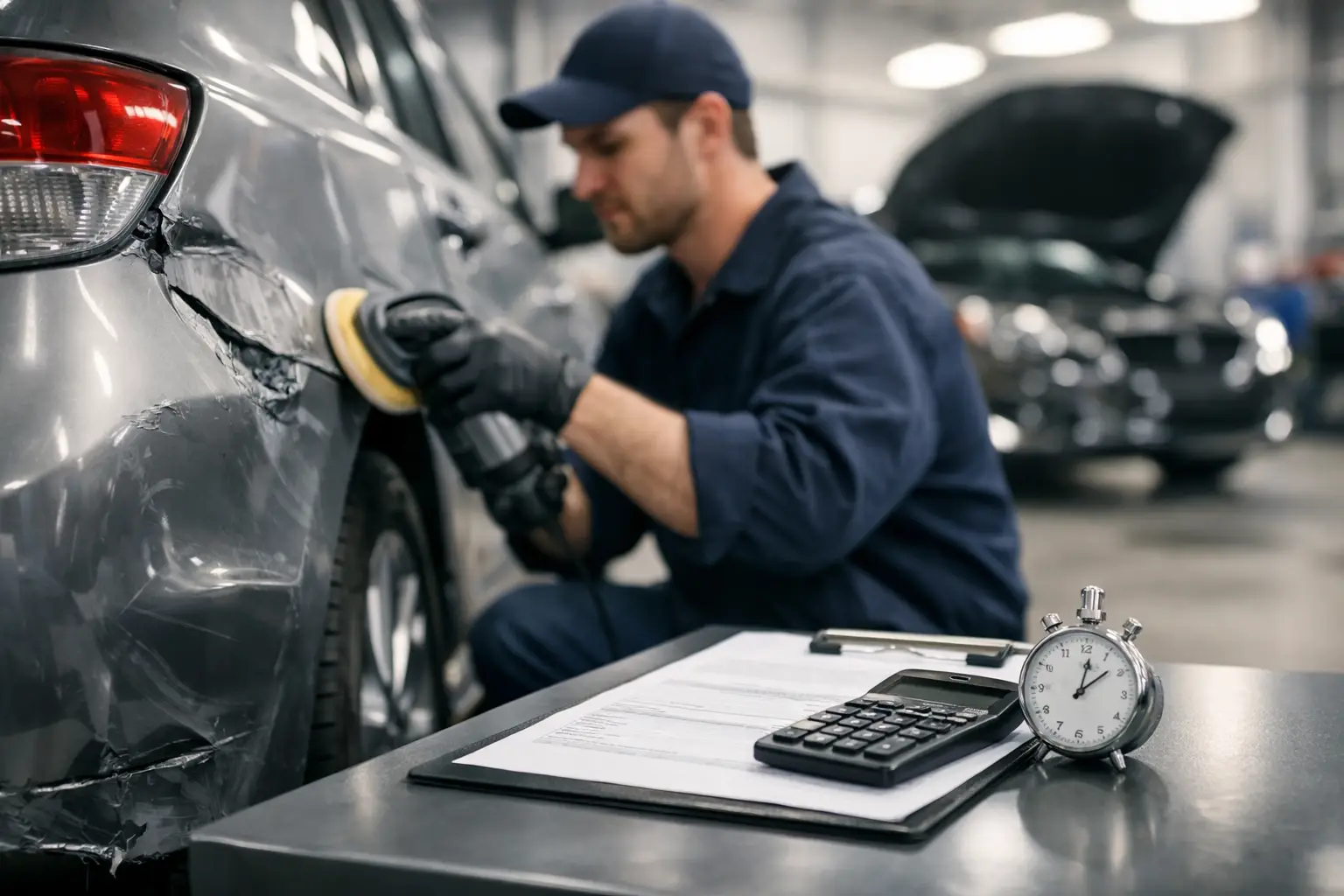
After an accident, one of the first numbers people notice on an estimate is the collision repair hourly rate. That line item can look simple, but it covers far more than a technician turning a wrench. In auto body repair, labor rates reflect skill, equipment, repair procedures, shop overhead, and the type of work your vehicle actually needs.
If you are comparing estimates in Lakeland, it helps to know what that rate does and does not tell you. A lower number is not always a better value, and a higher number is not automatically overcharging. The real question is whether the repair plan is accurate, complete, and built around returning the vehicle to proper condition.
What a collision repair hourly rate really means
A collision repair hourly rate is the labor charge a shop applies to specific repair operations. That can include body labor, frame or structural labor, paint labor, and in some cases mechanical labor related to accident damage. These categories are often billed at different rates because they involve different tools, training, and repair standards.
For example, fixing a dented fender is not priced the same way as pulling structural damage on a unibody frame machine. Paint work also has its own labor structure because prep, masking, refinishing, and color matching require separate materials and technician time. When customers look at a written estimate, they are usually seeing a combination of labor hours and labor rates, not one flat charge for the whole job.
That distinction matters because two estimates can show different hourly rates and still arrive at similar totals. One shop may bill fewer labor hours because of the way it writes the repair plan. Another may identify additional necessary steps that protect repair quality and finish appearance.
Why collision repair labor rates vary
There is no single national price for collision work. Labor rates vary by market, by shop capability, and by repair type. In a local market like Lakeland, rates can differ based on the level of equipment in the facility, the experience of the technicians, and the complexity of vehicles the shop repairs.
Shops that invest in modern measuring systems, welding equipment, paint booths, color-matching technology, and manufacturer repair information usually carry higher operating costs. Those costs are part of what supports safe and accurate repairs. A shop that can handle both body repair and refinishing in one place may also price labor differently than a facility that outsources part of the process.
Vehicle design also changes the equation. Newer vehicles often use advanced steels, aluminum components, sensors, and tighter repair procedures than older cars. Repairing those vehicles correctly can require more specialized labor, even if the visible damage does not seem severe at first glance.
What is included in the labor charge
Customers sometimes assume the hourly labor rate includes everything on the estimate. It does not. Labor is only one part of the total repair cost.
The labor charge generally covers technician time for approved repair operations. Separate charges may apply for paint materials, replacement parts, hazardous waste handling, sublet services, scans, calibrations, seam sealer, corrosion protection, or blend procedures needed to match adjacent panels. This is one reason a quick comparison based only on the posted rate can be misleading.
A shop with a modest labor rate may still produce a higher estimate if the vehicle needs more parts or refinishing steps. On the other hand, a shop with a higher hourly rate may deliver a more complete and better-documented repair plan from the start, which can reduce delays and supplements later.
Low rates can cost more in the long run
Price matters, especially after an accident, but labor rate alone is not the best way to judge a repair shop. Auto body repair is one of those services where shortcuts often show up later. Poor panel alignment, texture mismatch in the paint, weak weld quality, or missed hidden damage can create bigger problems than the original estimate difference.
A low collision repair hourly rate may reflect efficiency, but it can also reflect limited equipment, rushed repairs, or incomplete estimating. That does not mean every low-priced estimate is wrong. It means the details behind the estimate matter more than the headline number.
A quality shop should be able to explain what operations are included, what parts are being repaired or replaced, and whether the repair plan accounts for paint matching, structural checks, and final finish quality. If that explanation is vague, the rate itself becomes less meaningful.
Insurance and the collision repair hourly rate
Insurance adds another layer of confusion for many drivers. Customers often ask whether the insurance company sets the labor rate. In practice, insurers may reference prevailing market rates, but the repair still has to match the vehicle’s actual needs.
That is where tension can happen. A shop may determine that proper repairs require operations that are not fully reflected in an initial insurance estimate. Supplements are common in collision work because some damage is only visible after disassembly. This is not automatically a red flag. It is often part of writing an accurate final repair bill.
If you are using insurance, focus on whether the shop is documenting the repair correctly and communicating clearly about the process. The goal is not just to meet an insurer’s number. The goal is to restore the vehicle safely and professionally.
How to read an estimate without getting lost in the numbers
Most collision estimates look technical because they are. Still, a few basics make them easier to understand.
Start by looking at the labor categories. Body labor, paint labor, frame labor, and mechanical labor may each carry separate rates. Then look at the number of hours assigned to each operation. A panel repair, a panel replacement, and a refinish procedure are all different tasks with different labor values.
Next, check whether the estimate includes related refinishing steps. These may include feather, prime, and block work, masking, color application, clear coat, and blending adjacent panels for color match. If a damaged area is near another painted panel, blending is often necessary for a natural result, especially on metallic or pearl finishes.
Finally, ask about anything not yet included. Shops sometimes need teardown before they can confirm hidden structural issues, broken clips, sensor damage, or inner panel distortion. A professional estimate should leave room for that possibility instead of pretending everything is known upfront.
Questions worth asking before approving repairs
When you are comparing shops, ask practical questions tied to the repair itself. Ask whether the shop handles body and paint work in-house. Ask whether they can explain the labor categories on the estimate. Ask what happens if hidden damage is found after disassembly.
It also helps to ask how they approach color matching, whether structural repairs are measured, and whether post-repair inspections are part of the process. These are not small details. They directly affect how the vehicle looks, drives, and holds up after the job is done.
For Lakeland drivers, local experience matters too. Road use, heat, sun exposure, and daily driving demands all make finish quality and proper repair preparation important. A shop familiar with the area’s needs is often better positioned to deliver work that lasts and looks right.
Choosing value over a cheap estimate
The best estimate is not always the lowest and not always the highest. It is the one that makes sense for your vehicle, explains the work clearly, and reflects the real scope of damage. A fair collision repair hourly rate supports skilled labor, proper equipment, and enough time to complete the job correctly.
That is especially true when both body repair and paint restoration are involved. Appearance and structure go together. A vehicle should not only look repaired from ten feet away. The panels should fit correctly, the finish should match, and the repair should support long-term use.
At New Age Auto Painting, that practical standard is what many drivers are really looking for - not just a number on paper, but confidence that the repair will be handled the right way.
If you are reviewing estimates after an accident, take a few extra minutes to look past the hourly figure and into the repair plan itself. That is usually where the real value shows up.