New Age Auto Painting Blog · August 23, 2026
Dent Removal Versus Panel Replacement: Which Fits?
Dent removal versus panel replacement depends on damage depth, paint condition, and safety. See how Lakeland drivers can choose the right auto body repair.
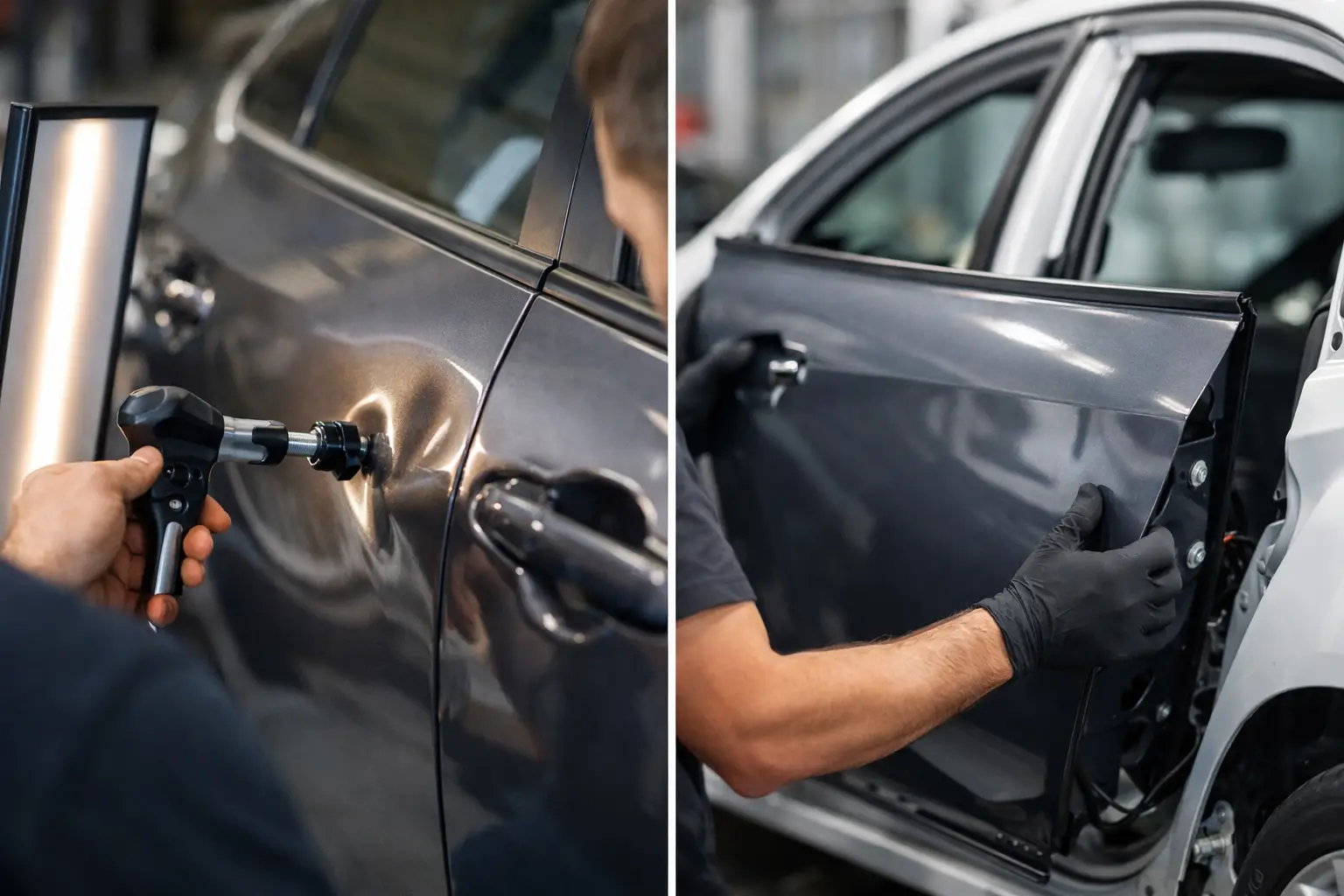
A parking-lot door ding and a crushed fender may both look like dents, but they do not call for the same repair. Dent removal versus panel replacement comes down to more than what is visible on the surface. The depth and location of the damage, the condition of the paint, the material involved, and the panel’s role in vehicle safety all affect the right decision.
For Lakeland drivers, the goal is usually straightforward: restore the vehicle’s appearance, protect its value, and make sure the repair holds up in Florida heat, rain, and daily driving. A qualified auto body shop evaluates the full extent of the damage before deciding whether a panel can be repaired or should be replaced.
When Dent Removal Is the Better Choice
Dent removal is often the right option when damage is localized and the panel still has its original shape and strength. Repairing the existing panel can preserve factory seams, maintain original fitment, and avoid the cost of replacing a part that is otherwise in good condition.
A body technician may use paintless dent repair for small, shallow dents when the paint has not cracked or stretched. This process carefully works the metal back into position from behind the panel when access allows. It is commonly suited to door dings, minor hail damage, and small dents caused by shopping carts or low-speed contact.
Not every repair can be completed without paintwork. When a dent has chipped paint, created a crease, or stretched the metal, conventional dent repair may be needed. The damaged area is reshaped, prepared, refinished, and color-matched to the surrounding panel. This is still a sound solution when the metal can be restored without compromising the panel.
Dent removal generally makes sense when the damage is small to moderate, away from structural reinforcement areas, and not heavily rusted. It can also be a good choice for owners who want to retain the original panel rather than install an aftermarket or recycled replacement part.
Benefits of Repairing the Existing Panel
The main advantage is that a successful repair addresses only the damaged area. There is no need to remove and replace a complete door, fender, quarter panel, or hood when that panel remains fundamentally sound.
Repair can also reduce the amount of disassembly required. Fewer removed parts may mean less risk of disturbing trim, weatherstripping, wiring, sensors, and factory fasteners. On many vehicles, preserving the original panel helps retain factory alignment and body gaps.
That said, dent removal is not automatically the least expensive or fastest option. A sharp crease in an awkward location can require significant skilled labor. If repair time becomes excessive or the finished result would be uncertain, panel replacement may be the more practical path.
When Panel Replacement Makes More Sense
Panel replacement is typically recommended when damage is severe, the panel is torn, the metal is badly stretched, or corrosion has weakened the material. It is also common after a collision that affects mounting points, reinforcement sections, door frames, or areas near safety systems.
A replacement panel gives the repair process a clean starting point when reshaping the original would take too much work or produce a compromised result. For example, a fender folded around a wheel, a door with a crushed edge, or a hood with major buckling may be safer and more cost-effective to replace than repair.
Replacement can also be necessary when rust has developed from beneath the paint or through the metal. Surface rust may sometimes be addressed during a repair, but perforated or widespread corrosion often means the panel no longer has the strength needed for a lasting fix. Covering rust with filler and paint does not stop the underlying problem.
Some panels deserve special caution because they contribute to crash protection. Doors, quarter panels, roof rails, pillars, and structural sections must be evaluated according to manufacturer repair procedures. A shop should not simply pull or fill damaged metal if doing so could affect occupant protection, panel strength, or the vehicle’s ability to absorb impact correctly.
Replacement Does Not Mean Paint Is Simple
Installing a new panel is only part of the job. The replacement must be correctly fitted, aligned, prepared, primed, painted, and blended as needed so it matches the rest of the vehicle. A new fender that does not align with the hood and door, or paint that does not match adjacent panels, will still leave the vehicle looking unfinished.
Modern paint colors can be difficult to match, especially metallics, pearls, tri-coats, and colors that have faded over time in the Florida sun. Professional refinishing involves color evaluation, proper surface preparation, and controlled application. Depending on the color and damage location, blending into adjacent panels may be required for a consistent appearance.
Dent Removal Versus Panel Replacement: What a Shop Checks
The initial estimate should not be based only on the first photo or a quick look at the dent. Damage behind the panel can change the repair plan. A thorough inspection considers the visible impact, the condition of the paint, access to the backside of the dent, and whether nearby components have shifted.
Technicians also look at the panel material. Steel, aluminum, plastic, and composite components require different repair methods. Aluminum panels, for instance, need specialized tools and procedures because the material reacts differently than conventional steel. Plastic bumper covers may be repairable when the damage is limited, but deep tears, broken tabs, or distortion near mounting areas can make replacement the better option.
The location matters just as much as the size. A modest dent in the center of a door skin may be repairable, while a similar dent on a body line, wheel opening, door edge, or structural seam may require more extensive work. Creases and sharp impact points are harder to restore because they stretch the material and disrupt the panel’s original contours.
For newer vehicles, sensors and cameras add another layer to the decision. Bumpers, mirrors, grilles, windshields, and body panels may support parking sensors, blind-spot monitoring, collision warning systems, or cameras. If parts are removed or replaced, calibration may be required to ensure those systems operate as intended.
Cost, Insurance, and Long-Term Value
Cost is a reasonable concern, but the cheapest estimate is not always the best value. An under-repaired panel can show waves in reflected light, develop cracking around filler, allow corrosion to return, or create poor fitment around adjacent parts. A proper repair should restore both appearance and durability.
Insurance coverage may influence the repair process after an accident. If you are filing a claim, the estimate may include repair or replacement based on the insurer’s guidelines, parts availability, and the documented damage. Even then, the repair should follow safe, appropriate procedures for the vehicle rather than forcing a repair simply because it appears less expensive on paper.
Ask the shop to explain why it recommends repair or replacement. A clear answer should address the panel condition, the expected finish, related damage, paint requirements, and any safety or calibration concerns. You should understand whether the panel can be restored to a proper standard, not just whether it can be made to look better temporarily.
Choosing the Right Repair for Your Vehicle
Small dents with intact paint often favor paintless dent repair. Dents with scratches, chipped paint, or minor deformation may call for conventional body repair and refinishing. Severe impact damage, torn metal, advanced rust, damaged mounting points, and compromised structural areas often point toward replacement.
There is no one-size-fits-all answer because two dents of similar size can have very different causes and repair needs. A professional inspection is the best way to avoid unnecessary replacement while also avoiding a repair that will not last.
New Age Auto Painting helps Lakeland-area vehicle owners assess collision damage, body damage, and paint concerns with the complete repair in mind. The right choice is the one that returns your vehicle to a clean, properly finished, road-ready condition without cutting corners on fit, appearance, or safety.