New Age Auto Painting Blog · May 7, 2026
Frame Damage Repair Lakeland FL: What to Know
Need frame damage repair Lakeland FL? Learn how shops inspect structural damage, what repairs involve, and when your vehicle is safe to drive again.
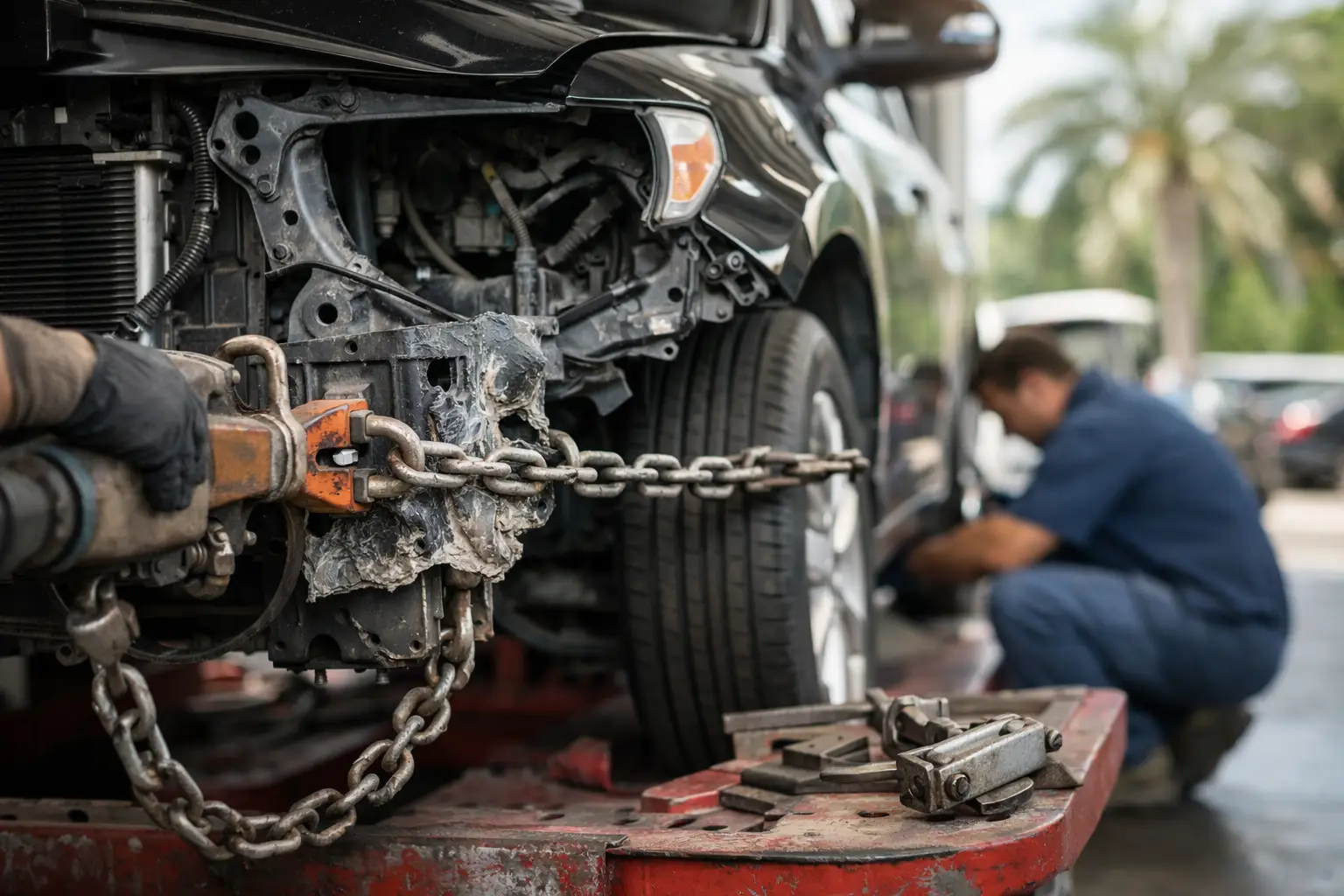
A car can look drivable after a collision and still have serious structural problems underneath. That is why frame damage repair Lakeland FL is not just about appearance. It is about restoring how your vehicle absorbs impact, tracks down the road, and protects you in another accident.
For many drivers, the first concern is visible damage - a bent fender, a misaligned hood, or a bumper hanging loose. But frame damage often shows up in less obvious ways. You might notice the steering wheel sits off-center, the vehicle pulls to one side, doors do not close like they used to, or tire wear suddenly becomes uneven. Those are warning signs that the structure may have shifted.
What frame damage means on a modern vehicle
When people hear the word frame, they often picture a heavy steel ladder frame on an older truck. Some vehicles still use that design, especially larger trucks and SUVs, but many passenger cars now use unibody construction. In a unibody vehicle, the structural frame and body are integrated. That means collision damage can affect the core structure even if the damage seems limited to one corner of the car.
In practical terms, frame damage can involve bent rails, twisted support sections, displaced crumple zones, or mounting points that no longer sit where they should. Even small changes in measurement matter. A few millimeters out of spec can affect suspension geometry, wheel alignment, panel fit, and impact performance.
That is why structural repair requires more than pulling parts into place by eye. Accurate measuring and controlled correction are the standard. Cosmetic fixes alone do not solve a structural problem.
Why frame damage repair in Lakeland FL needs a proper inspection
A quality inspection is the difference between guessing and knowing. After a collision, a repair shop should evaluate both visible damage and hidden structural movement. This usually starts with a visual assessment, but it should not stop there. Shops also need to measure the vehicle against manufacturer specifications to see where the structure has shifted.
A proper inspection may also reveal related damage to suspension parts, steering components, wheel assemblies, body mounts, and safety systems. If the frame or unibody is out of position, those connected systems can be affected too. That is one reason accident repair estimates sometimes change after teardown. Once damaged exterior parts are removed, the shop can see more of the structural impact.
For Lakeland drivers, this matters because daily commuting, highway driving, and Florida rain all put stress on a vehicle that needs to track straight and remain predictable. A vehicle that feels almost normal after a crash may still be unsafe if the structure has not been restored correctly.
How frame damage repair usually works
The repair process depends on the severity and location of the damage. In many cases, the vehicle is secured on specialized equipment that allows technicians to measure and correct the structure with precision. The goal is not to make it look straight. The goal is to bring structural points back within specification.
That may involve pulling and realigning frame rails, correcting apron damage, replacing structural sections, or repairing associated body components. On some vehicles, damaged sections can be repaired. On others, replacement is the better option. It depends on the manufacturer design, the extent of the damage, and whether the repair can meet structural standards.
After the structure is corrected, the shop still has to address the rest of the repair. That can include body panel repair, part replacement, refinishing, and final alignment work. For customers, this is one reason a shop that handles both structural repair and paint work under one roof can simplify the process. It reduces handoffs and helps keep the repair consistent from start to finish.
Signs your vehicle may need frame damage repair Lakeland FL
Not every impact causes frame damage, but certain symptoms should not be ignored. If the vehicle drifts or pulls after an accident, if the wheels no longer seem centered in the openings, or if body gaps suddenly look uneven, there is a good chance the structure needs attention.
Other common signs include doors, trunk lids, or hoods that do not latch properly, new vibrations at speed, a crooked steering wheel when driving straight, or obvious wrinkling in the metal inside the engine bay or trunk area. Sometimes drivers also notice that the car just does not feel right anymore. That instinct is worth taking seriously.
The challenge is that some structural damage is hidden. A bumper cover may absorb attention while the underlying reinforcement or adjacent structural area has moved. That is why post-accident inspections matter even when the vehicle still starts, steers, and drives.
Can frame damage be repaired correctly?
Yes, in many cases it can. The real question is whether the damage is repairable to proper standards and whether the repair makes economic sense compared with the vehicle’s value. Those are two different issues.
A skilled collision repair shop can often restore a damaged structure using manufacturer-guided procedures, precise measuring systems, and the right repair equipment. But there are limits. Severe damage, multiple impact points, or major compromise to critical structural sections may make a vehicle a poor candidate for repair. Insurance involvement also affects that decision, since the cost of repair may exceed the vehicle’s market value.
This is where experience matters. A shop should be direct about what can be repaired, what should be replaced, and what results you can reasonably expect. Not every structural hit is the same. A low-speed parking lot impact is one thing. A high-energy collision that affects the front rail, suspension mounting points, and adjacent body structure is another.
What Lakeland drivers should ask a repair shop
If you are comparing shops, focus on how they handle structural diagnosis and repair, not just how fast they can write an estimate. Ask whether the shop performs structural measuring, whether they inspect for hidden damage after disassembly, and whether alignment and refinishing are part of the overall repair plan.
You should also ask how the shop handles paint matching after structural and body repairs are complete. That may sound secondary, but it matters. Once the vehicle is structurally sound, it should also leave the shop looking properly restored, not patched together. For many vehicle owners, especially those planning to keep the car long term, appearance and structural quality both matter.
This full-process approach is where a local body shop with collision and paint expertise can be especially helpful. New Age Auto Painting serves Lakeland drivers who need both repair accuracy and a clean finished result, which is often exactly what accident-damaged vehicles require.
Repair time, cost, and what affects both
There is no flat answer for how long frame repair takes. Minor structural correction may move relatively quickly, while more extensive collision repair can take longer because of teardown, measuring, parts availability, supplemental damage, body work, refinishing, and final quality checks.
Cost works the same way. A vehicle with slight structural movement and limited body damage is a different job than one with suspension issues, multiple damaged panels, and refinishing across several areas. Insurance can help in covered claims, but even then, the final scope may change after hidden damage is discovered.
The best approach is clear communication. A good shop should explain what is confirmed, what may change after teardown, and what steps are required before the vehicle is ready for delivery.
Why proper frame repair matters long after the accident
Structural repair affects more than the immediate drive home. It can influence tire wear, steering behavior, road noise, panel fit, and overall confidence behind the wheel. It can also affect resale value if the vehicle shows signs of poor-quality repair.
More importantly, the structure of your vehicle is part of its safety design. Crumple zones, impact paths, and mounting points all work together in a future collision. If those areas are not restored properly, the vehicle may not respond as intended in another crash.
That is why the cheapest estimate is not always the best value. When structural integrity is involved, accuracy matters more than shortcuts. A proper repair supports safety, drivability, and the finished appearance of the vehicle.
If your car has been in a collision and something feels off, trust that signal and have it inspected. The right repair does more than straighten metal. It helps return your vehicle to the road with the fit, function, and confidence you expect every time you drive through Lakeland.