New Age Auto Painting Blog · June 14, 2026
Frame Straightening Services Explained
Learn how frame straightening services restore vehicle safety, alignment, and drivability after collision damage for Lakeland area drivers.
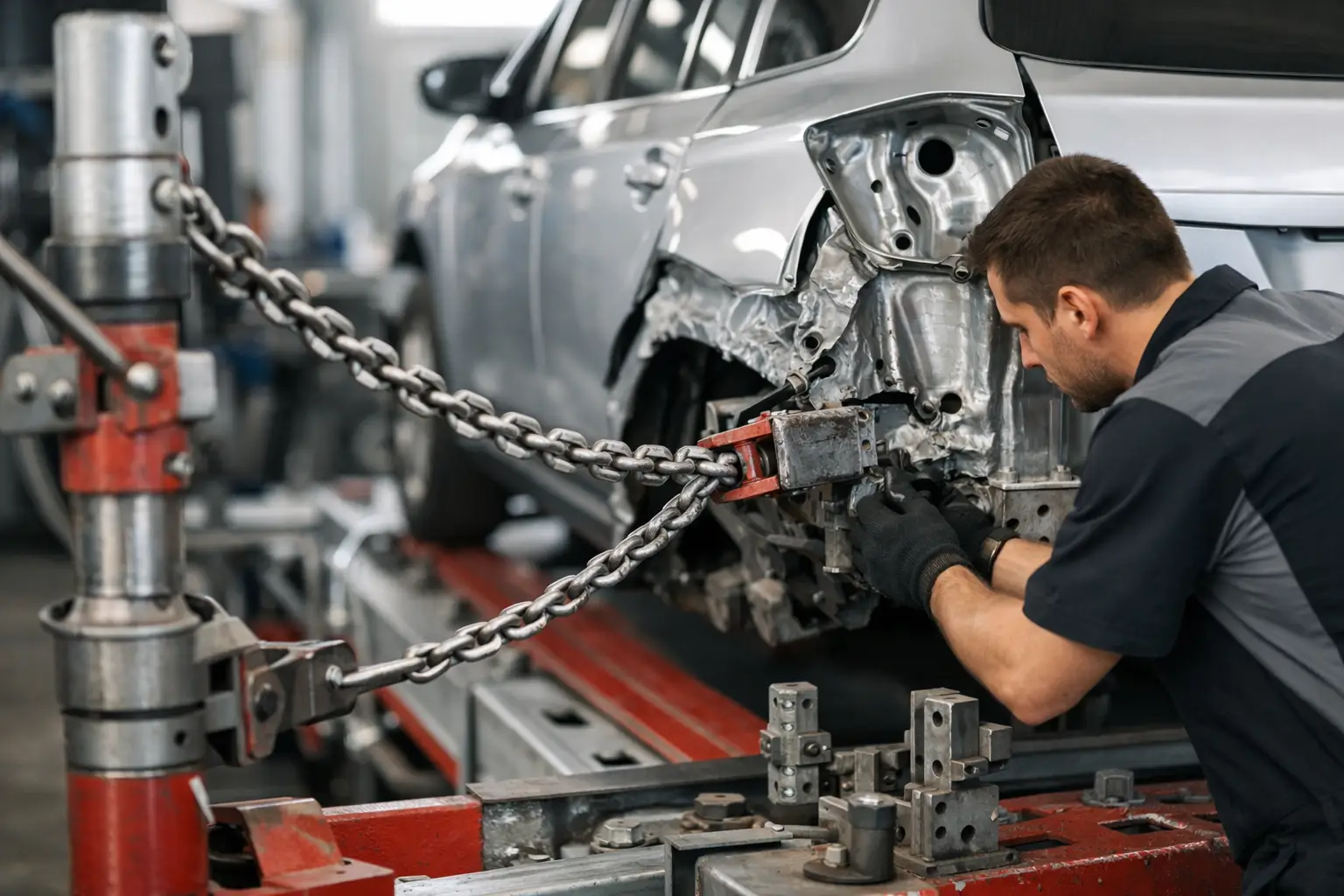
A car can look fine after a crash and still have structural damage underneath. That is why frame straightening services matter. If the frame or unibody is out of alignment, the vehicle may not drive correctly, protect occupants as designed, or hold proper wheel alignment even after visible body damage is repaired.
For drivers in Lakeland, this is usually not a cosmetic issue. It is a repair decision that affects safety, tire wear, steering feel, and the long-term value of the vehicle. When a collision impacts the front, side, or rear of a car, the force can travel through the structure in ways that are not obvious from the outside.
What frame straightening services actually fix
Frame straightening services are used to restore a vehicle’s structural dimensions after collision damage. On older body-on-frame vehicles, that may mean correcting damage to the actual frame rails. On most modern passenger vehicles, it often involves unibody repair, where the structural sections of the body are measured and pulled back toward factory specifications.
This work is not the same as dent repair or panel replacement. A bumper cover, fender, or door can be repaired or replaced, but if the underlying structure is shifted, the vehicle still has a deeper problem. Structural misalignment can affect suspension geometry, panel fit, steering response, and how the vehicle absorbs impact in a future collision.
In practical terms, straightening is about accuracy. A repair shop uses measuring systems and specialized equipment to identify where the structure is out of position. From there, controlled pulling and adjustment are used to bring damaged sections back into proper alignment.
Signs your vehicle may need frame straightening services
Some vehicles show obvious structural damage right away. Others do not. After an accident, even a moderate one, certain warning signs can point to a frame or unibody issue.
If the car pulls to one side, the steering wheel sits off-center, or the vehicle does not track straight, that may indicate more than a simple alignment problem. Uneven gaps around the hood, trunk, or doors can also suggest the structure has shifted. In some cases, doors may not close properly, the trunk may latch unevenly, or you may notice unusual tire wear after the repairable body damage is addressed.
There is also the issue of hidden damage. A low-speed impact can still transfer force into the structure, especially in modern vehicles built with crumple zones and engineered deformation points. That is why a visual inspection alone is not enough when collision damage is involved.
How the repair process works
A proper structural repair starts with inspection and measurement. The shop checks the vehicle against factory reference points to determine whether the structure is out of spec and by how much. This step matters because guessing is not enough when dealing with frame geometry.
Once the damage is mapped, the vehicle is secured on specialized equipment designed for structural correction. Controlled pulls are then applied to damaged areas. The goal is not to force metal into place by feel. The goal is to move the structure precisely and verify measurements as the repair progresses.
In many cases, frame straightening is only one part of the overall collision repair process. The vehicle may also need suspension repair, panel replacement, bodywork, and refinishing. That is one reason many owners prefer a shop that handles both structural repair and paint work. It reduces delays and helps keep the repair process more coordinated from start to finish.
Why precision matters more than speed
When customers hear that a car frame can be straightened, they sometimes assume the process is simple. It is not. Structural repair is one of the most technical parts of collision work because small measurement errors can create ongoing problems.
If the structure is still slightly off, the vehicle may continue to show symptoms even after the obvious damage is repaired. You might get recurring alignment issues, poor handling, vibration, or inconsistent panel fit. In more serious cases, improper structural repair can affect how the vehicle responds in another accident.
That does not mean every damaged vehicle is beyond repair. Many can be restored successfully. But the quality of the result depends on proper measurement, equipment, repair planning, and follow-through. Fast work is helpful only when it is also accurate.
Frame damage vs. cosmetic damage
This distinction matters because many drivers understandably focus first on what they can see. Scraped paint, dented fenders, and broken lights are obvious. Structural damage is different because it affects the foundation beneath those visible parts.
Cosmetic damage changes appearance. Structural damage changes how the vehicle is built, supported, and aligned. A shop can repaint a panel and make it look good, but if the underlying frame or unibody is not corrected, the car may still be unsafe or difficult to drive correctly.
The two often go together after a collision. That is why complete repair planning matters. Appearance restoration and structural repair should not be treated as separate concerns when both are part of the same damage event.
When a vehicle can be straightened and when it depends
Not every damaged vehicle should be repaired the same way. In many cases, frame straightening services are the right solution and can restore the structure to proper specifications. In other cases, the severity of damage, the age of the vehicle, the cost of repair, or insurance considerations may change the recommendation.
This is where honest assessment matters. Some structural damage is repairable with excellent results. Some damage is more extensive and may involve sectioning, replacement of structural components, or a broader conversation about repair value. The answer depends on how far the damage extends and whether the vehicle can be restored safely and correctly.
That is why inspection is so important after an accident. The right decision comes from measurement and repair planning, not from appearance alone.
Choosing a shop for frame straightening services in Lakeland
If you are comparing repair shops, ask whether they handle structural collision repair as part of a complete process. A quality repair is not only about straightening. It is also about checking related systems, restoring body fit, and finishing the vehicle properly once structural work is complete.
For Lakeland drivers, convenience matters too. If your vehicle needs body repair, paint refinishing, and structural correction, working with one local shop can simplify the process. It also helps reduce the handoff issues that can happen when one facility performs structural work and another handles the visible restoration.
A service-focused shop should be able to explain what was damaged, how it will be measured, and what additional repairs may be needed after the structure is corrected. Clear communication is part of good repair work. Customers should understand whether the issue is cosmetic, structural, or both.
At New Age Auto Painting, that full-picture approach matters because many collision repairs do not stop at one damaged part. Structural alignment, body repair, and paint refinishing often need to work together to return the vehicle to a clean, road-ready condition.
What to do after an accident
If you suspect structural damage, do not wait for symptoms to get worse. A vehicle that seems drivable may still have alignment and safety issues underneath. The best next step is to have it inspected by a collision repair shop that can evaluate the structure, not just the outer panels.
Take note of how the car feels on the road. If it pulls, vibrates, wanders, or shows uneven gaps around doors or panels, mention that during the estimate. Those details can help identify damage that is not obvious at first glance.
It is also smart to address structural repairs before focusing on appearance alone. Paint and bodywork are important, but the vehicle should be structurally sound first. Once the foundation is corrected, the rest of the repair can be completed with better fit, finish, and overall results.
A straight-looking car is not always a straight vehicle. The value of professional frame straightening services is that they address the part of collision damage you cannot afford to ignore, helping you get back on the road with more confidence in how your vehicle looks, drives, and holds up over time.