New Age Auto Painting Blog · May 13, 2026
A Practical Guide to Auto Paint Matching
A practical guide to auto paint matching for Lakeland drivers. Learn how color codes, fading, blending, and repair quality affect the final finish.
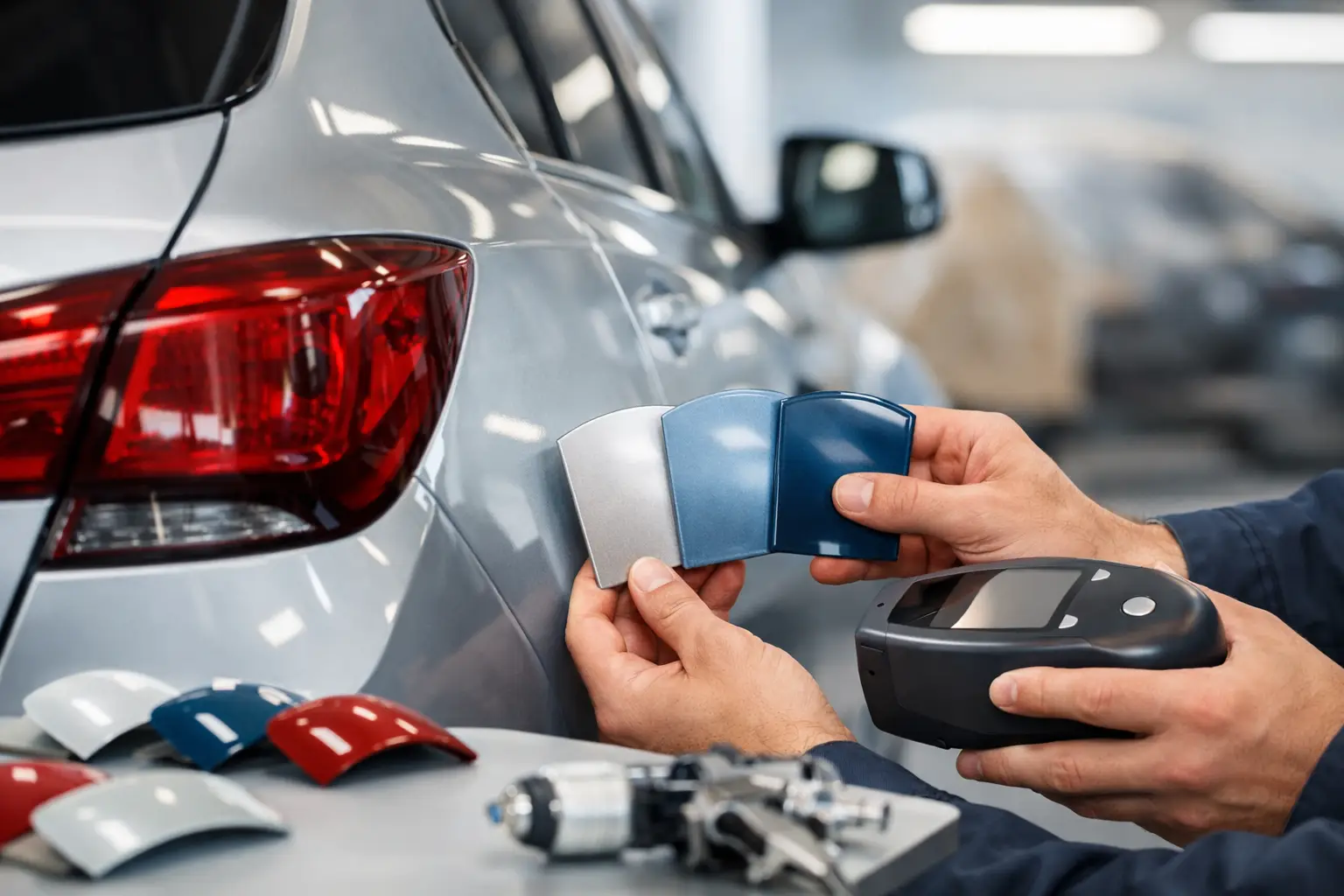
If your bumper, fender, or door needs paint work, getting the color close is not enough. A good guide to auto paint matching starts with one fact: the paint on your vehicle today is usually not the exact same shade it had when it left the factory. Sun exposure, weather, age, and prior repairs can all change how a panel looks. That is why professional paint matching is about more than finding a factory code and spraying new color.
For drivers in Lakeland, this matters even more. Florida sun is hard on automotive finishes. Red, black, blue, and other darker colors often show fading faster, while metallic and pearl finishes can shift in appearance depending on light and viewing angle. When a repair is done correctly, the new paint should look natural on the vehicle, not like one freshly painted panel sitting next to older ones.
Why auto paint matching is more complicated than it sounds
Many vehicle owners assume every car has one exact paint formula and that using the code solves the problem. The code is the starting point, not the finish line. Manufacturers often have multiple variants of the same paint code. Two vehicles with the same factory color can still look slightly different because of production differences, aging, oxidation, and how the paint was originally applied.
Then there is the finish itself. Solid colors are usually easier to match than metallics, pearls, and tri-coats. Metallic paint contains tiny flakes that reflect light. If those flakes do not lay the same way during application, the color can look lighter, darker, or uneven from different angles. Pearl finishes add another layer of complexity because they shift tone under sunlight and artificial light.
This is why a paint match that looks acceptable in the shop can look off in a parking lot. A proper match has to hold up under real-world lighting, not just under one set of bulbs.
The basics in any guide to auto paint matching
The first step is identifying the original paint information. Most vehicles have a manufacturer paint code located on a sticker or plate, often inside the driver-side door jamb, under the hood, or in the glove box area. That code helps narrow the formula, but it does not account for fading or color shift over time.
From there, a professional shop compares the vehicle’s current finish, not just the original specification. This may involve test panels, color chips, and digital color-matching tools. On newer vehicles, technology helps speed up the process. On older vehicles or sun-faded finishes, technician experience matters just as much as the equipment.
The goal is not simply to reproduce factory paint in theory. The goal is to make the repaired area visually disappear into the rest of the vehicle.
What a professional paint match usually involves
A quality repair begins with surface preparation. If the panel is not straight, smooth, and properly primed, even a correct color formula can look wrong. Paint reflects light based on the surface under it, so bodywork and prep directly affect the final appearance.
Next comes color mixing and spray-out testing. A technician may mix the formula, spray a sample card, and compare it to the vehicle in different lighting conditions. If the sample is too warm, too cool, too light, or too dark, small adjustments are made before the actual repair is painted.
Application technique matters too. Spray pressure, gun distance, overlap, and drying conditions all influence how a color settles. This is especially true with metallic and pearl paints. The same formula can produce different visual results depending on how it is sprayed.
Finally, many repairs require blending. Instead of painting only the damaged panel, the shop may extend color slightly into adjacent panels so the transition is invisible. Blending is often the difference between a repair that looks obvious and one that looks factory-finished.
Why blending is often necessary
Customers sometimes ask why a shop cannot just paint the one damaged area and stop there. In some cases, that works. In many cases, it does not. Even with accurate color matching, a fresh coat of paint can stand out against older surrounding panels.
Blending softens the difference. For example, if a front fender is repaired, the color may be blended into the front door or hood edge so the eye does not catch a hard shift between old and new paint. This adds labor and materials, but it often produces a better result.
There is a trade-off here. Spot painting one panel may cost less upfront, but it can leave a visible mismatch. A more complete refinishing approach may cost more, yet it usually delivers a cleaner and more consistent finish.
Common reasons paint matching goes wrong
Poor paint matching usually comes down to one of a few issues. The wrong variant may be selected from the manufacturer code. The existing paint may be faded beyond what the formula accounts for. The panel may not be prepped correctly. Or the application technique may not suit the specific color and finish.
Another common problem is rushing the repair. Paint work rewards process control. Shortcuts in sanding, masking, mixing, flash times, or clear coat application can show up later as visible color difference, texture variation, or gloss inconsistency.
Low-cost repairs also tend to skip the steps that matter most. A quick repaint might cover damage, but if the color is off by even a small amount, the repair will still draw attention every time you walk up to the car.
What Lakeland drivers should know about sun fade and paint condition
In Central Florida, UV exposure changes paint over time. Vehicles parked outdoors every day can develop oxidation, dullness, and uneven fading across different panels. Horizontal surfaces like hoods, roofs, and trunk lids usually fade faster than vertical ones.
That means matching a newer replacement panel to an older vehicle can be tricky, even if the vehicle was originally a standard factory color. A shop has to account for the vehicle as it sits today. On some cars, restoring one damaged area can also reveal how much the surrounding paint has worn down.
If your vehicle has clear coat failure, peeling, or widespread oxidation, a single-panel repair may not deliver the appearance you want. In that situation, a broader refinish plan may make more sense than trying to match one severely aged section.
How to choose a shop for paint matching work
If you need collision repair or cosmetic refinishing, ask how the shop handles color matching, spray-out testing, and blending. You want a shop that treats paint as part of the repair process, not an afterthought. Body work and paint need to work together for the final result to look right.
It also helps to ask whether the shop regularly works on your type of finish. White solid paint is one thing. A three-stage pearl white or metallic gray is another. Experience with difficult colors can save time and frustration.
For local drivers, convenience matters too. A full-service body and paint shop can manage the repair from structural correction through refinishing without sending your vehicle between vendors. That usually leads to better coordination and a more consistent finish. Shops like New Age Auto Painting focus on that complete repair process for drivers in the Lakeland area.
When a perfect match may not be realistic
Most professional repairs can get extremely close, often to the point that the average person will not notice the work. But there are cases where "perfect" depends on the condition of the vehicle. Older paint, prior non-factory repairs, aftermarket panels, and severe weathering can limit how invisible a repair can be without refinishing more of the vehicle.
That is why clear communication matters. A good shop should explain what can be matched, where blending may be needed, and whether the surrounding paint condition affects the outcome. Honest expectations are part of a quality repair.
If you are comparing estimates, remember that paint matching is not just a line item. It is a process that affects how your vehicle looks long after the repair is complete. The right approach saves you from paying for a repair that still looks like damage from across the parking lot.
If your vehicle needs paint work, focus on the result you will see every day: consistent color, even gloss, and a finish that fits the rest of the car instead of standing apart from it.