New Age Auto Painting Blog · June 28, 2026
A Practical Guide to Car Bumper Repair
A practical guide to car bumper repair for Lakeland drivers. Learn when damage is cosmetic, when repair makes sense, and when replacement is smarter.
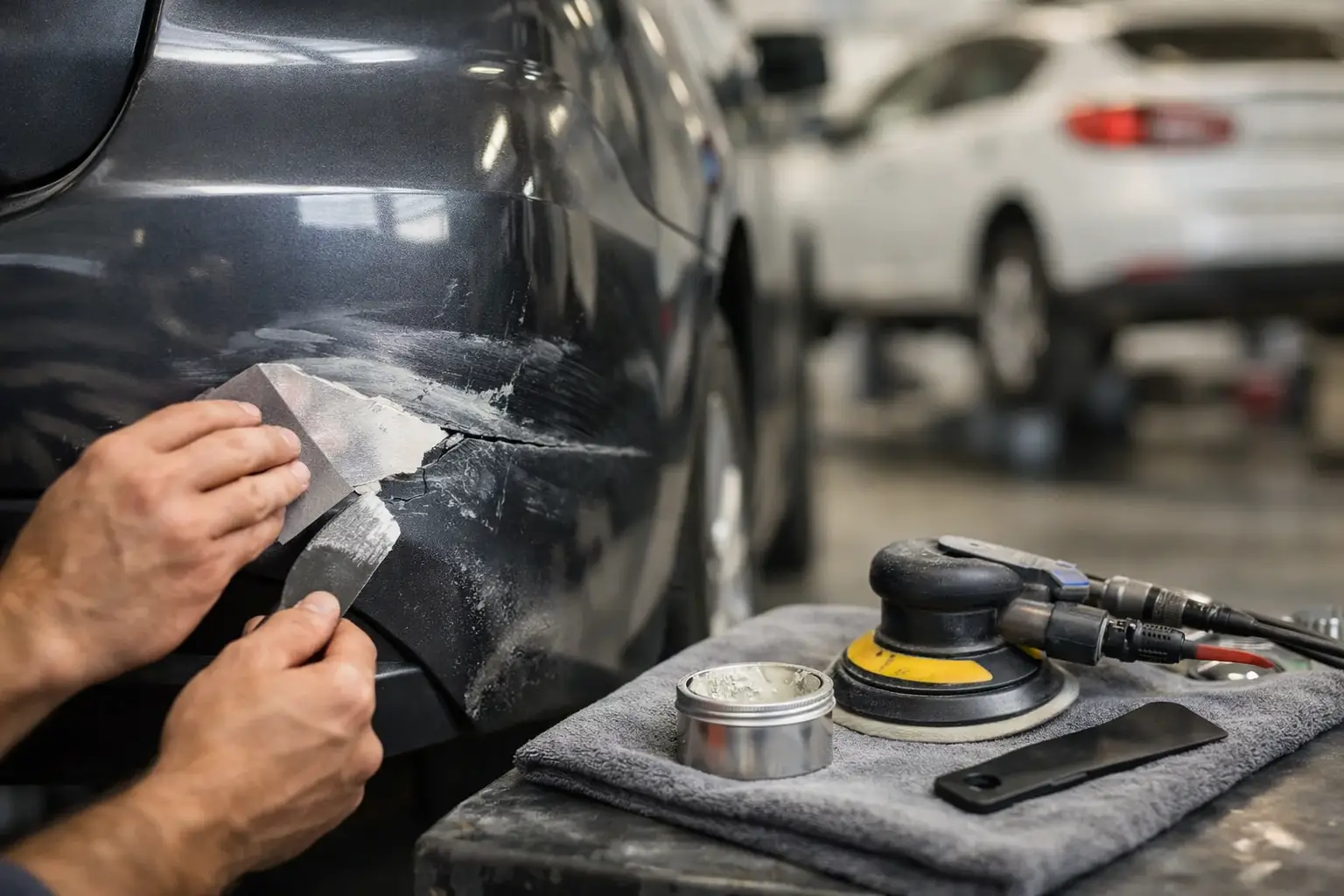
A parking lot scrape can leave your vehicle looking worse than the impact felt. That is usually when people start searching for a guide to car bumper repair - not because they want theory, but because they want to know what can be fixed, what it will take, and whether the bumper is still doing its job.
Bumper damage is easy to underestimate. A scuff across the paint may be mostly cosmetic, while a crack, puncture, or shifted bumper cover can point to deeper problems underneath. On newer vehicles, bumpers also work around sensors, brackets, absorbers, and mounting points. That means the right repair depends on more than what you can see from a few feet away.
Guide to car bumper repair: what damage actually means
Most modern vehicles use a plastic bumper cover over a structure designed to absorb and manage impact. When the cover gets scraped, dented, or cracked, the damage can range from minor surface repair to full replacement.
Scuffs and paint transfer are usually the simplest issues. In many cases, the plastic itself is still intact, and the repair centers on surface prep, refinishing, and color matching. Small dents or slight distortion in plastic can sometimes be corrected if the material has not torn or become too stretched.
Cracks are different. A short crack in a repairable area may be fixable with plastic repair methods, sanding, filler work, and refinishing. But long cracks, split edges, torn tabs, or damage near mounting points often make replacement the better option. If the bumper no longer fits tightly against the vehicle, that is another sign the problem may go beyond the visible outer cover.
A low-speed impact can also damage reinforcements, absorbers, clips, and brackets behind the bumper. If those parts are bent or broken, repairing the surface alone will not restore proper fit or protection.
When bumper repair makes sense
Repair is often the right choice when the damage is localized and the bumper can still be restored to proper shape and alignment. That usually includes light scrapes, surface gouges, minor dents, and some cracks in areas that have enough material to hold a lasting repair.
The advantage of repair is straightforward. It can preserve the original part, reduce parts cost, and shorten the process when replacement is not necessary. For cosmetic damage, professional prep and paint work can make a repaired bumper blend cleanly with the rest of the vehicle.
Still, repair is not always the cheapest choice in every case. If a bumper has multiple damaged areas, broken tabs, distorted shape, and paint damage across a large section, labor can add up quickly. At that point, replacement may be more efficient and produce a better long-term result.
When replacement is the better option
Replacement is usually the smarter route when the bumper cover is badly cracked, torn, or missing sections. The same goes for heavy deformation, poor fit after impact, or broken mounting points that affect how securely the bumper attaches to the vehicle.
Replacement is also common when damage affects structural components behind the cover. A bumper system is not just there for appearance. If the reinforcement bar, absorber, or support hardware is compromised, restoring the vehicle correctly matters more than saving the outer panel.
There is also a finish consideration. Some damage can technically be repaired, but not always in a way that makes sense for a customer who wants clean appearance restoration. If the repair area is extensive or the bumper has previous poor-quality work, replacing and refinishing the part may provide a more consistent result.
The repair process at a professional shop
A proper bumper repair starts with inspection, not sanding. The first step is checking the visible damage, the fit of the bumper, and the condition of the surrounding panels, lights, liners, and hardware. If the bumper has shifted, the technician needs to determine whether the cover, bracket, or inner structure caused that movement.
Once the damage is assessed, the bumper may be removed for a better look at what is happening behind it. That matters because hidden damage is common even in low-speed hits. If repair is appropriate, the damaged section is cleaned, reshaped if possible, repaired with the right plastic repair methods, sanded smooth, and prepared for primer and paint.
Paint work is a major part of the final result. Bumper covers are plastic, and refinishing them correctly takes the right prep, materials, and color application. A mismatch in color or texture is one of the fastest ways to spot poor repair work. Professional refinishing is what makes the bumper look like it belongs on the vehicle again, not like a recently patched panel.
For Lakeland drivers, that process matters even more under Florida sun. Paint quality, material compatibility, and finish consistency all affect how the repair holds up over time.
What a guide to car bumper repair should tell you about DIY work
Some bumper damage looks simple enough to fix at home. If the issue is light paint transfer or very minor scuffing, limited cosmetic improvement may be possible with the right products and realistic expectations.
But most actual bumper repair is less forgiving than it appears. Plastic surfaces need proper cleaning, repair materials need to match the substrate, and paint prep has to be exact. If a crack is repaired poorly, it can reopen. If the bumper is reshaped incorrectly, the fit may remain uneven. If the paint is off, the repair will stand out every time you walk up to the vehicle.
There is also the question of hidden damage. DIY work tends to focus on the visible surface. A shop inspects the brackets, retainers, reinforcement areas, and alignment. That is especially important after any impact stronger than a simple scrape.
For drivers who depend on their vehicle every day, professional repair usually saves time, reduces rework, and produces a more durable result.
How to tell if your bumper has hidden damage
A bumper can look only mildly damaged and still have issues underneath. Warning signs include loose edges, uneven gaps near the fenders or trunk, rattling, trouble with parking sensors, or a bumper cover that appears pushed in on one side.
You may also notice that clips no longer hold properly or that the bumper pops out of place after being pressed back in. Those are not just cosmetic annoyances. They often point to broken tabs, damaged retainers, or bent support components.
If the impact involved another vehicle, a post, a curb, or anything more than a surface scrape, it is worth having the bumper inspected. The goal is not just making it look better. It is making sure the damaged area is repaired the right way.
Cost depends on damage, materials, and finish
Customers often want one simple price for bumper repair, but the range can be wide. A light scuff repair with refinishing is very different from a cracked bumper that needs removal, plastic repair, full paint work, and hardware replacement.
Vehicle make and model also matter. Some bumpers are easier to remove and refinish than others. Sensor openings, trim pieces, textured finishes, and advanced driver-assistance features can affect labor and parts requirements. The more integrated the bumper system is, the more important proper repair becomes.
That is why estimates should be based on inspection rather than guesswork from a photo alone. Pictures help, but they do not always reveal alignment issues or hidden broken components.
Choosing the right shop for bumper repair in Lakeland
If you need bumper repair, look for a shop that handles both body repair and paint work. That combination matters because bumper repair is rarely just one or the other. The surface has to be restored, the part has to fit correctly, and the finish has to match.
Ask whether the shop evaluates underlying damage, not just the outer cover. Ask how they approach paint matching and whether they repair or replace based on what makes sense for the condition of the bumper. A good shop should be able to explain the trade-offs clearly.
For local drivers, working with a Lakeland collision and auto body shop offers another advantage. It is easier to get a direct assessment, ask questions, and move from damage inspection to refinishing without juggling multiple providers. That is part of why shops like New Age Auto Painting focus on both repair and appearance restoration under one roof.
A damaged bumper can make your vehicle look neglected, but the bigger issue is whether the part still fits, protects, and finishes the way it should. The best next step is simple - get the damage looked at before a small problem turns into a larger repair.