New Age Auto Painting Blog · August 9, 2026
How Long Does Collision Repair Take in Lakeland?
Wondering how long does collision repair take? Learn what affects auto body repair timelines in Lakeland, from estimates and parts to paint curing locally.
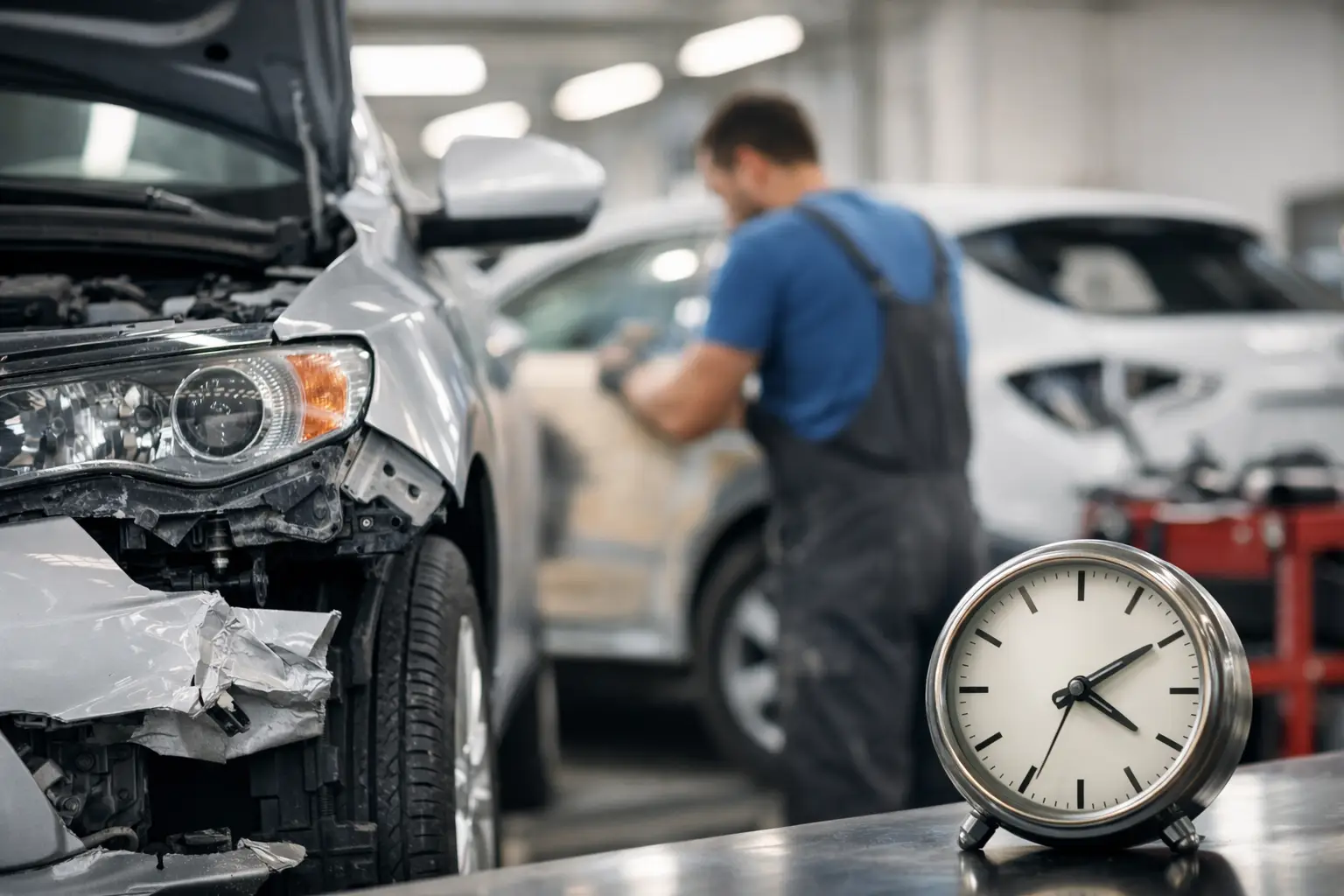
A damaged bumper can sometimes be repaired in a few days. A collision that affects a quarter panel, suspension, frame rail, or multiple safety systems can keep a vehicle in the shop for several weeks. If you are asking, how long does collision repair take, the honest answer is that the repair plan matters far more than the visible damage alone.
For Lakeland drivers, the most useful expectation is this: minor cosmetic repairs often take two to five business days, moderate collision repairs commonly take one to three weeks, and major structural repairs may take three weeks or longer. A professional estimate and a complete teardown are the best ways to narrow that range for your specific vehicle.
How Long Does Collision Repair Take After an Estimate?
The estimate is the starting point, not always the final repair plan. During an initial inspection, a technician can identify obvious damage to panels, paint, lights, bumpers, and trim. However, hidden damage may not be visible until the vehicle is disassembled.
A typical collision repair timeline includes damage assessment, insurance approval when applicable, parts ordering, body and structural repair, paint preparation and refinishing, reassembly, quality checks, and final delivery. Some of these steps can overlap, but others must happen in order. Paint, for example, cannot be completed correctly until bodywork is finished and panels are properly aligned.
For a straightforward repair with available parts and no insurance delays, work may begin shortly after the estimate is approved. If the repair requires a supplemental estimate because additional damage is found, the schedule can change while the new damage is documented and approved.
Typical Auto Body Repair Timelines
Every vehicle and accident is different, but these timeframes help set reasonable expectations.
Minor dents, scratches, and bumper damage
Small dents, paint scuffs, bumper scrapes, and isolated panel damage may take two to five business days. The vehicle may need sanding, minor filler work, primer, color application, clear coat, curing, and polishing. Even a small paint repair requires careful preparation to create a finish that looks consistent with the rest of the vehicle.
A bumper replacement can be quick when the part is in stock and arrives ready for paint. If the bumper needs sensors, trim, grilles, or camera components transferred and calibrated, it may require more time.
Moderate collision damage
Damage involving one or more panels, a door, fender, hood, trunk lid, or quarter panel often takes one to three weeks. This range accounts for parts delivery, panel repair or replacement, paint blending, and reassembly.
Paint blending is often necessary when a repaired panel sits next to an undamaged panel. Rather than painting only the damaged area and risking a visible color difference, the refinishing process may extend color into adjacent panels for a more uniform appearance. This adds labor, but it protects the quality of the finished repair.
Major structural or multi-area damage
A serious front-end, rear-end, or side-impact collision can take three weeks or longer. Structural repairs may involve measuring the vehicle, pulling or replacing damaged sections, repairing multiple body panels, and addressing mechanical or safety-related components.
Modern vehicles also contain sensors, cameras, radar units, airbag components, and advanced driver-assistance features. These systems may need inspection, replacement, aiming, or calibration after a collision. A vehicle should not be rushed through this stage just to meet an arbitrary delivery date.
What Can Delay Collision Repair?
The most common delays are not caused by the repair technician. They are often related to parts availability, insurance authorization, and damage that appears after disassembly.
Parts availability has a major effect on timing. Original equipment, aftermarket, recycled, or specialty parts may have different delivery schedules. A common domestic vehicle may have parts available within days, while a newer model, luxury vehicle, or vehicle with limited production parts may require a longer wait.
Insurance claims can also affect the schedule. If an insurer needs photos, an inspection, approval for repairs, or review of a supplemental estimate, the shop may need to wait before proceeding with certain work. Keeping your claim information available and responding promptly to questions can help avoid unnecessary pauses.
Hidden damage is another normal part of collision repair. A bumper cover may appear lightly damaged, but removing it can reveal broken mounting points, damaged absorbers, bent brackets, or impact damage behind the panel. Finding this damage before refinishing and reassembly is the right outcome, even when it changes the original timeline.
Why Quality Painting Takes Time
Automotive paint is not simply sprayed over a repaired panel. The surface must be cleaned, sanded, repaired, primed, sealed, color matched, and finished with clear coat. Each product has recommended flash and cure times that support adhesion, durability, gloss, and a smooth appearance.
Lakeland's heat and humidity can affect refinishing conditions, which is why controlled preparation and professional paint procedures matter. A quality shop manages the process so the paint has the proper conditions to cure and the final finish looks clean in direct Florida sunlight.
Rushing paint work can lead to problems such as texture differences, poor color match, weak adhesion, or visible sanding marks. Allowing the necessary time for preparation and curing is part of restoring the vehicle's appearance properly.
Can You Drive Your Vehicle During the Repair?
In most collision repair situations, the vehicle stays at the shop until repairs are complete. Once a damaged panel is removed, the vehicle may not be weather-tight, safely operable, or ready for the road. If structural areas, lights, sensors, doors, bumpers, or safety equipment are involved, driving it before repairs are completed may not be safe.
If the damage is limited to a cosmetic scratch or minor dent, a shop can often tell you whether the vehicle is safe to drive while you wait for an appointment or parts. Do not assume it is safe based on appearance alone. A damaged bumper, fender, wheel area, or light assembly may conceal an issue that needs attention.
How to Help Keep Your Repair on Schedule
You cannot control every part of a collision repair timeline, but a few practical steps can reduce avoidable delays. Provide complete insurance and contact information at the beginning, approve the estimate promptly, and stay reachable if questions arise about parts or additional damage.
It also helps to ask for updates at key milestones: after teardown, when parts are received, when the vehicle enters paint, and when reassembly and final inspection begin. This gives you a realistic view of progress without expecting a fixed completion date before the full extent of damage is known.
If you are arranging a rental vehicle, plan for some flexibility. The original estimate may change after disassembly or when a required part has a longer delivery time than expected.
Choosing a Shop That Explains the Timeline Clearly
A reliable collision repair shop should explain what has been found, what work is next, and what may affect the completion date. Clear communication is especially valuable when insurance approvals, parts delays, or additional repairs change the original plan.
At New Age Auto Painting, collision repair and professional automotive painting are handled with the goal of returning Lakeland vehicles to a clean, road-ready condition with repairs that look right and hold up. The fastest repair is not always the best repair. The right timeline is the one that allows bodywork, paint, fitment, and final inspection to be completed properly.
When you bring in a damaged vehicle, ask for a repair timeline based on the actual estimate, available parts, and the condition found during teardown. That conversation will give you a far more useful answer than a one-size-fits-all promise and help you plan with confidence.