New Age Auto Painting Blog · July 2, 2026
How to Fix Hail Dents the Right Way
Learn how to fix hail dents on your car, when DIY methods may work, and when professional auto body repair is the safer long-term choice.
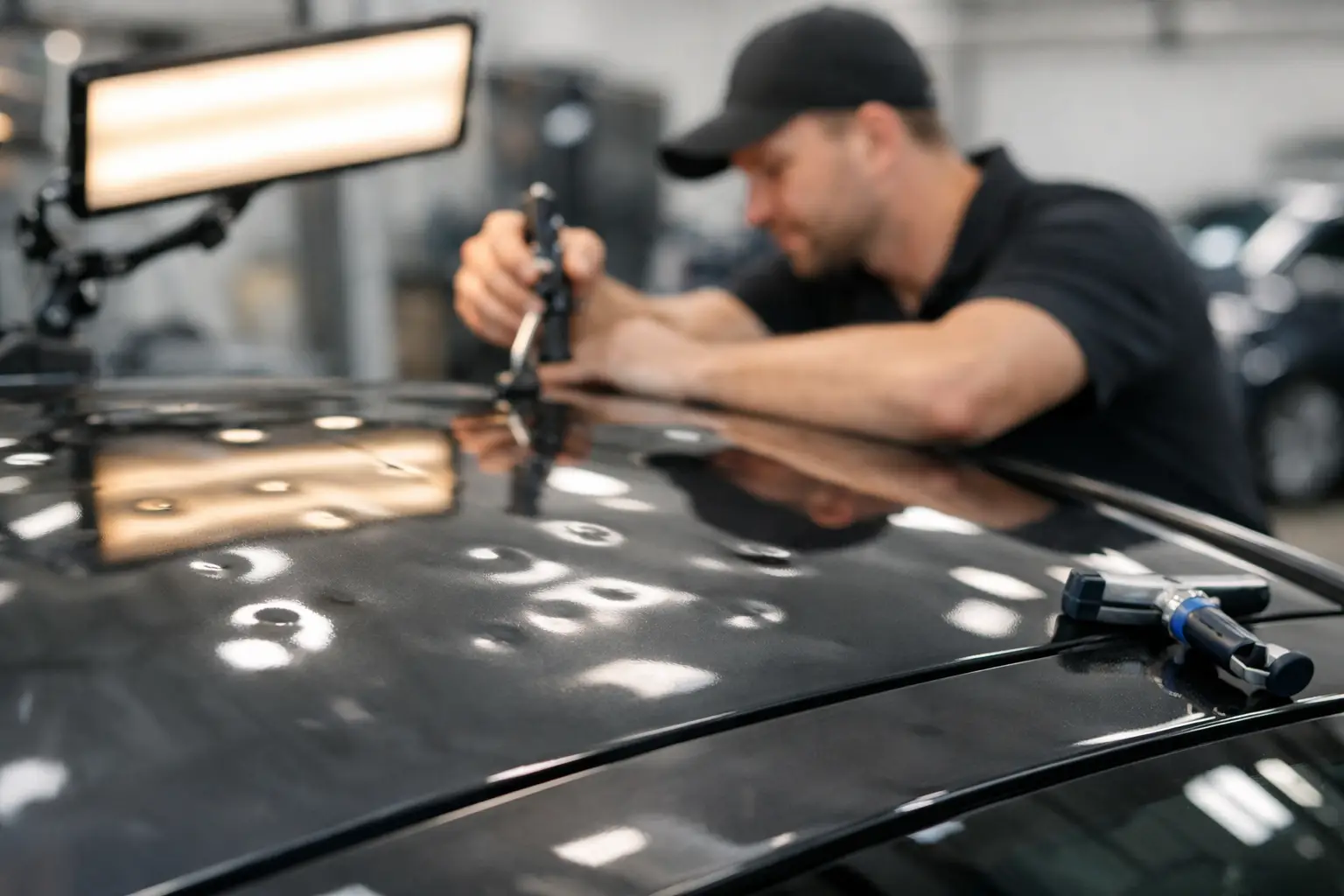
A Florida storm can move through fast, and the damage it leaves behind is not always obvious until the sun hits your hood or roof just right. If you are searching for how to fix hail dents, the first thing to know is that not every dent should be handled the same way. Some can be improved with paintless dent repair, while others need bodywork and refinishing to restore the panel correctly.
Hail damage often looks minor at first because the dents are shallow and spread across wide areas like the hood, roof, trunk lid, and upper door sections. The problem is that hail can affect more than the metal surface. It can stretch panels, chip paint, and create damage patterns that make a quick do-it-yourself fix less effective than people expect.
How to fix hail dents depends on the damage
The size, depth, and location of the dent matter. A small dent in a flat section of metal with no paint damage is very different from a sharp dent on a body line or a panel where the finish has already cracked. That is why one repair method is not right for every vehicle.
Paintless dent repair, often called PDR, is usually the best option when the paint is still intact and the metal has not been badly stretched. This process uses specialized tools to massage the dent out from behind the panel or controlled pulling methods from the outside. When done correctly, it restores the shape without sanding, filler, or repainting.
Traditional body repair is the better choice when hail has chipped the paint, distorted the panel too much, or struck areas that cannot be corrected cleanly with PDR. In those cases, the repair may involve reshaping the metal, applying filler where needed, sanding, priming, and repainting the damaged area to match the rest of the vehicle.
Can you fix hail dents yourself?
Sometimes, but this is where many car owners lose time and end up making the repair harder. Online DIY methods usually focus on suction tools, heat, cold, or glue pulling kits. These can sometimes improve a very shallow dent, but results are unpredictable.
A basic suction tool may help if the dent is broad, shallow, and located on a smooth panel. Even then, it usually works better on larger soft dents than on the small round impacts hail commonly causes. Hail dents are often too tight and too numerous for simple suction methods to be effective.
Glue pulling kits can also create mixed results. Used by trained technicians, they can be part of a proper repair process. Used without experience, they can pull unevenly, leave high spots, or in some cases risk damaging weakened paint. If the panel has already been repainted in the past, glue pulling can be especially risky because non-factory paint may not bond as strongly.
Heat-and-cold tricks are popular online, but they are not reliable repair methods. Modern automotive metal and paint systems do not respond the way internet videos suggest. You might see a slight change in a shallow dent, but most hail damage will not simply pop back into place. Too much heat can also damage paint or trim.
What to check before attempting a repair
Before doing anything, wash the vehicle and inspect it in direct light. Hail dents are easier to see when the panel is clean. Look closely at the hood, roof, trunk, and tops of the fenders and doors.
Check whether the paint is still intact. If you see chips, cracks, or exposed metal, the issue is no longer just a dent. Bare metal can start to corrode, and that makes prompt repair more important.
Also pay attention to the dent shape. A shallow round dent in the middle of a flat panel is the best-case scenario. A sharp crease, a dent on an edge, or a hit directly on a body line is more difficult. If there are dozens of dents across multiple panels, a professional inspection usually saves time because the real challenge is not one dent. It is restoring the vehicle consistently across the entire damaged area.
When paintless dent repair is the best option
If you want the cleanest repair without repainting, paintless dent repair is often the right place to start. The biggest advantage is that it preserves the original finish. That matters for appearance, resale value, and avoiding unnecessary refinishing work.
PDR is most successful when the dent is shallow, the metal is still flexible enough to be reshaped, and there is access behind the panel. Roofs, hoods, and trunk lids are common candidates, although access can vary depending on the vehicle design. Skilled technicians use lighting and reflection boards to read the panel precisely and work the damage out in a controlled way.
The trade-off is that PDR has limits. If the dent is too sharp, the panel is overstretched, or the paint is broken, the repair may not come out cleanly enough. A good shop will tell you when paintless dent repair makes sense and when conventional bodywork will deliver a better result.
When hail dents need body repair and paint work
Some hail damage goes beyond what paintless methods can correct. If the panel has chipped paint, cracked clear coat, or previous repair work underneath, the repair often needs a more complete approach.
In that case, the damaged section may be repaired through standard auto body procedures. The panel is corrected as much as possible, surface imperfections are refined, and the area is prepared for paint. Matching color and finish is a critical part of the process, especially on metallic or pearl paints where a poor blend stands out quickly.
This is also why choosing a shop that handles both body repair and paint work can make the process more efficient. You do not have to move the vehicle between separate vendors or hope the final finish matches after partial work is done elsewhere.
Insurance and hail damage repair
If your car was caught in a hailstorm, review your insurance coverage before paying out of pocket. Hail damage is generally handled under comprehensive coverage, not collision coverage. The extent of the damage, your deductible, and the vehicle’s value all affect what makes financial sense.
Take clear photos before any repair begins. Capture the roof, hood, trunk, windshield area, and any paint damage. Even if the dents seem cosmetic, documentation matters. Some damage patterns are hard to see later, especially after the vehicle has been cleaned or moved between lighting conditions.
If you are in the Lakeland area and the damage is widespread, it helps to have the vehicle inspected by a local body shop that can identify whether the repair should stay paintless or move into conventional refinishing. That kind of evaluation can prevent underestimating the real scope of the work.
Why quick fixes can cost more later
The biggest mistake with hail damage is treating every dent as cosmetic and harmless. A dent with damaged paint can turn into a corrosion issue. An uneven DIY pull can make the panel harder to repair properly. And if multiple dents remain, the vehicle can still look rough even after time and money were spent trying to improve it.
There is also the appearance factor. Hail damage tends to affect the most visible horizontal surfaces. Even small dents become obvious under sunlight, parking lot lights, or after a fresh wash. If you plan to keep the car, trade it in, or simply want it looking right again, repair quality matters.
For many drivers, the smartest approach is simple. Try to identify whether the paint is intact and whether the damage looks minor and isolated. If it is, a professional PDR assessment may be all you need. If the damage includes paint failure, sharp dents, or several affected panels, body repair and refinishing will usually give the better long-term result.
At New Age Auto Painting, that distinction matters because not every vehicle needs the same repair path. The goal is to restore the panel correctly, protect the finish, and get the car back to a clean, road-ready condition without guesswork.
If your vehicle took hail damage, do not judge it only by how small the dents look from a distance. The right repair starts with knowing what kind of damage you actually have, and that is what determines whether the fix will hold up and look right after the storm is long gone.