New Age Auto Painting Blog · June 20, 2026
How to Fix Peeling Car Clearcoat
Learn how to fix peeling car clearcoat, when a DIY repair may work, and when professional refinishing is the better option for lasting results.
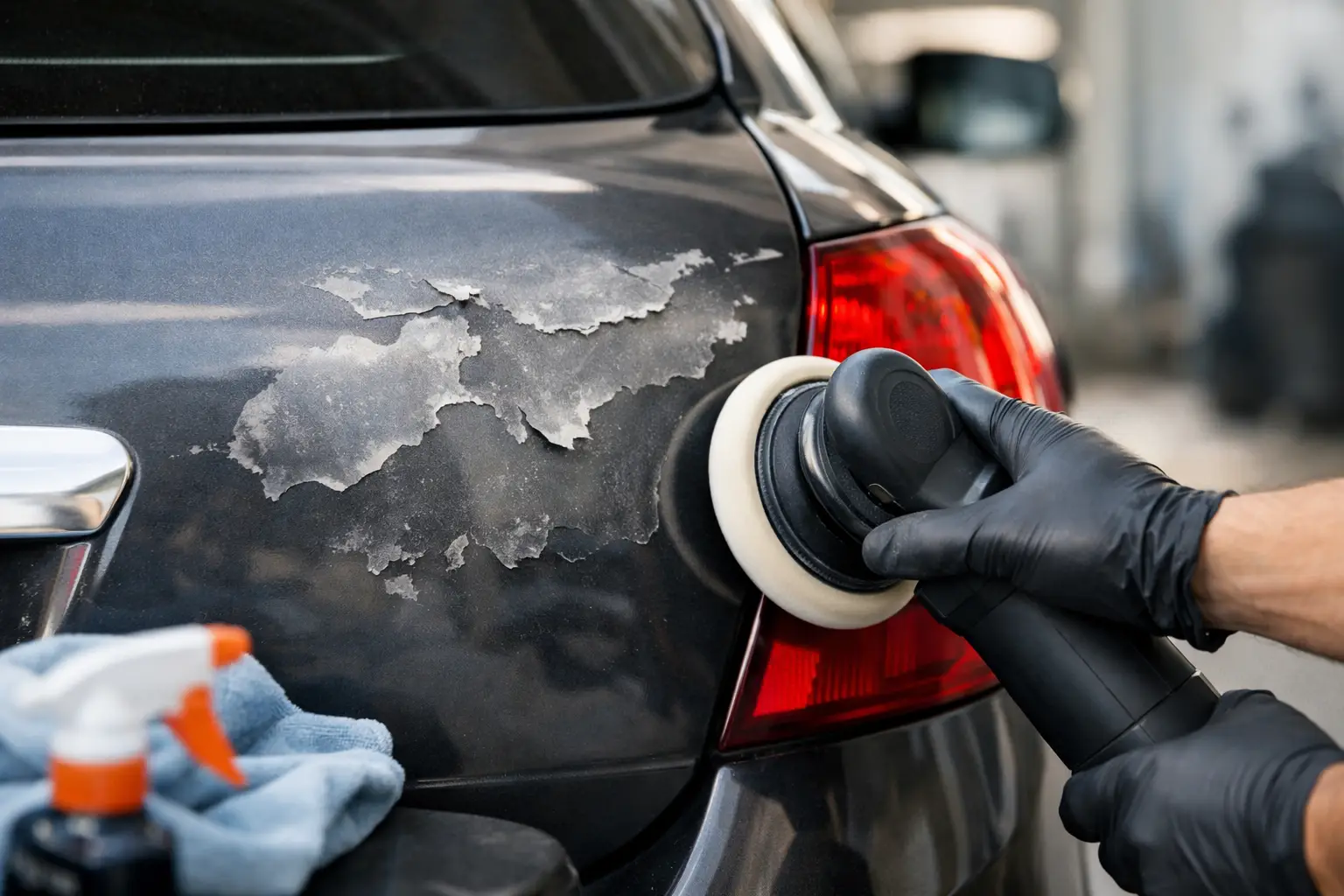
Clearcoat failure usually starts small - a cloudy edge on the hood, a rough patch on the roof, or a peeling spot near a sun-baked panel. If you are searching for how to fix peeling car clearcoat, the first thing to know is that there is no one-size-fits-all repair. Some minor damage can be improved with careful prep and spot refinishing. Widespread peeling usually needs a full professional repaint of the affected panel.
In Florida, clearcoat damage is common because heat, UV exposure, humidity, and outdoor parking all work against your finish. Once the clear layer starts separating from the base coat, wax and polishing will not solve it. At that point, the repair is about removing failed material, restoring a stable surface, and applying new finish the right way.
What peeling clearcoat actually means
Clearcoat is the transparent protective layer applied over your vehicle's color coat. It gives paint its gloss and helps protect it from sun exposure, moisture, oxidation, and minor surface wear. When it starts peeling, that top layer is breaking down and losing adhesion.
That matters because clearcoat failure is not just a cosmetic issue. Once the surface opens up, the color coat underneath is exposed to more UV damage and contamination. Left alone, the finish usually gets worse, not better. What starts as a small peeling edge can spread across the whole hood, trunk, or roof.
Can you really fix peeling car clearcoat yourself?
Sometimes, but it depends on how far the failure has progressed. If the peeling is very limited to a small area and the base coat underneath is still in decent condition, a careful spot repair may improve the appearance. If the clearcoat is peeling across multiple areas, if the paint underneath is faded or chalky, or if the panel has previous repair work, DIY results are often short-lived and uneven.
The biggest mistake people make is spraying new clearcoat over damaged or loose material. New clear will not properly bond to failing clear. It may look better for a short time, then lift, haze, or peel again. Good results depend on surface prep, blending, and clean application conditions.
How to fix peeling car clearcoat on a small area
For a small, localized failure, the basic process is to remove the damaged clearcoat, smooth the transition into the surrounding finish, clean the panel thoroughly, and reapply clearcoat. The exact materials and steps vary by vehicle and damage level, but the general approach stays the same.
Start by washing and drying the area completely. Any dirt, wax, or road film left on the surface can interfere with sanding and adhesion. After that, inspect the panel closely. If the peeling section is surrounded by more loose clear, the repair area may be larger than it first appears.
Next, the failed clearcoat has to be sanded away. This is the stage where patience matters. You want to remove the peeling, flaking material and feather the edges into stable paint without cutting too aggressively into the base color below. If you sand through the color coat, the repair becomes more involved because the area may now need color as well as clear.
Once the damaged clear is removed, the panel needs a uniform, smooth surface for refinishing. The area is then cleaned with the proper prep solvent to remove sanding dust, grease, and residue. Masking is important too. Overspray and poor edge control are common reasons DIY paint work looks obvious.
After prep, new automotive clearcoat is applied in light, even coats based on product directions. Too little material can leave the finish dry and uneven. Too much can lead to runs, solvent trapping, or poor curing. After cure time, the area may need wet sanding and polishing to improve gloss and blend.
This process can work on very limited damage, but there is a trade-off. Spot repairs in clearcoat often remain visible in certain light, especially on older paint that has already faded. Metallic colors and sun-worn panels are even harder to blend cleanly.
When spot repair is not enough
If the hood, roof, trunk lid, or upper door surfaces have widespread peeling, a spot fix usually turns into a temporary patch. These panels take the most UV exposure, and once one section fails, nearby areas are often not far behind.
In those cases, the better repair is usually to refinish the full panel. That means sanding away the failed top layer, addressing any base coat damage, properly sealing if needed, then applying new color and clear across the entire panel. This creates a more consistent appearance and a more durable bond.
A full panel refinish costs more than a small DIY attempt, but it often saves money compared to repeating incomplete repairs. If you want the vehicle to look right for more than a few months, this is usually the smarter route.
Common mistakes that make clearcoat repairs fail
The most common problem is skipping proper prep. Peeling clearcoat is an adhesion failure, so everything depends on removing unstable material and creating the right surface for new coatings. Spraying over oxidation, gloss, wax, or loose edges almost always leads to another failure.
Another issue is using the wrong products. Not every aerosol clear is designed for automotive refinishing, and product quality affects gloss, UV resistance, and longevity. There is also a big difference between a cosmetic touch-up and a true repair-grade finish.
Application conditions matter too. High humidity, dust, direct sun, and improper temperature can all affect curing and finish quality. In Florida, weather can work against you fast. A repair done outside in poor conditions may trap moisture, collect debris, or cure unevenly.
Then there is the sanding issue. Too aggressive, and you burn through the color. Too light, and the new clear has nothing solid to grip. That balance is one reason professional paint work looks more consistent.
How professionals handle peeling clearcoat
A professional shop evaluates more than the peeling itself. The technician checks whether the damage is limited to the clearcoat or if the base coat has faded, oxidized, or separated too. They also look for prior repairs, panel damage, and color-match concerns.
From there, the repair is built around long-term finish stability. That may include machine or hand sanding, panel prep, primer or sealer where needed, color application, and high-quality clearcoat sprayed under controlled conditions. The goal is not just to cover the problem, but to restore the panel so it holds up under daily driving and Florida sun.
For vehicle owners in Lakeland, that matters. Exterior paint damage can lower resale value, make an otherwise solid vehicle look neglected, and spread if ignored. When the damage is beyond a very small isolated spot, professional refinishing usually gives the best appearance and the best service life.
How to know when to call a body and paint shop
If the peeling is larger than a few inches, if multiple panels are affected, if the color coat is dull or exposed, or if you want a repair that matches the rest of the vehicle, it is time to talk to a professional. The same applies if the panel has dents, scratches, or collision-related damage at the same time. Paint failure and body damage often make the most sense to address together.
A local shop such as New Age Auto Painting can inspect the vehicle, explain whether the panel needs a spot repair or full refinish, and help you avoid wasting money on a temporary fix that will peel again. That is especially helpful when sun damage has already spread farther than it appears from a distance.
Preventing clearcoat problems after repair
Once clearcoat has been repaired, keeping the finish in better shape comes down to regular washing, removing contaminants promptly, and protecting the vehicle from prolonged sun exposure when possible. Covered parking helps. So does keeping the surface clean rather than letting bird droppings, tree sap, and road grime sit for long periods.
Routine paint protection can help preserve a healthy finish, but it is not a cure for existing failure. That distinction matters. If the clearcoat is already lifting or flaking, maintenance products will not reverse it. The repair still has to happen first.
If your vehicle has a small peeling section, careful refinishing may improve it. If the damage is spreading or the panel is heavily weathered, the better answer is usually professional paint restoration. A clean, durable finish starts with honest assessment, proper prep, and choosing the repair that fits the actual condition of the vehicle.