New Age Auto Painting Blog · May 17, 2026
How to Remove Deep Scratches on a Car
Learn how to remove deep scratches on a car, when DIY works, and when professional paint and body repair is the better long-term fix.
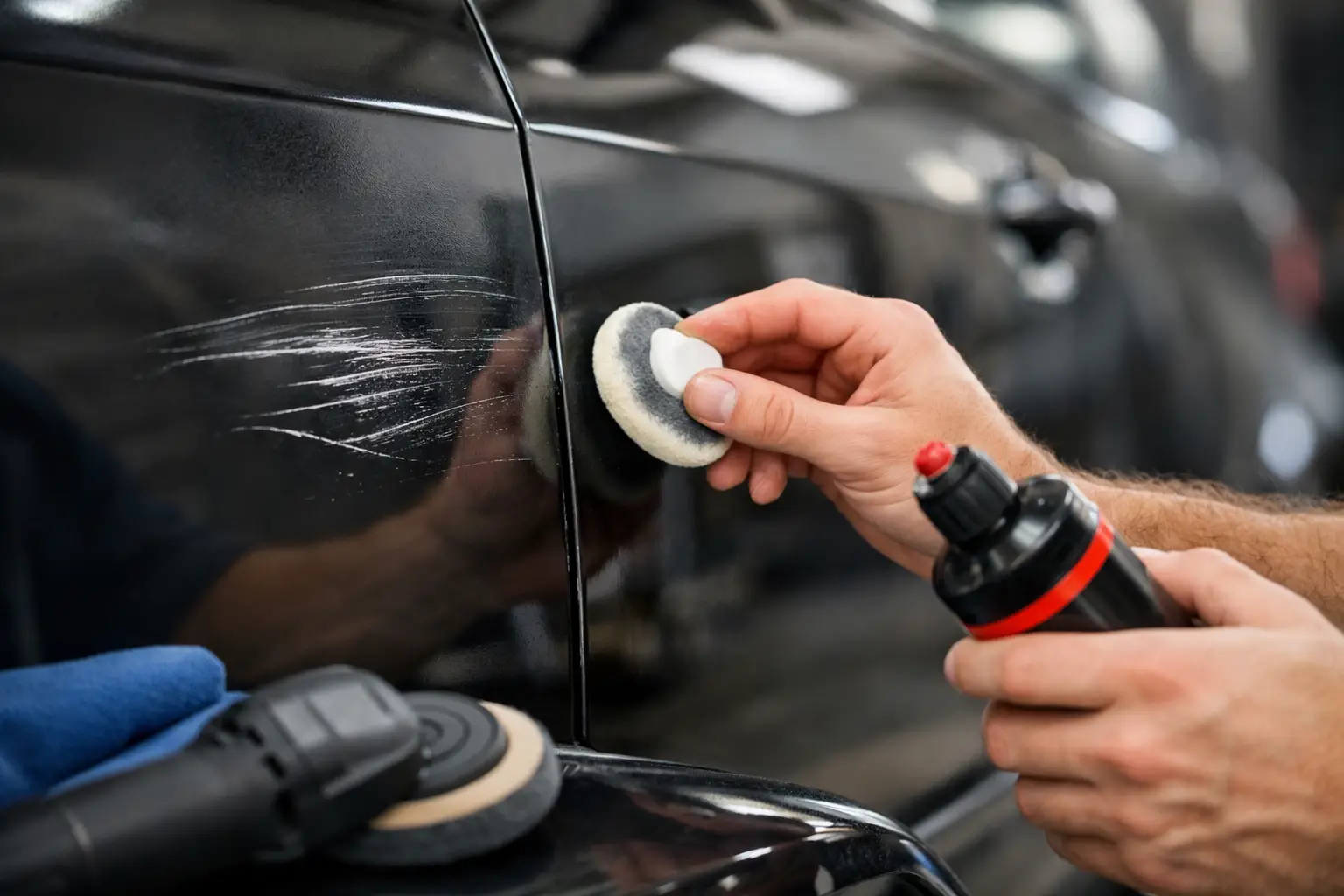
A scratch that catches your fingernail is usually more than a quick polish job. If you are searching for how to remove deep scratches, the first thing to know is that some damage can be improved at home, but not every scratch can be fully corrected without professional paint repair.
On modern vehicles, the paint surface is built in layers. There is a clear coat on top, color underneath, and primer and metal below that. Once a scratch cuts past the clear coat, the repair becomes less about buffing and more about rebuilding the finish so the panel looks right and stays protected.
How to remove deep scratches without making them worse
The biggest mistake car owners make is treating all scratches the same. A light surface mark may respond to polish or compound, but a deep scratch can get worse if you keep rubbing it aggressively. That is especially true if you expose primer or bare metal and then try to level the area with heavy sanding.
Before doing anything, wash the panel with automotive soap and dry it completely. Dirt left around the scratch can create more damage while you work. After cleaning, inspect the mark in good daylight. If the scratch looks white but not dark, you may be dealing with clear coat damage. If you can see a different color underneath, or any gray metal, the scratch has gone deeper.
A simple fingernail test helps. If your fingernail catches strongly in the groove, it is likely too deep for a simple buffing process. That does not always mean the panel needs full replacement or major body work, but it usually means a true cosmetic repair will involve touch-up, sanding, and refinishing rather than just polishing.
What you can try at home
If the scratch is narrow and localized, a careful DIY repair may improve the appearance. It may not make the damage disappear completely, but it can reduce how obvious it looks and help protect the panel from moisture and corrosion.
Start with a scratch repair compound only if the damage appears to be mostly in the clear coat. Use a microfiber applicator and work in small sections with light pressure. If the scratch remains clearly visible after a few passes, stop there. More force will not solve a deeper cut.
For scratches that go into the color layer but are still relatively small, touch-up paint can help. Clean the area with wax and grease remover, apply a very thin amount of matched touch-up paint, and allow proper drying time between coats. Once the paint builds close to the surrounding surface, a clear coat may be added depending on the repair system you are using. After full cure, the area can sometimes be lightly leveled and polished.
This process sounds simple, but the result depends on the color match, the depth of the scratch, and your patience. Dark colors, metallic finishes, and scratches on highly visible panels like doors and hoods tend to show DIY repairs more easily.
When DIY stops being the right answer
There is a point where trying to save money creates a rougher, more expensive repair later. If the scratch is long, deep, on multiple panels, or paired with a dent, do-it-yourself methods usually fall short. The same is true if the damage reaches bare metal. In Florida, that matters because heat, humidity, and rain can speed up surface deterioration once the panel is exposed.
Professional repair is usually the better choice when the scratch has torn through paint layers, when the panel has distortion around the damage, or when the affected area is highly visible and you want the finish to actually match. Shops use proper paint prep, color matching, spray equipment, and blending techniques that are hard to duplicate in a driveway.
There is also the issue of texture and gloss. A car can have the right color and still look wrong if the repaired area reflects light differently from the rest of the panel. That is one reason deep scratch repair often includes refinishing a larger section than the scratch itself.
How body shops repair deep scratches
When customers ask how to remove deep scratches, they are often really asking how to make the damage disappear, not just look a little better. That level of correction usually requires a professional process.
A shop begins by inspecting the panel for full paint and body damage. If the scratch is isolated, the technician may sand the damaged area, feather the edges, apply filler or primer if needed, and prepare the panel for paint. If the scratch includes denting or impact damage, body repair may come first.
From there, the area is primed, blocked smooth, color matched, and repainted. In many cases, adjacent areas are blended so the repair transitions naturally. Clear coat is then applied over the refinished section, and after curing, the surface is polished to restore gloss and consistency.
This is why a proper repair does more than hide a line in the paint. It restores the protective finish and helps the panel match the rest of the vehicle. For drivers who want their car to look clean and properly repaired, that difference matters.
Deep scratches vs. paint transfer
Some damage looks severe at first but turns out to be paint transfer from another object. A shopping cart, bumper contact, or parking lot scrape may leave a long mark that appears deep, even though much of what you see is foreign material sitting on top of your paint.
Paint transfer can often be reduced with the right cleaning product, clay treatment, or polishing process. But you still need to inspect the area afterward. It is common to remove transferred paint and then find a real scratch underneath. That is another reason to avoid guessing based on appearance alone.
If the mark came from a low-speed scrape and the surface feels smoother than it looks, there is a decent chance part of the damage is transfer. If the groove is sharp and catches your nail, the underlying paint has likely been cut.
What affects the cost of deep scratch repair
Repair cost depends on how far the scratch goes, where it is located, and whether the damage is purely cosmetic or includes body distortion. A small isolated scratch on one panel is a very different job from a key scratch stretching across multiple doors.
Vehicle color also affects the process. Solid colors are often simpler to match than pearl or metallic finishes. Panel location matters too. Flat panels can be more straightforward than body lines, edges, and curved surfaces where defects stand out more easily.
The goal should not be the cheapest possible fix. It should be the right repair for the condition of the vehicle. Sometimes a spot repair is enough. Sometimes full panel refinishing is the only way to avoid a visible patch.
Why quick fixes often disappoint
Many over-the-counter products are marketed as complete scratch removers, but the label does not always match the damage. Most of these products work best on light surface defects, oxidation, or haze. They are not designed to rebuild missing paint.
That does not mean they are useless. A quality compound or polish can improve a shallow defect and clean up the surrounding finish. The problem comes when deep scratches are treated like light swirl marks. If paint is gone, a bottle of rubbing compound will not replace it.
Wax fillers can also create a temporary improvement that fades after a few washes. For a seller trying to make a car look better for the weekend, that might be enough. For a vehicle you plan to keep, temporary concealment is rarely the best answer.
Getting the best result in Lakeland
If your vehicle has a deep scratch, timing matters. The longer exposed areas sit, the greater the risk of corrosion, fading around the damage, or a repair that becomes more involved later. That is especially true when the scratch is on a daily driver that stays outside.
For Lakeland-area drivers, the best approach is to get the damage looked at before trying multiple DIY products that may complicate the finish. A professional assessment can tell you whether the scratch can be corrected with a localized repair or whether the panel needs refinishing. At New Age Auto Painting, that kind of repair is about more than cosmetic improvement. It is about restoring the panel correctly so the vehicle looks right and stays protected.
A deep scratch does not always mean major work, but it does mean you should be selective about the fix. The right repair is the one that matches the depth of the damage, not the one with the boldest claims on the package.