New Age Auto Painting Blog · August 17, 2026
How to Repair a Quarter Panel the Right Way
Learn how to repair quarter panel damage, when DIY makes sense, and when Lakeland drivers need professional bodywork and color-matched paint repair help.
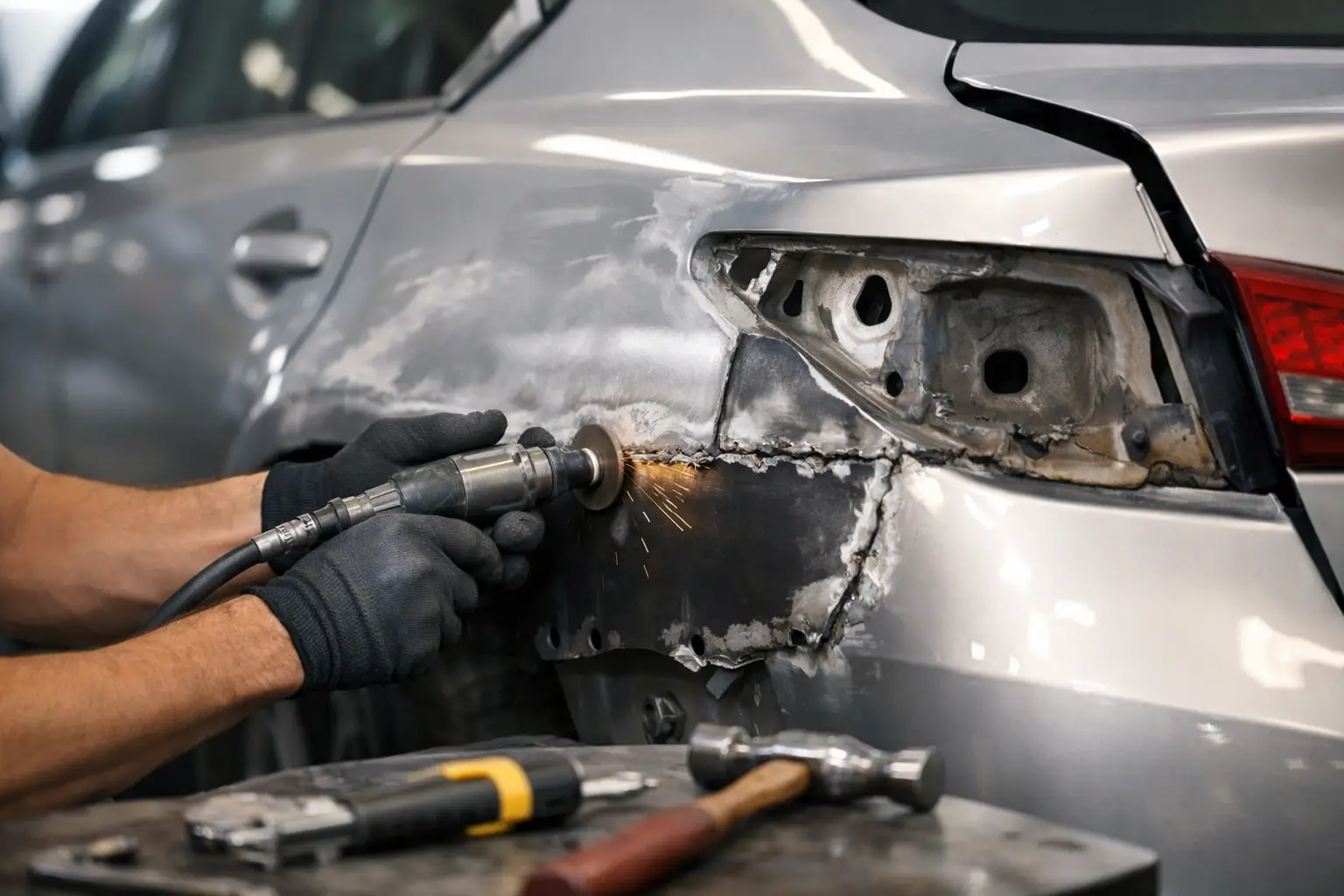
A damaged quarter panel can make an otherwise reliable vehicle look neglected, but the repair is not always a simple dent removal job. Knowing how to repair quarter panel damage starts with understanding what sits behind the visible metal, how far the impact traveled, and whether the finish can be restored without compromising the body of the vehicle.
On most cars and trucks, the quarter panel is the body section behind the rear door or rear side window and ahead of the bumper. It is often welded into the vehicle body, unlike a bolt-on fender. That difference matters. A small parking-lot dent may be repairable with paintless dent repair or conventional bodywork, while a crushed, rusted, or torn quarter panel can require cutting, welding, corrosion protection, and professional refinishing.
Start by Assessing the Quarter Panel Damage
The right repair method depends on the metal, the paint, and the condition of the structure underneath. Start by looking beyond the obvious scrape or dent. Check whether the panel has sharp creases, exposed bare metal, split seams, cracked paint, or damage around the wheel opening, trunk opening, rear door opening, or taillight area.
A shallow dent with intact paint is the best-case scenario. If the metal has not been stretched and access exists behind the panel, paintless dent repair may restore the shape without filler or repainting. This approach is usually practical for small door dings, minor shopping-cart impacts, and soft dents away from body lines.
A sharp crease is more involved. Creases stretch metal and create a defined low spot that does not simply pop back into place. The technician may need to pull the metal gradually, reshape the surrounding area, apply a thin layer of body filler where needed, and refinish the panel.
Damage becomes more serious when the quarter panel is pushed into the wheelhouse, trunk floor, rear body panel, or pillar area. In those cases, the visible dent may be only part of the repair. Measurements and alignment checks help determine whether the vehicle needs structural correction before cosmetic work begins.
How to Repair Quarter Panel Dents Without Cutting Metal
For repairable dents, the process usually begins with access. Interior trunk trim, rear seat components, taillights, liners, and wheelhouse trim may need to come off so the damaged area can be inspected from both sides. Removing these pieces carefully matters because hidden clips, wiring, and weather seals are easy to damage.
The technician then brings the metal back toward its original shape. Depending on panel access and the type of damage, this may involve controlled pushing from behind, glue pulling from the exterior, or stud welding and pulling. The goal is not to force the dent outward in one move. Pulling too aggressively can stretch the metal further and create a larger repair area.
Once the panel is close to shape, the repair area is sanded to remove damaged paint and expose clean metal. Minor surface imperfections can be leveled with a thin application of body filler. Filler is not meant to replace damaged metal or cover a deep cavity. A proper repair restores the panel first, then uses filler only for final contouring.
After shaping, the area is sanded through progressively finer grits, primed, block-sanded, and checked under proper lighting. This step is where quality bodywork separates itself from a quick cosmetic patch. A quarter panel has long, reflective surfaces, so even a slight ripple can show up clearly in sunlight.
When Quarter Panel Replacement Is the Better Option
Repair is not always the responsible choice. If the panel has severe collision damage, extensive rust, torn metal, or multiple old repairs, replacement may provide a safer and more durable result. A panel that has rusted through near the wheel opening or lower rear section, for example, cannot be permanently fixed by filling and painting over corrosion.
Quarter panel replacement is more complex than replacing a bumper or fender because the panel is generally welded to the vehicle. The damaged section may be removed at factory-approved seam locations, and a replacement panel is fitted, welded, sealed, and protected to match the vehicle's original construction as closely as possible.
This type of work requires attention to panel gaps, rear door operation, trunk alignment, fuel-door fit, taillight mounting, and wheel-opening shape. If those details are off, the vehicle may look repaired even after fresh paint is applied. Replacement is also a situation where insurance involvement is common, especially after a rear-end or side-impact collision.
Paint Repair Is Part of the Job, Not an Afterthought
A quarter panel repair is only complete when the paint and corrosion protection are handled correctly. Bare steel must be protected promptly. Primer, seam sealer, undercoating, and cavity wax may all be needed depending on the repair location. These materials help prevent moisture from reaching the back side of the repair, where rust can begin unnoticed.
Color matching also takes more than entering a paint code into a mixing system. Factory paint varies over time due to age, sun exposure, previous repairs, and normal production variation. A professional painter evaluates the vehicle's existing color and may blend color into an adjacent door, roof rail, trunk area, or bumper section to create a consistent appearance.
Blending increases the refinishing area, but it often prevents a visible color edge. This is especially relevant with metallic, pearl, tri-coat, and light-colored finishes. On a white, silver, red, or pearl vehicle, a panel-only paint job can look noticeably different beside an older original panel if blending is skipped.
Can You Repair a Quarter Panel Yourself?
A careful DIY repair can be reasonable for a very small dent or paint scuff on an older vehicle when appearance expectations are modest. A touch-up repair may slow rust after a light scrape, and a paintless dent repair kit can sometimes improve a shallow dent. The trade-off is that aftermarket tools do not provide the control, access, color match, or finish quality of professional equipment.
DIY work is usually not the right answer when paint is cracked, metal is creased, rust is visible, a body line is distorted, or the damage is near a welded seam. Sanding too far, applying too much filler, using incorrect primer, or spraying mismatched paint can turn a localized repair into a larger and more expensive correction later.
Avoid drilling holes in the panel to pull dents, applying filler over rust, or using heat without experience. Modern vehicles can have wiring, sensors, sound-deadening material, fuel-system components, and high-strength steel near the repair area. Heat and improper welding can also damage coatings that protect the metal from corrosion.
What Lakeland Drivers Should Do After a Collision
After an impact, take clear photos before cleaning or attempting any repair. Document the panel, wheel, bumper, taillight, rear door, trunk, and any warning lights. If another vehicle was involved, keep the claim information and avoid authorizing work based only on a quick exterior glance.
A body shop should inspect the quarter panel together with the surrounding components. A dent near the rear wheel can affect the wheelhouse or suspension area. Damage near the trunk can affect seals and water intrusion. A panel that appears cosmetic may also hide broken retainers, damaged mounting points, or distorted seams.
For Lakeland vehicle owners who want body repair and refinishing handled in one place, New Age Auto Painting can evaluate the damage, explain whether repair or replacement makes sense, and restore the panel with professional paint preparation and color matching. The best result is not simply a dent that looks flatter from a distance. It is a quarter panel that fits correctly, resists corrosion, and looks right every time you walk back to your vehicle.