New Age Auto Painting Blog · July 16, 2026
How to Spot Frame Damage After a Car Accident
Learn how to spot frame damage after a collision, from uneven gaps and pulling to suspension clues, and know when Lakeland drivers need an inspection.
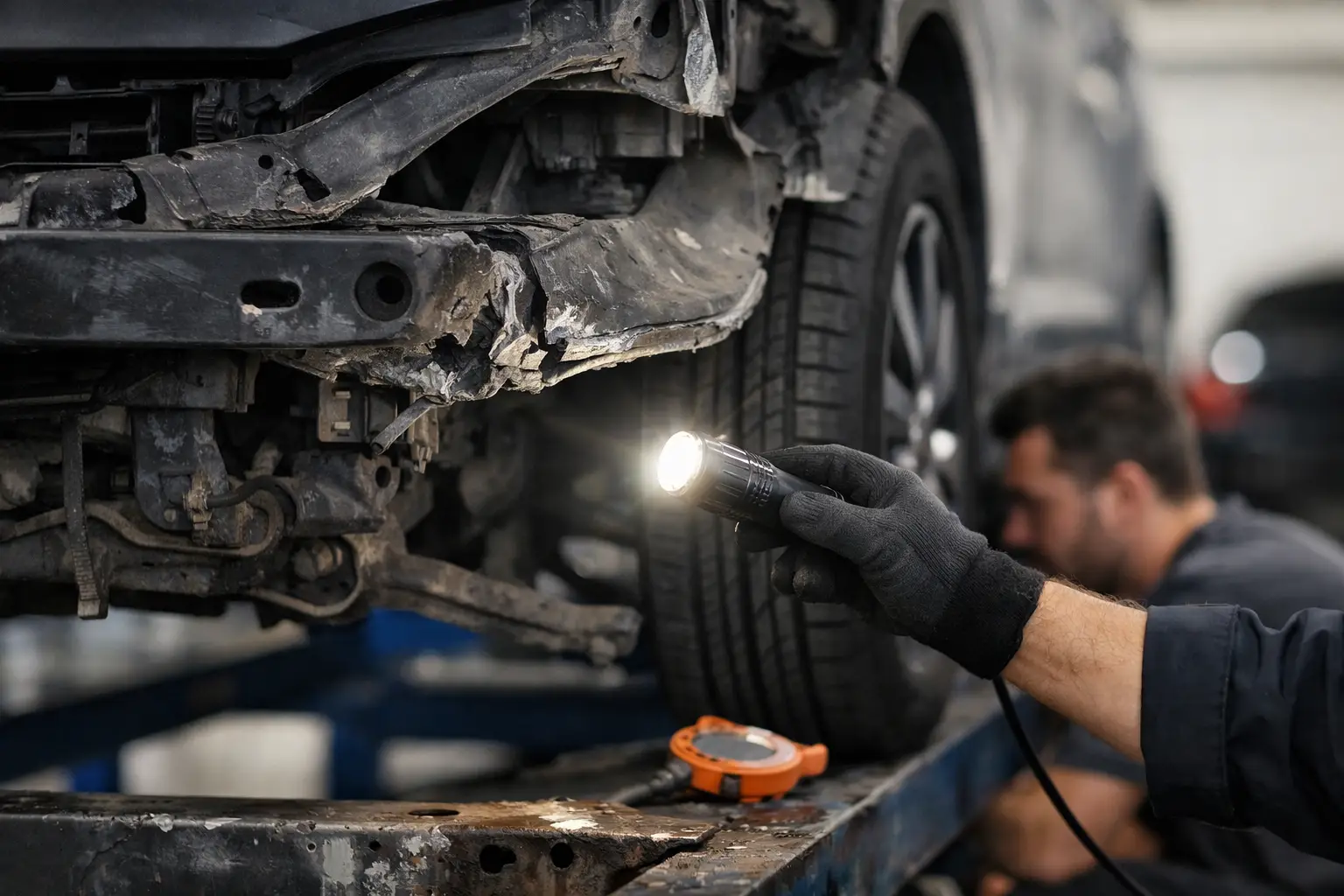
A low-speed parking-lot impact can leave a bumper scuffed but structurally sound. A harder hit can change the way the vehicle sits, steers, and absorbs force in a future accident, even when the exterior damage looks manageable. Knowing how to spot frame damage helps Lakeland drivers make an informed repair decision before cosmetic work hides signs of a larger issue.
Modern passenger vehicles commonly use a unibody structure, where the frame and body are integrated. Trucks, SUVs, and some older vehicles may use a separate frame. In either design, damage to structural components needs more than an eyeball check. The signs below can tell you when to schedule a professional collision inspection.
How to Spot Frame Damage Before Repairs Begin
Start with a walk-around in good daylight on level ground. Look at the vehicle from several angles rather than focusing only on the impact area. Frame or structural damage can transfer force across the vehicle, so the clearest clue may appear away from the bumper, fender, or door that was hit.
Uneven panel gaps and doors that no longer fit
Body panels are manufactured to fit with consistent gaps. After a collision, look for a hood that sits higher on one side, a trunk that needs to be slammed, or a door that rubs the fender when it opens. Uneven spacing around the hood, grille, doors, trunk, or liftgate can indicate that mounting points or nearby structural sections have shifted.
This sign is not conclusive by itself. A loose bumper cover or damaged hinge can also create a poor panel gap. But when several panels no longer line up, especially after a front, rear, or side impact, the vehicle should be measured before repair work begins.
A vehicle that pulls, wanders, or has an off-center steering wheel
If the car pulls left or right on a flat road, the steering wheel sits crooked while driving straight, or the vehicle feels unsettled after an accident, do not assume it only needs an alignment. A bent suspension component, damaged wheel, or tire issue can create similar symptoms. Structural movement can also alter suspension mounting locations and make proper alignment difficult.
Pay attention to when the problem occurs. Pulling during normal driving, vibration at speed, tire squeal, or a steering wheel that does not return normally after a turn are all useful details to share with the repair shop. Do not test the vehicle aggressively to diagnose it yourself.
Uneven tire wear or a wheel that looks out of place
Look at the tires from the front and rear. One wheel sitting farther back in the wheel opening than the other, a tire leaning noticeably inward or outward, or fresh uneven wear can point to collision-related suspension or structural damage. A wheel that appears centered differently from the wheel on the opposite side deserves immediate attention.
Florida roads can cause normal wear over time, so tire wear alone does not prove frame damage. The concern is a sudden change following an impact, particularly when it comes with handling problems or visible damage around the wheel well.
Wrinkles, ripples, and broken seams under the vehicle
The underside of the vehicle often provides better evidence than the painted exterior. With the vehicle safely parked, look without crawling underneath for wrinkled metal in accessible areas, cracked seam sealer, fresh scrapes on crossmembers, or bent-looking brackets. In the engine compartment, check for ripples along the inner fenders, radiator support, and strut towers.
Do not put yourself under a vehicle supported only by a jack. Structural inspection requires a lift, correct measuring equipment, and a trained technician who knows where factory reference points should be located.
New noises, leaks, and warning lights
Frame damage is not always visible. A collision may shift components enough to cause rattles, clunks over bumps, exhaust contact, fluid leaks, or dashboard warning lights. Modern vehicles have sensors, cameras, wiring, and advanced driver-assistance systems mounted near areas that can be affected by an impact.
A warning light does not automatically mean the frame is bent, and a vehicle with no warning lights is not automatically structurally sound. Treat either situation as part of the overall picture. If a warning appears after a collision, have it diagnosed rather than clearing it and continuing to drive.
Why Cosmetic Damage Can Be Misleading
Bumpers, fenders, and doors are designed to take damage before more critical components do. That is useful, but it can create a false sense of security. A bumper cover may look like the main problem while the reinforcement bar, absorber, rails, or mounting points behind it have been damaged.
The opposite can also happen. A vehicle may have a deep dent and broken paint but no structural movement. The only reliable way to separate cosmetic damage from structural damage is a proper inspection and measurement process.
This matters for safety as well as appearance. Crumple zones are engineered to manage crash energy in a specific way. If those areas are distorted or repaired incorrectly, the vehicle may not respond as intended in another collision. Proper repair can also protect resale value and prevent ongoing problems with alignment, tire wear, water leaks, and panel fit.
What a Professional Frame Inspection Involves
A collision repair shop does more than look for obvious bends. Technicians inspect the impact area and related components, then compare structural measurements to manufacturer specifications. Depending on the vehicle and damage, this may include checking unibody rails, suspension mounting points, floor sections, strut towers, crossmembers, and frame rails.
The vehicle may need to be placed on a frame machine or measuring system to confirm whether structural points are within specification. This is especially important after a moderate or severe impact, airbag deployment, wheel or suspension damage, or any collision that changes how the car drives.
A complete repair plan may involve structural correction, replacement of damaged parts, suspension alignment, diagnostic scanning, and paint refinishing. Those steps should follow the actual damage, not a guess based on the appearance of the bumper or fender.
When You Should Not Keep Driving
Some post-accident symptoms call for a tow or immediate inspection rather than a trip across town. Avoid driving the vehicle if a wheel is rubbing, a tire is damaged, fluids are leaking, the steering feels unpredictable, the vehicle pulls sharply, or body panels interfere with safe operation. The same applies if the hood, trunk, or doors will not latch securely.
If the vehicle seems drivable but has changed noticeably since the impact, limit unnecessary driving until it is inspected. A small issue can worsen when a misaligned tire, suspension component, or loose part is repeatedly loaded on the road.
What to Tell Your Collision Repair Shop
Clear information can speed up the inspection. Describe where the vehicle was hit, whether it was moving, whether another vehicle struck a wheel, and whether airbags deployed. Mention any changes you noticed afterward, including pulling, vibration, noises, warning lights, leaking fluids, or panels that do not close correctly.
Photos taken at the scene can help show the direction and severity of the impact, even if the exterior has since been cleaned. If you have already had an alignment or estimate, bring that information along. It can help technicians understand what has been checked, but it should not replace a structural inspection when signs of frame damage are present.
For Lakeland vehicle owners, New Age Auto Painting can assess collision-related body and structural concerns and build a repair plan that addresses both safe fitment and a clean finished appearance. If your vehicle looks different, drives differently, or simply took a harder hit than the exterior suggests, having it inspected early is the practical next step.