New Age Auto Painting Blog · April 7, 2026
Insurance Collision Repair Lakeland Guide
Need insurance collision repair Lakeland drivers can trust? Learn how claims, body repair, paint work, and shop selection affect your results.
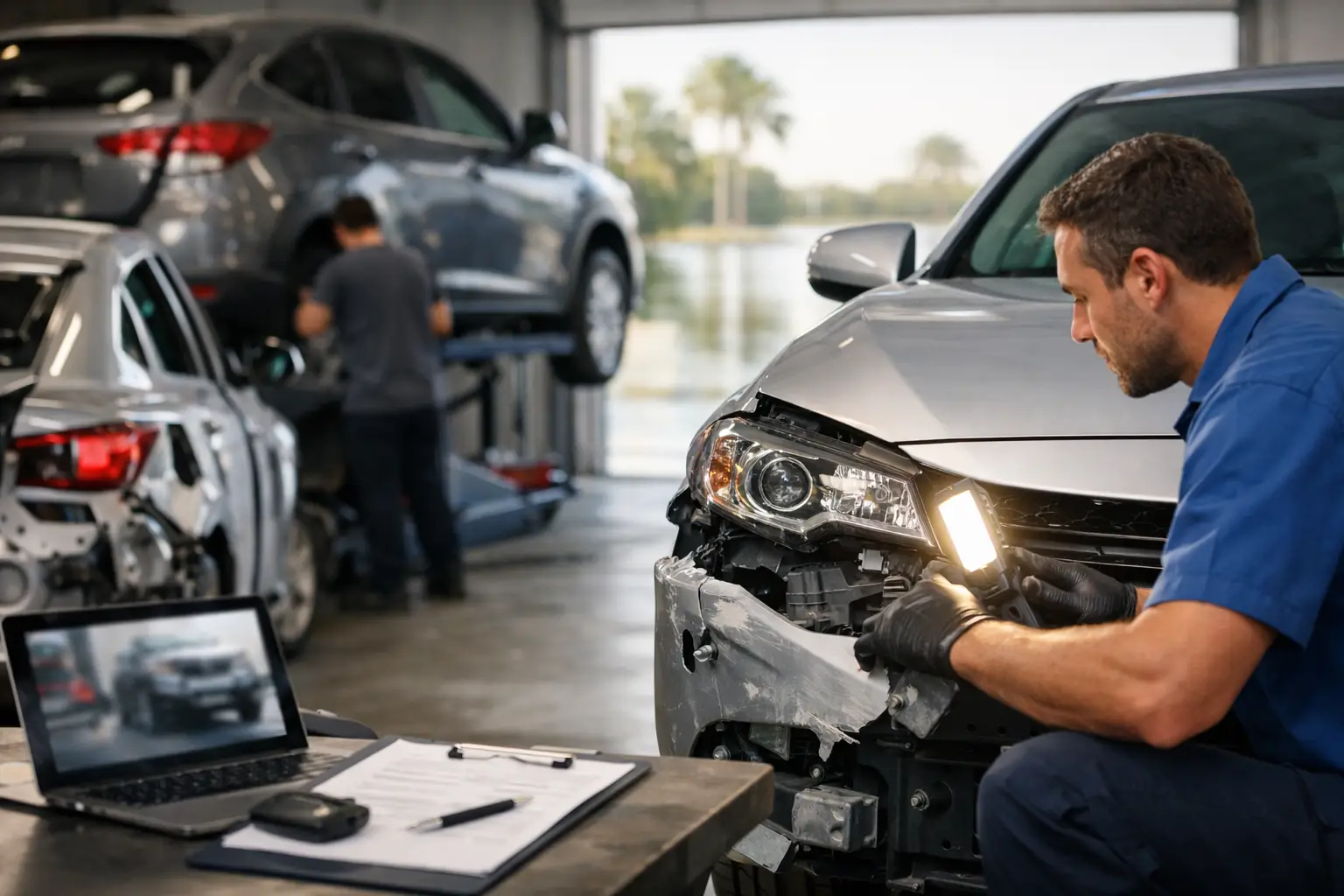
After a crash, most drivers are dealing with two problems at once - vehicle damage and insurance paperwork. If you are searching for insurance collision repair Lakeland services, you probably want one thing: to get your car repaired correctly without wasting time or guessing your way through the process.
That starts with understanding what insurance collision repair actually involves. It is not just replacing damaged parts and sending the vehicle back out. A proper repair can include damage assessment, structural correction, panel repair or replacement, paint matching, refinishing, and final quality checks. When insurance is involved, the process also includes documentation, estimate review, and approval steps that affect both timing and cost.
What insurance collision repair means in Lakeland
Insurance collision repair in Lakeland usually begins after an accident, whether it was a parking lot impact, a rear-end collision, side damage, or a more serious hit that affected the frame or body structure. The insurance company wants a documented estimate. The vehicle owner wants safe, professional repairs. The body shop has to bridge those two needs while keeping the work accurate.
This is where experience matters. Visible damage is only part of the story. A bumper may look like the main issue, but the impact can also affect brackets, sensors, reinforcements, quarter panels, or alignment points underneath. If those issues are missed early, the repair can become more expensive later or leave the vehicle with ongoing problems.
For Lakeland drivers, local conditions matter too. Daily commuting, stop-and-go traffic, heavy rain, and long-term sun exposure all affect how a repaired vehicle should be finished. Paint work is not just about color. It is also about proper prep, application, and curing so the repair holds up in Florida conditions.
How the insurance collision repair Lakeland process usually works
The first step is documenting the damage. That often means taking photos, filing the claim, and getting an initial estimate. Some insurance companies provide their own inspection process, while others work directly with repair shops for supplements when hidden damage is found.
That last point is important. Initial estimates are often just that - initial. Once the vehicle is disassembled, additional damage may appear behind panels or under exterior parts. This does not automatically mean something went wrong. It often means the full extent of the impact could not be seen until repair work began.
After approval, the body repair process moves into structural and cosmetic work. Depending on the accident, that may include pulling damaged sections back to specification, repairing dents, replacing panels, restoring body lines, and preparing surfaces for paint. If the damage involves multiple panels, blending adjacent areas may be necessary so the finish looks consistent.
Then comes refinishing. A good paint result depends on more than matching the paint code. Age, sun fade, existing wear, and panel location can all affect how the final color appears. This is one reason a shop that handles both body repair and painting under one roof can be a practical choice. The repair and finish stages are connected, and quality in one affects the other.
Choosing a shop for insurance collision repair Lakeland drivers can trust
Not every shop approaches insurance work the same way. Some move vehicles through fast but leave gaps in communication. Others do acceptable body work but treat paint as an afterthought. For customers, the better choice is usually a shop that can explain the process clearly, document the repair properly, and restore both safety and appearance.
A few details are worth paying attention to when comparing shops. Ask how damage is inspected, how supplements are handled, and whether paint and body work are completed in the same facility. It also helps to ask how the shop communicates during the repair. Delays do happen in collision work, especially if parts are backordered, but regular updates make the process easier to manage.
You should also pay attention to how the estimate is discussed. A professional shop should be able to explain what is included, what may change once teardown begins, and which repairs are driven by safety, fit, or finish requirements. Straight answers matter more than the lowest number on paper.
Why body repair and paint quality should be treated together
Many collision repairs are judged first by appearance. That is understandable. You notice the bumper, the fender gap, the waviness in the panel, or a color mismatch right away. But appearance problems often point back to repair quality.
If a panel is not aligned correctly, the paint job will not hide it. If body filler work is uneven, sunlight will expose it. If prep work is rushed, the finish may fail early. That is why body repair and refinishing should never be treated as separate concerns.
For Lakeland vehicle owners, this is especially relevant because bright sun makes flaws easier to spot. A repair that looks acceptable indoors may look uneven outside. Professional refinishing requires careful surface prep, proper materials, and attention to color consistency across repaired and adjacent panels.
A full-service shop can often control this process better because the body technicians and paint team are working toward the same final result. That reduces the chance of disconnects between repair stages and gives customers one place to turn for updates.
What can affect insurance approval and repair timelines
Drivers often ask one simple question after an accident: how long will this take? The honest answer is that it depends on the damage, parts availability, and the insurance approval process.
Minor body damage with straightforward replacement parts may move fairly quickly. Heavier collision damage can take longer because the vehicle may need structural measurement, multiple supplements, or specialty parts. If sensors, trim pieces, or newer model components are involved, waiting on parts can become the biggest factor.
Insurance communication can also slow things down. Some carriers approve changes quickly. Others require additional review before updated repairs move forward. A good shop helps by documenting hidden damage clearly and keeping the claim tied to the actual repair needs of the vehicle.
This is one reason it helps to work with a local collision repair provider that is used to dealing with insurance-related repairs. Experience with estimates, supplements, and repair documentation can reduce confusion and keep the job moving.
When price is not the best way to judge a repair
After an accident, many owners focus on deductibles, claim limits, and out-of-pocket costs. That is reasonable. But collision repair is not a service where the cheapest number always leads to the best result.
If repairs are limited to what is visible, underlying issues can remain. If paint materials or prep steps are cut back, the finish may not hold up. If panel alignment is off, the vehicle may look repaired rather than restored. Those problems are frustrating because they often show up after you thought the process was over.
A better standard is value: accurate repair planning, consistent communication, quality body work, and a finish that matches the rest of the vehicle. For customers in Lakeland, that usually means looking for a shop focused on complete exterior restoration, not just the fastest turnaround.
At https://newagepainting.replit.app/, New Age Auto Painting presents that kind of local focus by combining collision repair, body work, and automotive painting in one place.
What Lakeland drivers should do after collision damage
If your vehicle has been hit, take photos, report the damage, and get the vehicle inspected before assuming it is only cosmetic. Even light impacts can hide broken mounts, bent supports, or misalignment that affects how the vehicle drives or how panels fit.
Once the claim is underway, choose a shop that explains the repair process in plain terms. You should know what is being repaired, what may require insurance approval, and how the final finish will be handled. The right shop should make the process clearer, not more complicated.
A repaired vehicle should feel road-ready and look right when you get it back. That means the structural work, body lines, panel fit, and paint finish all need the same level of attention. If you are dealing with accident damage in Lakeland, the best next step is usually the simplest one: find a local shop that can handle the repair from damage assessment through final paint so you can move forward with confidence.