New Age Auto Painting Blog · April 13, 2026
Is Repainting a Car as Good as Factory Paint?
Is repainting a car as good as factory paint? Learn what affects finish quality, durability, color match, and when repainting can look excellent.
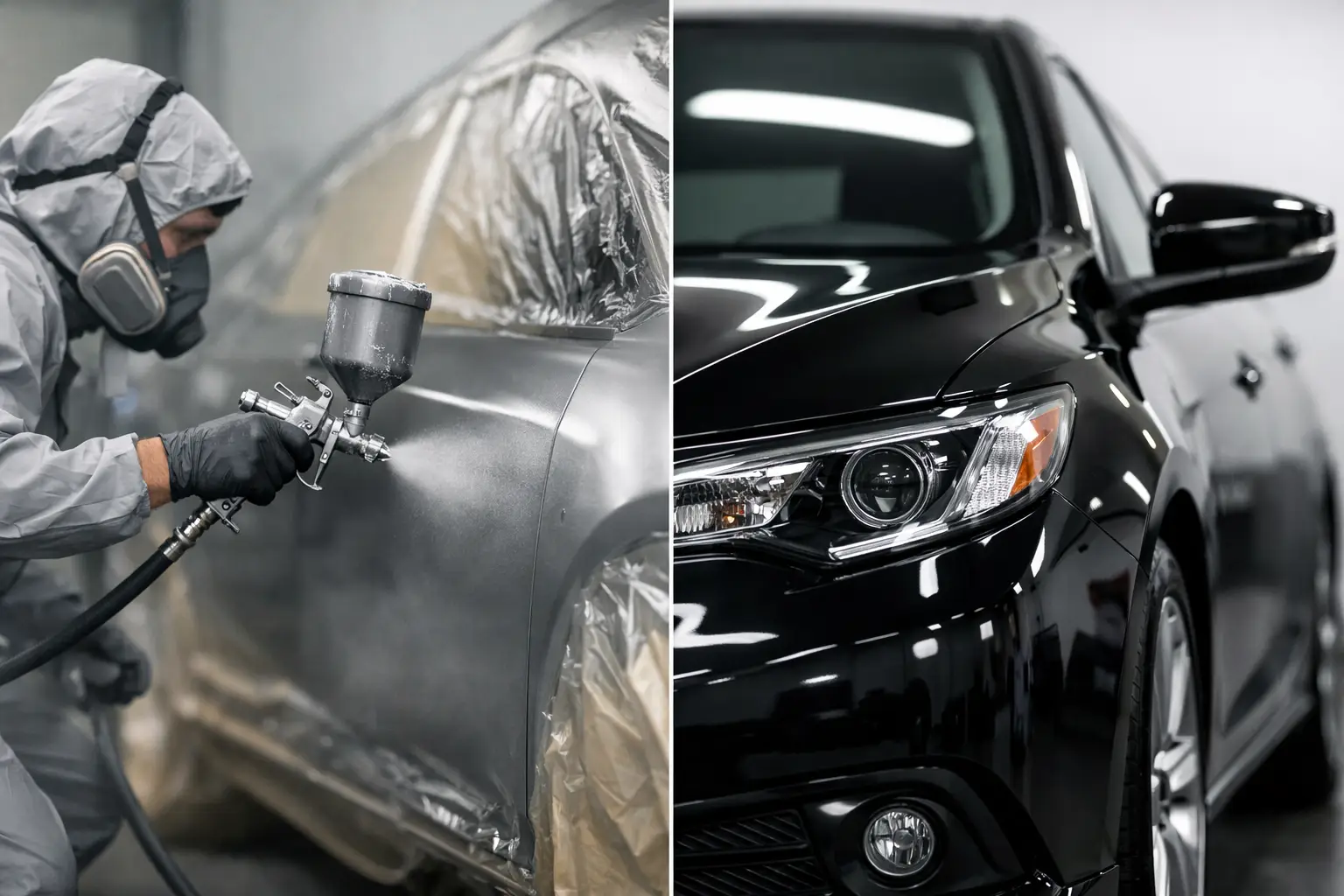
A lot of vehicle owners ask the same question after a collision, deep scratch, or fading clear coat: is repainting a car as good as factory paint? The honest answer is that it depends on the quality of the repair, the materials used, and how much damage the vehicle had in the first place. A factory finish has advantages, but a professional repaint can still produce excellent results that restore both appearance and value.
If you are comparing a damaged original finish to a properly refinished panel, the repaint often wins on appearance. If you are comparing a brand-new factory finish to an average low-cost repaint, factory paint usually comes out ahead. The gap is not just about paint itself. It comes down to prep work, color matching, application technique, curing, and how well the repaired area blends with the rest of the vehicle.
Why factory paint has a built-in advantage
Factory paint is applied under tightly controlled manufacturing conditions. Vehicle manufacturers use automated systems, precise temperature control, and consistent curing processes that are difficult to duplicate outside of a production plant. That environment helps create a finish that is uniform across the entire vehicle.
Factory finishes also benefit from being applied to brand-new metal or panels before years of sun, road debris, moisture, and wear affect the surface. There is no previous damage to correct, no existing chips to feather out, and no need to blend old paint into new material. That gives the original finish a head start.
For those reasons, factory paint is often seen as the benchmark for consistency and long-term durability. But that does not mean a repaint is automatically second-rate.
Is repainting a car as good as factory paint in real-world repairs?
In real-world auto body work, the better question is often whether a repaint can return the vehicle to a clean, correct, factory-like appearance. In many cases, yes. A skilled shop can refinish a repaired panel so that most drivers would never notice the difference in normal use.
That is especially true for localized repairs such as a damaged fender, bumper, door, or quarter panel. When the bodywork is done correctly and the paint is matched and blended properly, the result can look excellent. On daily drivers, family vehicles, and commuter cars, a professional repaint is usually the right solution after collision damage or cosmetic wear.
Where people run into problems is when the job is rushed or priced too low to allow proper prep and finishing. Paint defects rarely start with the final spray pass. They usually begin earlier, with poor sanding, incomplete cleaning, cheap materials, or shortcuts in curing time.
What makes a repaint look good or bad
The quality of a repaint depends more on process than on promises. Surface prep is one of the biggest factors. If the damaged area is not repaired smoothly, cleaned thoroughly, and primed correctly, the final finish may show waves, sanding marks, or adhesion problems later.
Color matching is another major factor. Modern vehicle colors are more complex than many drivers realize. Metallics, pearls, and tinted clear systems can shift depending on spray angle, light, and panel shape. A quality shop does not just pick the paint code and spray. It adjusts for fade, age, and surrounding panel condition so the repaired area blends naturally.
Application technique matters just as much. Even with good materials, a poor spray pattern can leave the finish too dry, too heavy, or uneven in gloss. Then there is the clear coat, which affects depth, shine, and long-term protection. If the clear is applied badly, the panel may stand out even if the color itself is close.
Finally, curing and finishing can make the difference between a decent repair and a professional one. Proper bake cycles, drying time, polishing, and inspection all affect the final appearance.
Durability is where the comparison gets more nuanced
When people ask if repainting a car is as good as factory paint, they often mean durability. Will it last? Will it peel? Will it fade faster?
A high-quality repaint can hold up very well, especially when the shop uses professional-grade materials and follows manufacturer procedures. On the other hand, a poor repaint may fail early. Peeling clear coat, edge lifting, fading, and loss of gloss usually point to prep or application issues, not just bad luck.
Factory paint still tends to have an edge in long-term consistency because it was applied under ideal manufacturing conditions. But a properly refinished vehicle should still provide years of solid performance. For many owners, that is what matters most. They want the vehicle to look right, protect the repaired surface, and hold up through Florida heat, sun, rain, and daily driving.
In Lakeland and surrounding areas, UV exposure is a real factor. Strong sun can be hard on any finish, original or repainted. Quality materials and proper clear coat application become especially important in that environment.
Full repaint vs panel repaint
There is also a big difference between repainting a whole vehicle and refinishing one or two damaged panels. A complete repaint gives the shop more control over overall color and gloss consistency because the entire exterior is being refinished together. It can create a very uniform appearance when done correctly.
A panel repaint is more technical in a different way. The challenge is making the new finish disappear next to older paint. That often requires blending into adjacent panels so there is no obvious color break. On modern cars, that step is often necessary for a natural-looking result.
This is one reason drivers sometimes think repainted cars never match factory paint. In reality, the issue is often that the repair was too narrowly done or not blended properly. Good refinishing is as much about transition as it is about color.
When repainting may not match factory paint exactly
There are situations where a repaint may still differ slightly from the original finish, even when the work is professional. Older vehicles with sun fade are one example. Over time, the paint on the rest of the car changes. Matching a fresh finish to aged paint can be done well, but not always perfectly under every light.
Certain colors are also harder to match than others. Whites can vary more than people expect. Metallic silvers can show orientation differences. Pearls and tri-coats can shift in sunlight. Dark colors may reveal surface imperfections more easily.
Texture can also differ. Factory finishes have a natural orange peel pattern, and a repaint that is too flat or too textured may look off even if the color is correct. A skilled shop accounts for that so the repaired area fits the overall appearance of the vehicle.
Why repair quality matters as much as paint quality
Paint gets the attention, but body repair underneath is just as important. If a panel has dents, filler work, or structural damage, the surface has to be restored correctly before refinishing begins. Otherwise, the paint may look shiny at first but still reveal poor repair lines, waves, or uneven reflections.
That is why many customers prefer a shop that handles both collision repair and paint work in one place. The bodywork and refinishing need to work together. When they are treated as separate steps by separate providers, quality can suffer.
For drivers dealing with accident damage, the goal is not simply to put color back on the car. The goal is to return the vehicle to a road-ready, presentable condition with repairs that look right and hold up.
How to judge whether a repaint was done well
If you are evaluating a repaired vehicle, look at it in daylight and from multiple angles. Check how the repaired panel compares to the surrounding panels in color, gloss, and texture. Look along the body lines to see if reflections stay straight. Inspect edges around trim, handles, and moldings for tape lines or overspray.
A good repaint should not draw attention to itself. The finish should look consistent, clean, and properly blended. On a collision repair, the panel gaps and body alignment should also look correct. Paint quality and repair quality go together.
A professional shop should also be able to explain what was repaired, what was refinished, and why blending or additional paint work was recommended. Straight answers usually mean a more controlled repair process.
So, is repainting a car as good as factory paint?
Sometimes no, especially if you are comparing it to a perfect original finish straight from the manufacturer. But that is not the standard most damaged vehicles need to meet. The real standard is whether the repair restores the appearance, protects the surface, and holds up over time.
A professional repaint can absolutely look excellent and, in many situations, be the right solution after collision damage, paint failure, scratches, or fading. The outcome depends far less on the idea of repainting itself and far more on who does the work, how the surface is repaired, and whether the finish is matched and applied correctly.
For local drivers dealing with damaged or worn paint, the smart move is to focus on repair quality, material quality, and shop experience rather than assuming all repaint work is the same. When the process is done right, a refinished vehicle can look clean, polished, and ready to drive with confidence.