New Age Auto Painting Blog · July 30, 2026
Paintless Dent Repair vs Bodywork Explained
Compare paintless dent repair vs bodywork to choose the right fix for your vehicle’s dent, paint condition, repair needs, budget, and safety in Lakeland, FL.
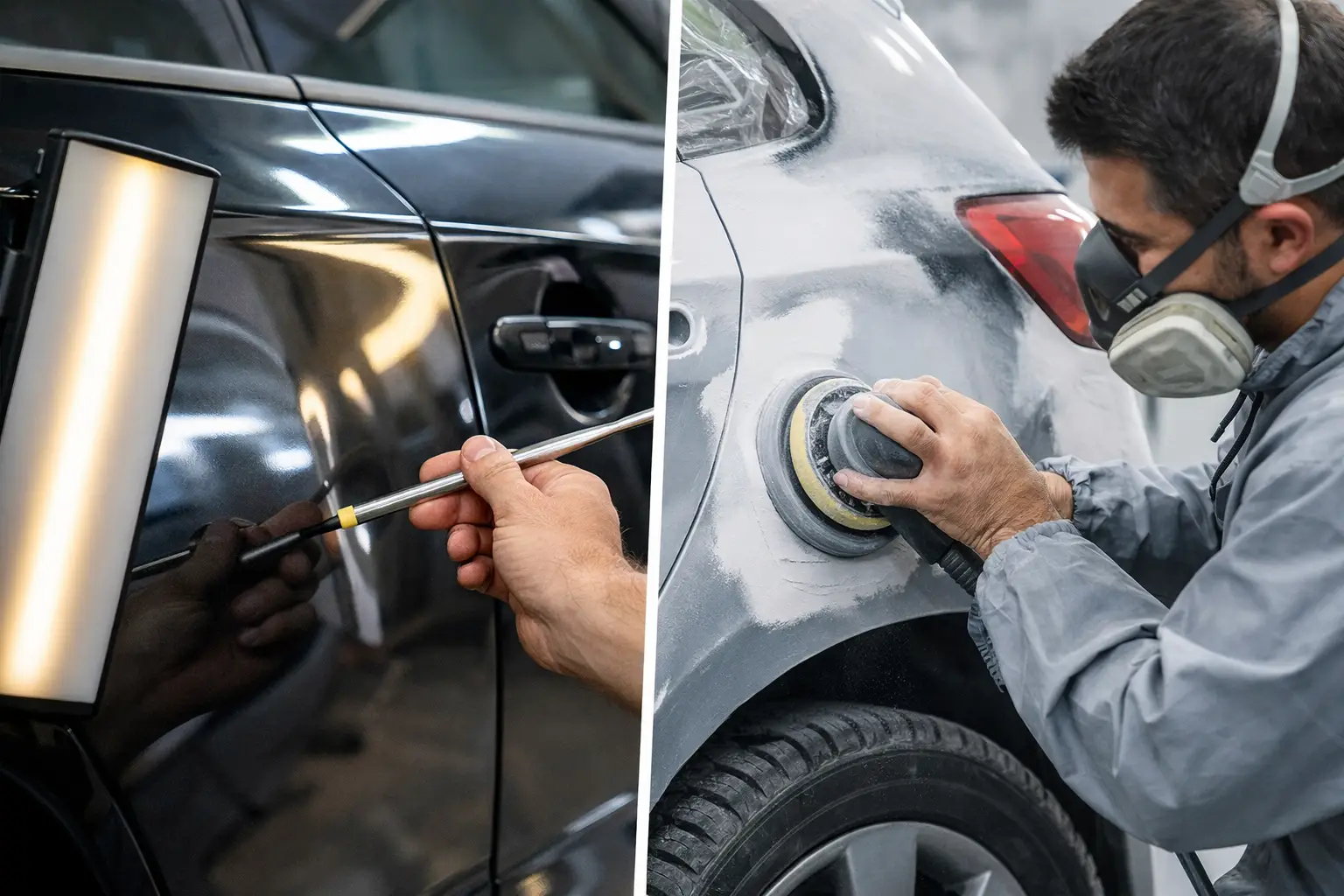
A shopping cart ding in a Lakeland parking lot and a dent from a low-speed collision can look similar from a few feet away. The repair process can be very different. When comparing paintless dent repair vs bodywork, the deciding factors are not just the dent’s size. The condition of the paint, the location of the damage, whether the metal has stretched, and whether a panel or structure was affected all matter.
For some vehicles, paintless dent repair can return a panel to its original shape without repainting it. For others, conventional auto body repair is the correct path because the damage goes beyond what can be safely or cleanly pushed back into place. Knowing the difference helps you make a better decision before investing in repairs.
What Paintless Dent Repair Is Designed to Fix
Paintless dent repair, often called PDR, is a specialized technique for removing minor dents while keeping the vehicle’s original factory finish. A technician accesses the back side of the damaged panel when possible and uses precise tools to gradually massage the metal back into position. In some cases, controlled pulling methods are used from the exterior.
The best candidates for PDR are shallow dents with paint that is still intact. Door dings, hail dents, light impacts from carts, and small rounded depressions are common examples. Because there is no filler, primer, or color application involved, the repair can often be completed faster than a conventional body repair.
PDR works especially well when the metal has not been sharply creased or stretched. Modern vehicle panels are designed to flex to a point, but a strong impact can push material beyond its ability to return cleanly to shape. When that happens, a technician may be able to improve the dent with PDR, but a complete restoration may require bodywork and paint.
When the Paint Matters Most
A paintless repair depends on the clear coat and color coat remaining bonded to the panel. If the paint is cracked, chipped, scraped through, or separating from the metal, pushing the dent out will not restore the damaged finish. It can also make existing paint damage more visible.
Florida heat and sun exposure are worth considering as well. Older paint that has faded, become brittle, or started to peel may not tolerate the pressure involved in PDR as reliably as a newer factory finish. A proper inspection helps determine whether the paint can remain in place during the repair.
When Traditional Bodywork Is the Better Repair
Conventional bodywork is used when damage requires more than reshaping a panel from behind. The process may involve pulling damaged metal, straightening the panel, applying a small amount of body filler where needed, sanding, priming, matching the color, and refinishing the repaired area. If a panel is too damaged to restore properly, replacement may be the better option.
Bodywork is generally the right choice after collision damage, deep dents, sharp creases, broken paint, rust, or damage near a panel edge. It is also appropriate when the impact affected more than the visible exterior surface. A dent in a bumper, fender, door, quarter panel, or hood can hide damaged brackets, reinforcements, inner panels, or alignment issues.
Unlike PDR, bodywork can address the full repair system: damaged metal, surface preparation, corrosion protection, and paint restoration. That makes it the more complete solution when appearance and long-term panel condition depend on refinishing.
Body Repair Can Protect More Than Appearance
A damaged painted surface exposes metal to moisture and contaminants. In Lakeland’s humid climate, a chip or crack that reaches bare metal can eventually become a rust concern, even if the original dent seems minor. Repairing the metal and properly sealing the surface helps protect the vehicle from further deterioration.
After an accident, bodywork may also be part of restoring proper fit and function. Doors need to open and latch correctly. Hoods, trunks, lights, bumpers, and trim need to align properly. If damage involves structural components or safety-related mounting points, it should be inspected and repaired as part of a collision repair process rather than treated as a cosmetic dent alone.
Paintless Dent Repair vs Bodywork: Key Differences
The main difference between paintless dent repair vs bodywork is whether the original finish can be preserved. PDR focuses on carefully restoring a panel’s shape without repainting it. Bodywork repairs the damaged panel and then restores the finish through preparation and professional automotive painting.
PDR is usually less invasive. When it is suitable, it can reduce repair time and avoid the need for color matching. It also preserves the vehicle’s factory paint, which many owners prefer for minor cosmetic damage.
Bodywork is more adaptable. It can correct damage that PDR cannot, including creases, stretched metal, paint damage, corrosion, and collision-related panel distortion. It requires more steps, but those steps are necessary when a vehicle needs a repair that looks right and holds up over time.
Cost also depends on the type and extent of damage. A small, accessible door ding with intact paint may cost less to repair with PDR than with conventional bodywork. However, PDR is not automatically the lower-cost choice in every situation. Difficult access, aluminum panels, complex body lines, or dents near bracing can make the process more time-consuming. Conversely, a larger repair involving damaged paint may be better handled through bodywork from the start rather than attempting an incomplete PDR repair first.
How Location Changes the Repair Decision
Where the dent is located often matters as much as how large it is. Flat, open areas of a door or hood are usually more favorable for paintless repair than tight edges and heavily reinforced areas. Dents near the edge of a panel are more likely to stretch the metal. Areas around body lines can be repaired in some cases, but the sharper the crease, the less predictable PDR becomes.
Panels with limited backside access may require removing trim, interior panels, lights, or other components. That does not rule out PDR, but it can affect labor time and whether the repair is practical. Some vehicle designs also use high-strength steel, aluminum, composite materials, or extensive internal bracing that change the recommended approach.
Bumpers deserve special attention. Many bumper covers are plastic rather than metal, so conventional paintless dent repair is not always the right description for the work required. A dented bumper can sometimes be reshaped, but cracks, torn tabs, deep scratches, or distorted mounting areas often require bumper repair and refinishing.
Questions to Ask Before Choosing a Repair
Before deciding on PDR or bodywork, look beyond the visible dent. Is the paint intact? Does the panel have a sharp crease? Is there damage on a body line, edge, or corner? Does the door, hood, trunk, or bumper still fit correctly? Has the vehicle been in an impact that could have affected components behind the panel?
If the answer involves cracked paint, poor panel alignment, a deep crease, or collision damage, conventional body repair is usually the safer recommendation. If the dent is shallow, the paint is in good condition, and the panel has no underlying damage, PDR may be an efficient option.
An experienced inspection is valuable because repairability cannot always be judged from a photo or a quick glance. Lighting can hide low spots and paint damage. What appears to be a simple fender dent may have damaged a liner, bracket, headlight mounting point, or inner structure.
Choose the Repair That Restores the Vehicle Properly
The goal is not to force every dent into the fastest or cheapest repair category. The goal is to restore your vehicle’s appearance, protect its finish, and address any damage that affects fit, function, or safety. Paintless dent repair is an excellent solution for the right type of minor damage. Professional bodywork and painting are the better answer when the dent involves paint damage, deeper distortion, or collision-related concerns.
For Lakeland drivers, a clear repair assessment can prevent a small cosmetic issue from becoming a larger appearance or corrosion problem. New Age Auto Painting can evaluate the condition of the panel and recommend the repair approach that gives your vehicle a clean, durable, road-ready result.