New Age Auto Painting Blog · September 6, 2026
Post Accident Vehicle Inspection Guide for Lakeland
Use this post accident vehicle inspection guide to identify visible damage, protect your safety, and plan quality collision repairs in Lakeland, Florida.
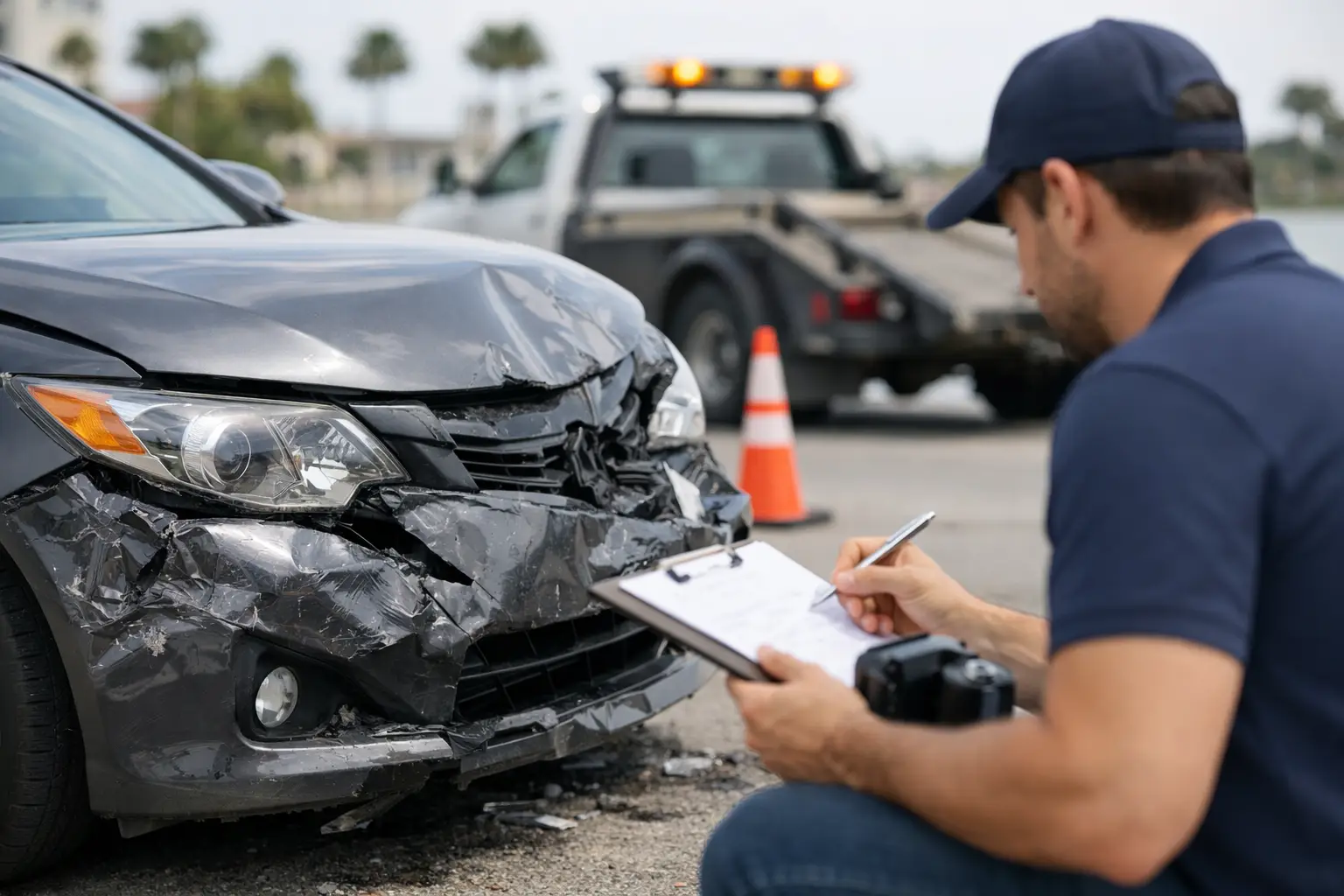
A minor impact can leave a vehicle looking drivable while hiding damage that affects steering, braking, lighting, or crash protection. This post accident vehicle inspection guide helps Lakeland drivers recognize what to check before assuming a car is safe to use or deciding that a repair is only cosmetic.
Post Accident Vehicle Inspection Guide: Start With Safety
Before inspecting damage, make sure the vehicle is in a safe location. If there is smoke, a fuel odor, steam, leaking fluid, exposed wiring, or an active warning light, turn the vehicle off and arrange for a tow. Do not open a hot radiator cap or attempt to move damaged parts by hand.
If the collision was significant, the safest choice is usually to have the vehicle transported rather than driven. A car can start and still have damage to its suspension, cooling system, wheel alignment, or safety systems. Florida roads, high speeds, and sudden rain make those problems more dangerous than they may appear in a parking lot.
Once the vehicle is secure, take a slow walk around it in good lighting. Start at one corner and work your way around the vehicle instead of focusing only on the point of impact. A bumper hit can transfer force into nearby panels, lamps, brackets, wheel openings, and structural components.
Check the Exterior Beyond the Obvious Dent
Look for cracked paint, split bumper covers, loose trim, broken lamps, gaps between body panels, and panels that no longer sit flush. Note whether the hood, trunk, liftgate, or doors open and close normally. A door that sticks, needs extra force to latch, or sits unevenly can indicate more than a damaged outer panel.
Pay close attention to panel gaps around the hood, fenders, doors, and trunk. Even spacing does not guarantee there is no hidden damage, but a new gap, rubbing edge, or misaligned seam is worth documenting. It may point to a shifted mounting point or damage behind the visible surface.
Also inspect the windshield, side windows, and mirrors. Chips and cracks can spread after the accident, especially in Florida heat. Check that headlights, taillights, turn signals, brake lights, and hazard lights operate correctly. Moisture inside a lamp housing, a loose light assembly, or a cracked lens should be addressed before regular driving.
Paint damage deserves attention even when the metal underneath seems intact. Scratches that cut through the clear coat and color layer can expose metal or leave edges where moisture works beneath the finish. Professional refinishing is not just about appearance. Proper surface preparation, color matching, and clear coat application help protect repaired areas from future deterioration.
Inspect Tires, Wheels, and Suspension Clues
A curb strike or side impact can damage a tire, bend a wheel, or affect alignment without creating dramatic exterior damage. Look at each tire for cuts, bulges, low pressure, sidewall scuffs, or tread that appears uneven. A bulge in the sidewall can signal internal tire damage and should not be ignored.
Check wheels for cracks, missing pieces, deep scrapes, or a rim that looks out of round. Then look through the wheel opening for loose plastic liners, hanging components, fluid residue, or parts that appear closer to the tire than normal.
When it is safe to drive after a minor accident, pay attention to how the vehicle feels. Pulling to one side, a crooked steering wheel, vibration, clunking over bumps, or tire noise can point to wheel, suspension, or alignment damage. These symptoms are reasons to stop driving and schedule an inspection, not issues to wait out.
Look Under the Vehicle for Leaks
Use a flashlight to check the ground and the underside of the vehicle. Fresh puddles, drips, or a strong odor can indicate damage to the cooling system, oil pan, transmission lines, fuel system, or washer fluid reservoir. The color alone is not always enough to identify a fluid, so do not rely on guesswork.
A sweet smell or green, orange, pink, or clear fluid may be coolant, while dark brown or black fluid may be oil. Red fluid can be transmission or power steering fluid in some vehicles. Fuel odors, especially after a rear-end collision, deserve immediate attention. Keep the vehicle off and contact a towing service if you suspect a fuel leak.
Open the hood only after the engine has cooled and only if the front end is not severely damaged. Look for displaced covers, cracked reservoirs, loose battery connections, and visible fluid leaks. Do not try to straighten brackets or reconnect damaged wiring yourself. Modern vehicles often place sensors and safety components behind the bumper and grille area.
Check the Interior and Warning Systems
Inside the vehicle, confirm that seat belts extend and retract properly and that their buckles latch securely. If an airbag deployed, the vehicle needs professional evaluation before it returns to the road. Airbag replacement can involve sensors, modules, seat belt pretensioners, dashboard components, and other related parts.
Turn the ignition on and check the instrument panel. New warning lights for the airbag system, check engine system, anti-lock brakes, traction control, steering, or tire pressure may be connected to the accident. A warning light does not identify the exact repair needed, but it does tell you the vehicle should be inspected.
Test the backup camera, parking sensors, power windows, locks, wipers, horn, and climate controls if they were near the impact area. These features can be affected by damaged wiring, connectors, or mounting points. On newer vehicles, even a modest bumper impact may affect cameras and driver-assistance sensors that require proper repair and calibration.
Document Damage Before Repairs Begin
Take clear photos from several distances. Capture the full vehicle, each damaged area, close-ups of cracks and paint damage, the license plate, tires and wheels, warning lights, and any fluid on the ground. Photograph the other vehicle and accident location when appropriate and safe to do so.
Write down what happened while it is fresh. Include the date, location, direction of impact, weather conditions, visible damage, warning lights, and changes you notice while driving. This record can help when you speak with your insurer and when a repair professional evaluates the vehicle.
Avoid washing away paint transfer, fluid evidence, or debris before taking photos unless it creates a safety hazard. At the same time, do not delay necessary towing or emergency service just to collect more documentation. Safety comes first.
Why a Professional Collision Inspection Matters
Visible damage tells only part of the story. Bumper covers can conceal damaged absorbers, reinforcement bars, brackets, sensors, and energy-management components. A fender dent may be limited to the panel, or it may be accompanied by damage to the inner structure, wheelhouse, headlamp mounts, or suspension. The difference cannot always be determined from a driveway inspection.
A qualified collision repair shop can assess body panels, mounting points, paint damage, structural concerns, and repair needs as one process. This matters because a repair that looks good but leaves a loose component, misaligned panel, or unaddressed sensor issue is not a complete repair.
Repair decisions also depend on the vehicle's age, the location of the damage, parts availability, insurance requirements, and whether a panel can be repaired safely instead of replaced. For minor dents and scuffs, focused bodywork and paint refinishing may be appropriate. For heavier impacts, a more detailed damage assessment is necessary before anyone can give an accurate repair plan.
For Lakeland vehicle owners, New Age Auto Painting provides collision repair, auto body work, and professional paint restoration in one local shop. Bringing the vehicle in promptly gives a technician the chance to identify visible and hidden concerns before small issues lead to additional damage or an unsafe driving condition.
Know When Not to Drive
Do not drive the vehicle if a tire is damaged, a wheel rubs, fluids are leaking, the steering feels abnormal, warning lights remain on, lights are broken, a bumper or panel is loose, or the hood will not latch. The same applies if the car overheats, pulls sharply, makes new grinding sounds, or has deployed airbags.
After an accident, the goal is not simply to make the car look better. It is to make sure the vehicle is inspected carefully, repaired appropriately, and ready for the road with its safety and appearance restored.