New Age Auto Painting Blog · July 8, 2026
Quarter Panel Damage Repair Explained
Quarter panel damage repair restores body lines, safety, and paint finish after dents, collisions, or rust on your vehicle in Lakeland.
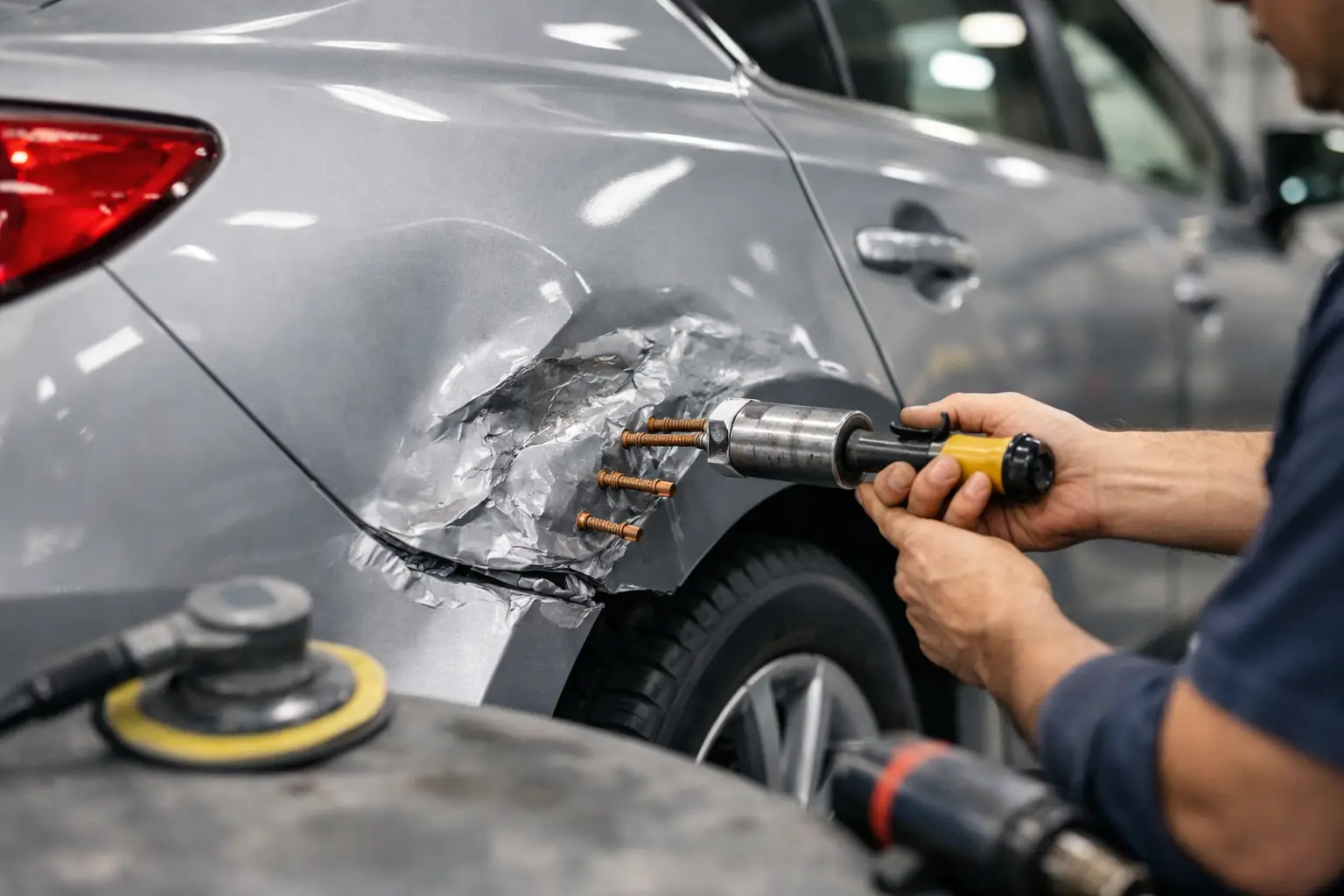
A damaged quarter panel can make a vehicle look worse than the accident itself. It also raises a practical question fast - is this a simple cosmetic fix, or does it require major body work? Quarter panel damage repair depends on where the impact happened, how deep the metal is distorted, and whether the damage reaches adjacent panels, mounting points, or paint surfaces.
The quarter panel is one of the larger exterior body sections on a vehicle, usually located between the rear door and the back bumper area on each side. On many vehicles, it is welded into place rather than bolted on like a fender. That matters because repair work is often more involved than people expect. What looks like a dent near the wheel opening can affect body lines, panel strength, trim fitment, and paint matching.
What quarter panel damage actually involves
Quarter panel damage can range from a shallow parking lot dent to collision-related deformation that reaches the wheel arch, trunk opening, rear body panel, or door gap. Scrapes and creases are common, but so are cracked paint, stretched metal, and hidden inner damage.
When the panel takes a hit, the visible dent is not always the full problem. Impacts can shift the surrounding metal, distort the lip around the wheel opening, or create pressure points that throw off alignment. If the damage is close to the rear suspension area or inner structure, a proper inspection matters even more.
This is why quarter panel damage repair is rarely just about making the surface look smooth again. The goal is to restore shape, fit, and finish so the vehicle looks right and functions the way it should.
When quarter panel damage repair is possible
Not every damaged quarter panel has to be replaced. In many cases, repair is the better option if the metal has not been torn, severely stretched, or compromised beyond practical reshaping.
A repair may be suitable when the damage is limited to dents, minor creases, surface scrapes, or localized deformation without major structural involvement. Skilled body work can often pull the panel back into shape, refine the metal, apply filler where needed, and refinish the area to match the rest of the vehicle.
That said, it depends on the severity and the location. A small dent in a flatter area is very different from damage along a sharp body line or around the wheel opening. Edges and curves are harder to restore cleanly because they define how the panel flows into the rest of the vehicle.
When replacement makes more sense
Some quarter panels are too damaged for an efficient or lasting repair. If the metal is heavily crushed, torn, badly stretched, or rusted through, replacement may provide a better result.
Because quarter panels are commonly welded on, replacement is not a light job. It can involve removing trim, glass, lights, interior components, and nearby panels to access factory seams and install the new section correctly. This kind of work requires proper measuring, welding, corrosion protection, seam sealing, and refinishing.
Replacement is often the right move when repair time would be excessive, when the panel shape cannot be restored to acceptable standards, or when the impact has affected attachment areas and inner supports. The cheapest path up front is not always the best one long term.
How the repair process usually works
A professional quarter panel damage repair starts with a full inspection, not just a glance at the dent. The shop checks the visible damage, the condition of the paint, the alignment of nearby panels, and any signs of hidden damage behind the quarter panel.
If the panel is repairable, technicians may pull the metal outward using specialized equipment, reshape damaged areas, and smooth imperfections before refinishing. Minor filler may be used to restore contour after the metal is brought as close as possible to its original form. The surface is then primed, sanded, color matched, painted, and cleared.
If replacement is needed, the damaged section is removed at proper seam locations and the new panel is fitted carefully before welding and finishing begin. Once the body work is complete, the paint process has to blend correctly with surrounding panels so the repair does not stand out.
For vehicle owners, this is where working with a shop that handles both body repair and paint under one roof makes a difference. It reduces handoff issues and helps keep the final result consistent from metal work through refinishing.
Why paint matching matters in quarter panel damage repair
Even an excellent metal repair can look off if the paint does not match. Quarter panels sit in a highly visible area, especially on lighter colors, metallic finishes, and vehicles with strong side body lines.
Paint matching is not only about finding the right color code. Existing paint may have faded from sun exposure, age, and weather. In Florida, that exposure can be significant. A proper refinish often involves blending color into adjacent areas so the repaired section transitions naturally rather than looking like a patch.
Clear coat quality matters too. Gloss level, texture, and edge transitions all affect how noticeable the repair will be in daylight. A quarter panel repair should not leave you with a clean dent fix but a mismatched finish.
Cost factors that affect the job
Customers often want a firm price right away, but quarter panel repairs vary a lot. The cost depends on how deep the damage goes, whether the panel can be repaired or replaced, how much disassembly is required, and how much paint work is involved.
Vehicle make and model also matter. Some quarter panels are easier to access and section than others. Some finishes are more labor-intensive to match. If sensors, trim, moldings, tail lamps, or nearby components have to come off and go back on, that adds time.
Insurance may cover quarter panel damage if it resulted from a collision or covered event, but the scope still needs to be documented accurately. A quality estimate should account for both visible damage and likely repair steps rather than guessing low and revising later.
Signs the damage may be more serious than it looks
A quarter panel dent can seem minor while hiding larger problems. If the trunk does not close correctly, the rear door gap changed, the bumper no longer fits flush, or the wheel opening looks uneven, the impact may have spread beyond the outer panel.
You may also notice cracked seam sealer, taillight misalignment, or buckling inside the trunk area. These are signs the hit may have affected adjacent structures. In that situation, appearance repair alone is not enough. The vehicle needs a thorough body inspection so the repair plan addresses the full damage, not just the obvious part.
Choosing the right shop for quarter panel damage repair
Quarter panel work is not the place to cut corners. Because the panel is large, visible, and often welded into the body, the repair quality affects both appearance and long-term value.
Look for a shop that can assess structural concerns, perform precise body work, and deliver professional paint refinishing in the same process. Ask whether the panel is likely repairable, whether blending will be needed, and how the shop handles fit and finish around doors, bumpers, lights, and trunk openings.
For drivers in Lakeland, working with a local shop that handles collision repair and refinishing every day can simplify the process. New Age Auto Painting focuses on restoring damaged vehicles with body repair and paint services designed to bring them back to a clean, road-ready condition.
What to do after the damage happens
If your quarter panel was hit, take clear photos before washing or moving anything around. Note changes in panel gaps, door operation, wheel opening shape, and damage near the trunk or bumper. If insurance is involved, good documentation helps.
Then get the vehicle inspected before assuming it is only cosmetic. A quick estimate based on a photo may give a rough direction, but a proper in-person evaluation is what reveals whether the panel can be repaired, whether replacement is needed, and what it will take to restore the finish correctly.
Quarter panel damage does not fix itself, and it usually becomes more noticeable over time. The right repair brings back more than appearance - it restores the shape, finish, and confidence you want when you walk back to your vehicle.