New Age Auto Painting Blog · May 25, 2026
Repairing Deep Car Paint Scratches
Repairing deep car paint scratches takes more than touch-up paint. Learn when DIY works, when body repair is needed, and how pros restore finish.
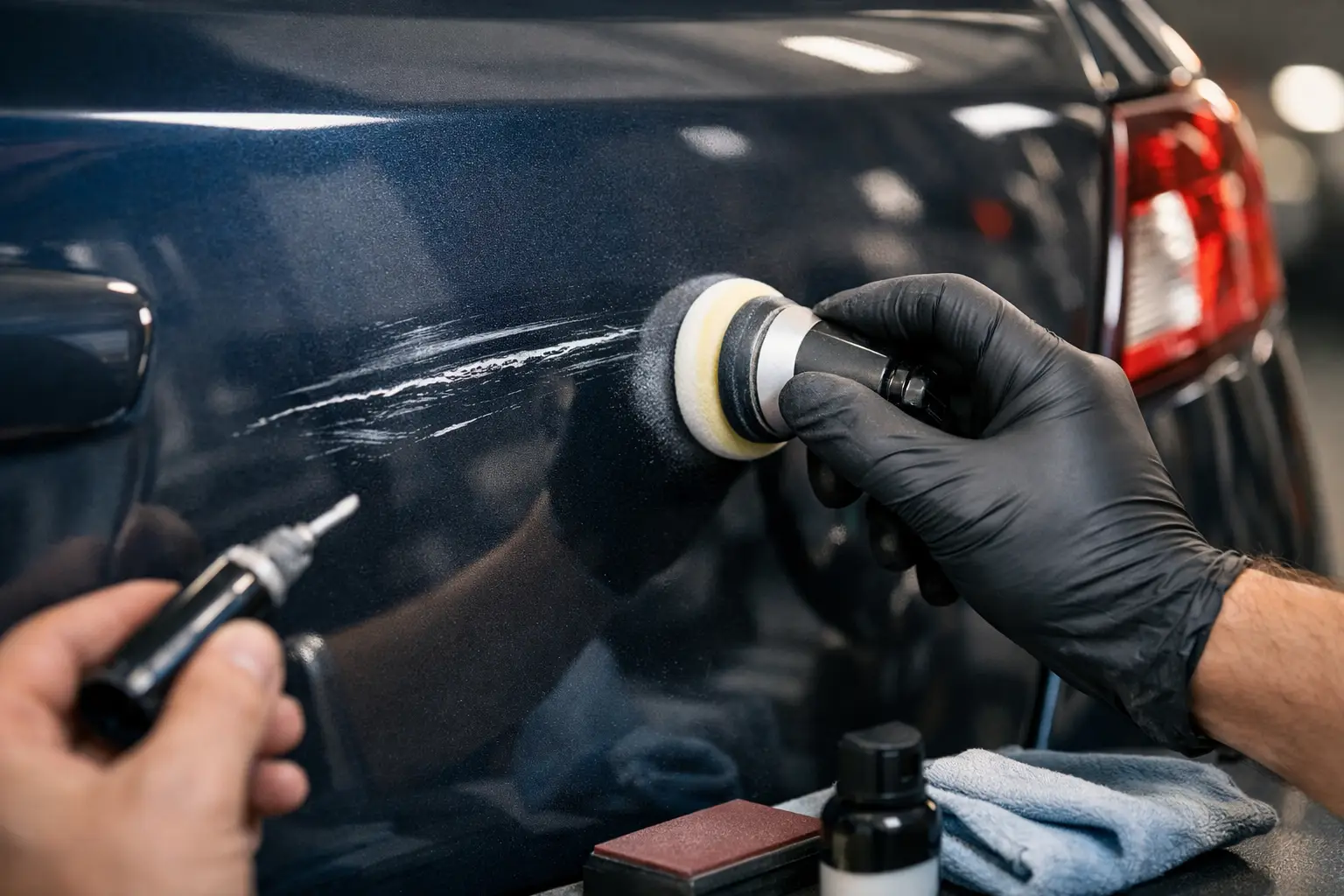
A scratch that catches your fingernail is usually more than a surface blemish. In many cases, repairing deep car paint scratches means dealing with damage that has cut through the clear coat, color coat, and sometimes even into the primer or metal underneath. If the area is left exposed, what starts as a cosmetic issue can turn into paint failure, corrosion, and a more expensive repair later.
For drivers in Lakeland, that matters more than many people realize. Heat, rain, road grime, and regular sun exposure can make damaged paint deteriorate faster. A deep scratch on a door, bumper, fender, or quarter panel is not just something you notice in a parking lot. It is a weak point in the finish, and the longer it sits, the harder it can be to restore cleanly.
What counts as a deep car paint scratch?
Not every scratch needs body shop repair. Light marks that only affect the clear coat can often be polished out. Deep scratches are different. They usually look sharper, feel rough, and may show a lighter underlayer or dark exposed substrate beneath the paint.
If you can see primer, bare metal, or plastic, the damage has gone beyond the top layer. On modern vehicles, paint is a system made up of multiple layers that work together. Once those layers are broken, a quick wipe, wax, or scratch remover will not bring the finish back.
This is where many DIY attempts go wrong. A product may reduce the appearance of a scratch temporarily, but it cannot rebuild missing paint layers or correct distorted body lines around the damaged area.
Repairing deep car paint scratches the right way
The correct repair depends on how severe the damage is, where it is located, and whether the panel itself has also been dented or gouged. There is no one-size-fits-all fix, which is why accurate evaluation matters at the start.
A proper repair usually begins with cleaning and inspecting the panel under good lighting. The technician needs to determine whether the scratch is isolated to the paint system or if there is deformation in the panel. If the impact that caused the scratch also bent the metal or damaged a bumper cover, the repair process becomes more involved.
After inspection, the damaged area is prepared by sanding away compromised paint and feathering the edges so the repair can transition smoothly into the surrounding finish. If the scratch has reached metal, corrosion protection may be needed before primer is applied. If filler is required because the surface is gouged or uneven, that step has to be shaped carefully so the panel looks correct once painted.
From there, primer is applied and cured, followed by sanding to create a smooth, level base. Then the color coat is matched to the vehicle and blended as needed. Finally, clear coat is applied to protect the finish and restore gloss. After curing, the area may be polished to refine the final appearance.
That process sounds straightforward on paper, but results depend on equipment, paint matching, surface prep, and technician experience. Deep scratch repair is rarely about just covering a line. It is about rebuilding the damaged finish so the repair holds up over time.
Why touch-up paint often falls short
Touch-up paint has its place. It can help reduce the visibility of very small chips and minor isolated damage. But for larger or deeper scratches, especially on visible panels, it often leaves a result that is still easy to spot.
The main problem is texture and level. A brush-applied touch-up rarely lays flat enough to match the surrounding paint. Color match can also be an issue, particularly on faded finishes, metallic paints, and pearl colors. Even if the color is close, the repaired area may still stand out because the gloss, flake orientation, or edge blending is off.
There is also the issue of hidden damage. If a scratch is deep enough to expose metal and the area is not properly prepared first, simply dabbing paint over it does not provide the same protection as a professional refinishing process. The vehicle may look slightly better for a while, but the repair may not last.
When a body shop repair makes more sense
If the scratch runs across multiple inches, crosses a body line, exposes bare metal, or affects a bumper corner or door edge, professional repair is usually the better option. The same is true if the damage happened during a parking lot impact, side swipe, or minor collision. In those cases, there may be more going on than the paint damage you can see.
A body shop can also determine whether the panel should be spot repaired, refinished, or replaced. That distinction matters. Some damage can be localized effectively. Other repairs need full panel refinishing to avoid visible transition lines or durability issues.
For example, a deep scratch on a flat lower door area may be repairable without repainting adjacent panels. A scratch on a metallic fender near a body contour may require blending for a cleaner match. Bumper covers bring their own challenges because flexible materials and curved shapes affect how paint is applied and how defects show in the finish.
The cost question depends on more than scratch length
Many drivers want a price based only on how long the scratch is. That is understandable, but repair cost is tied to more than size alone. Depth, location, panel material, paint color, and whether the panel has prior damage all affect the scope of work.
A short scratch down to primer on a simple panel may be less involved than a similar-length scratch on a metallic bumper with scuffs, distortion, and cracked paint around it. If rust has already started on an exposed metal panel, that also adds repair steps.
This is why an in-person estimate is usually the most accurate way to understand what the repair will require. A photo can help, but it does not always show depth, texture, or panel distortion clearly.
How Florida conditions affect scratched paint
In Lakeland and the surrounding area, climate is part of the repair conversation. Moisture, heat, UV exposure, and frequent washing all put stress on damaged paint. Once the finish is broken, the exposed area is more vulnerable to deterioration.
On metal panels, that can mean oxidation begins sooner than expected. On plastic parts like bumpers, the concern is less about rust and more about continued peeling, lifting, or noticeable finish breakdown around the damaged spot. Either way, delaying repair can turn a small restoration job into a larger repaint.
That does not mean every scratch is an emergency. It does mean deep scratches should not be ignored for months, especially when the damage has clearly gone through the top layers.
What to expect from a professional finish
A quality repair should do more than hide the scratch from ten feet away. The goal is to restore the appearance of the panel so the color, gloss, and surface contour look consistent with the surrounding vehicle. That takes proper prep, accurate paint matching, and attention to how the repaired area transitions into the original finish.
Professional results also matter for resale value and everyday appearance. A visibly brushed-in repair on a prominent panel can make an otherwise solid vehicle look neglected. A properly refinished panel helps the car look cared for and complete.
For vehicle owners who want both body repair and paint work handled in one place, a full-service shop can simplify the process. That is especially useful when a scratch is part of broader cosmetic or collision-related damage. New Age Auto Painting serves Lakeland drivers who need that kind of repair done professionally, without sending the vehicle between multiple shops.
Deciding whether to repair now or wait
If the scratch is shallow, hard to see, and only in the clear coat, waiting may be reasonable. If it is deep, visible, or exposing underlying material, sooner is usually better. The longer damaged paint sits, the greater the chance that surrounding edges start to fail or contamination affects the repair area.
A good rule is simple. If the scratch catches your fingernail and you can see a different layer below the color, get it looked at. You do not have to guess whether it needs polishing, touch-up work, or full refinishing. A trained shop can tell you quickly and help you avoid spending money on the wrong fix.
Deep scratches are frustrating, but they are repairable. The right approach is not about masking the damage. It is about restoring the panel correctly so your vehicle looks right, stays protected, and is ready for the road again.