New Age Auto Painting Blog · June 26, 2026
Rock Chip Paint Repair That Actually Lasts
Rock chip paint repair helps stop rust, protect your finish, and restore your vehicle's look. Learn when touch-up works and when shop repair is best.
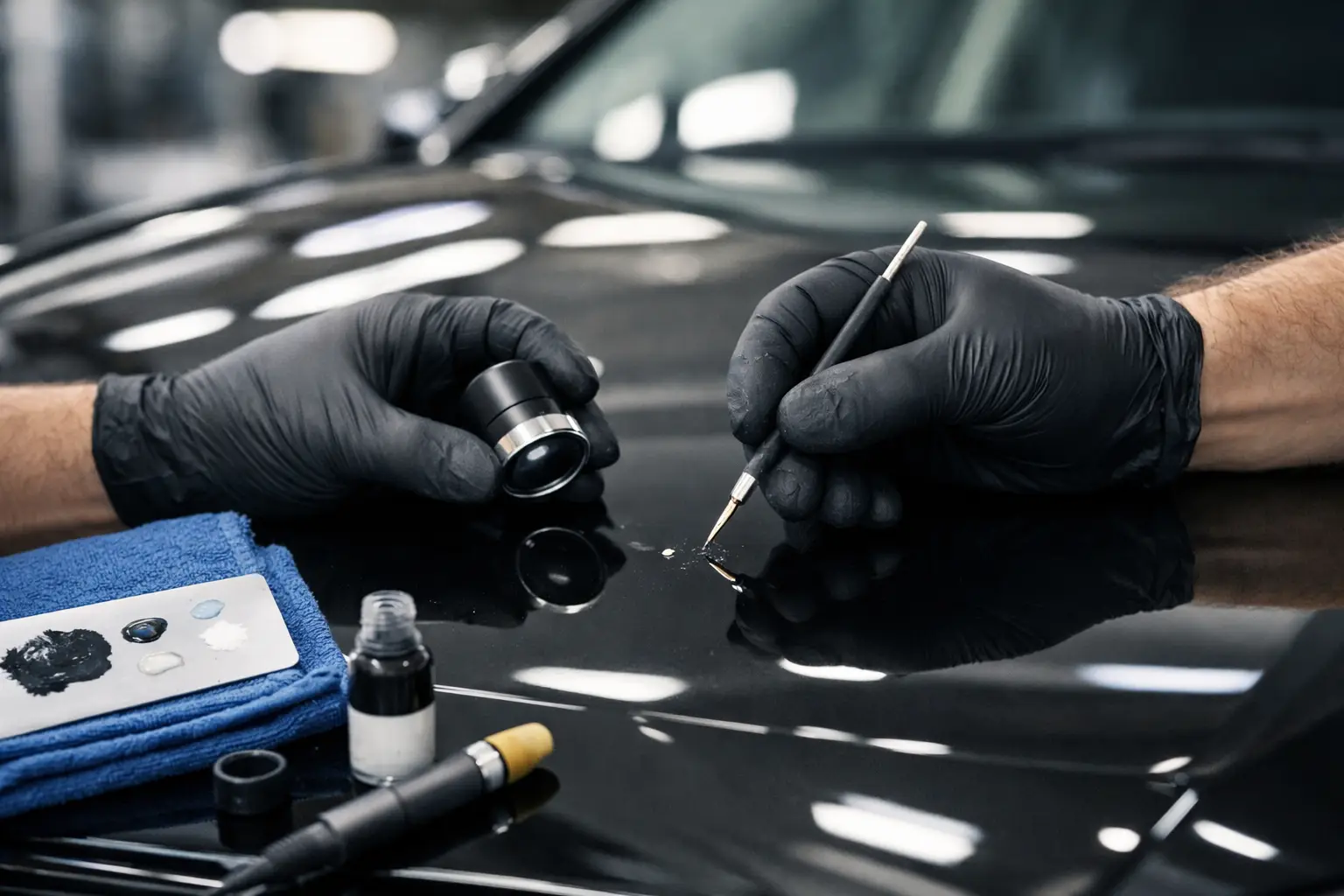
A small chip on the hood or bumper does not stay small for long in Florida. Heat, rain, road grit, and regular driving can turn a pinhead-size mark into peeling paint, exposed metal, or rust that spreads beyond the original damage. That is why rock chip paint repair matters. Done correctly, it protects the panel underneath and keeps minor cosmetic damage from turning into a larger refinishing job.
For many drivers, the question is not whether to fix a rock chip. It is how soon to fix it, and whether a quick touch-up is enough or a professional repair will hold up better. The answer depends on where the chip is, how deep it goes, and what you expect the finished repair to look like.
Why rock chip paint repair matters
Modern automotive paint is built in layers. You have primer, basecoat for color, and clear coat for protection and gloss. When a rock strikes the surface hard enough, it can cut through one layer or all of them. If the damage stops at the clear coat, the repair is usually simpler. If the chip exposes primer, bare metal, or plastic, the repair becomes more urgent.
The biggest risk is not always appearance. On metal panels such as hoods, fenders, and roof edges, an untreated chip can let moisture reach the metal. In Lakeland, that combination of humidity and daily driving can accelerate corrosion faster than many drivers expect. Even when rust has not started yet, dirt and moisture can make later paint work more complicated.
There is also the issue of resale value and overall presentation. A vehicle with multiple visible paint chips often looks older and less cared for, even when it is mechanically solid. Repairing chips early helps preserve the finish and maintain a cleaner, more consistent appearance.
When a paint chip is more serious than it looks
Some chips look minor from a few feet away but need more than a dab of touch-up paint. Damage near the leading edge of the hood, along wheel arches, or on bumper covers often takes repeated impact from road debris. If the surrounding paint is already weak, one chip can turn into flaking or lifting around the edges.
A few signs suggest the repair needs professional attention. If you see rust color in the chip, if the edges feel rough or raised, if the chip is larger than a pencil eraser, or if there are several chips concentrated in one area, a simple at-home fix may not blend well or last. The same goes for chips on highly visible areas where color match and finish quality matter.
Plastic bumpers bring a different issue. They do not rust, but they can still lose paint adhesion, especially if the impact cracked the coating or flexed the surface. In that case, filling the spot without proper prep may leave a visible ring or peeling edge later.
DIY touch-up versus professional rock chip paint repair
There is a place for DIY touch-up paint. If the chip is very small, the color match is accurate, and the goal is mainly to seal the damaged spot, a careful touch-up can help prevent further exposure. This approach makes sense for older vehicles, work trucks, or less visible areas where perfect cosmetic blending is not the priority.
The trade-off is finish quality. Bottle touch-up paint tends to leave a raised spot, and many factory colors are difficult to match exactly without the right materials and application process. Metallic colors, pearl finishes, and panels exposed to years of sun fading can be especially difficult. A repair that looks acceptable up close on one vehicle may stand out badly on another.
Professional rock chip paint repair is usually the better choice when appearance matters, when the chip has gone through multiple paint layers, or when several chips affect the same panel. A body and paint shop can clean the damage properly, treat any early corrosion, apply compatible materials in the right sequence, and blend the repair so it looks more natural with the surrounding finish.
What professional rock chip paint repair involves
A durable repair starts with inspection. The technician checks how deep the chip goes, whether there is hidden rust, and whether the surrounding paint is still stable. That matters because paint does not hold well over contamination, loose edges, or corrosion.
The damaged area is then cleaned and prepared. Depending on the chip, that may involve sanding, feathering the edges, removing any rust, and applying primer where needed. If the chip is deep, a small amount of filling may be necessary to level the surface before color is applied.
Next comes color matching. This is one of the biggest differences between a professional result and a basic touch-up. Matching automotive paint is not just about finding the factory code. Age, sun exposure, and the angle of light all affect how a repaired area will appear. A trained refinishing team adjusts for those variables so the repair blends more naturally.
After the base color is applied, clear coat restores protection and gloss. The repaired area may then be polished and refined to reduce texture differences and improve the final appearance. If the panel has widespread chips or fading, spot repair may not be the best option, and refinishing a larger section or the full panel may produce a cleaner result.
When repainting a panel makes more sense
Not every chip should be treated as an isolated spot repair. If the front edge of the hood is peppered with impact marks, or if several chips have started to spread into peeling paint, local touch-ups can leave the panel looking patched. In those cases, repainting the affected section often gives a better and longer-lasting result.
This is where it helps to work with a shop that handles both body work and paint. If a panel has dents, gouges, or previous repair issues along with paint damage, the repair plan can address the full problem at once instead of layering cosmetic fixes over underlying defects.
For drivers who want the vehicle to look right again, not just temporarily covered, that distinction matters. The correct repair is not always the smallest repair. It is the one that restores the finish in a way that holds up.
Florida driving conditions make timing important
Lakeland drivers deal with conditions that are hard on paint. Highway debris, heavy rain, UV exposure, and frequent temperature swings all work against damaged finishes. A fresh chip on Monday can look very different a month later after weather and washing have had time to work on it.
That does not mean every rock chip requires major shop work. It does mean waiting is usually the wrong move. The sooner the area is inspected and sealed, the better the chance of keeping the repair smaller and more affordable.
Vehicles that spend a lot of time on I-4 or other high-traffic roads often show repeated chip damage on the hood, bumper, mirrors, and front fenders. If that sounds familiar, it is worth having those areas looked at before the damage becomes widespread enough to require full panel refinishing.
Choosing the right shop for rock chip paint repair
Paint repair is one of those services where details matter. Proper prep, color match, and finish quality determine whether the repair disappears into the panel or keeps catching your eye every time you walk up to the vehicle.
Look for a shop that regularly handles both cosmetic paint work and structural auto body repairs. That usually means the team is used to evaluating damage correctly rather than treating every issue as a quick surface touch-up. If a chip has led to rust, paint failure, or hidden panel damage, they can address the full scope instead of only the visible spot.
For local drivers, working with a Lakeland-area shop also makes the process easier. You can get the damage assessed in person, understand whether spot repair or refinishing makes more sense, and avoid guessing based on a photo or a generic paint kit. At New Age Auto Painting, that practical approach is central to helping vehicle owners get repairs that fit both the damage and the condition of the vehicle.
A small chip can lead to a bigger repair
Rock chips are easy to ignore because the vehicle still drives the same way. But paint damage is not just cosmetic once it opens the surface to moisture, contamination, and further paint loss. Early repair helps protect the panel, improve appearance, and reduce the odds of a more expensive correction later.
If you have a chip on the hood, bumper, fender, or roofline, the best next step is simple. Have it looked at while it is still a small repair, because that is usually when you have the most options and the best chance at a clean result.