New Age Auto Painting Blog · August 13, 2026
Same Shop Body and Paint Benefits for Your Car
See the same shop body and paint benefits: clearer repairs, better color matching, fewer handoffs, and a more efficient restoration in Lakeland, FL today.
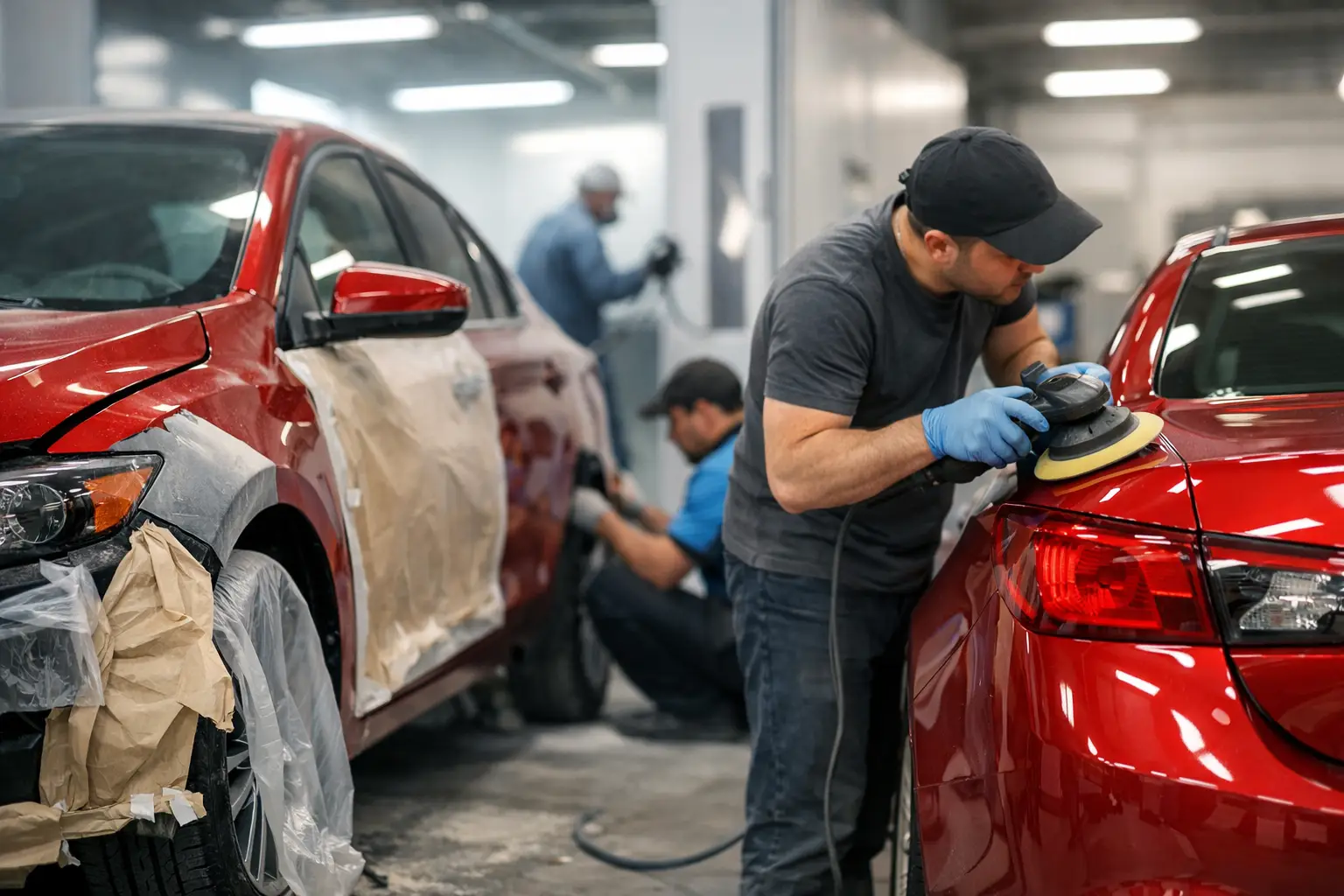
After a collision, a dent, or paint damage, the repair process can become more complicated than the damage itself. One shop may handle the bodywork, while another is asked to paint the repaired panel. The same shop body and paint benefits come from avoiding that split process: one team assesses the damage, completes the repair, prepares the surface, and applies the finish.
For Lakeland drivers, that means fewer handoffs and a clearer path from damaged vehicle to clean, road-ready result. It also gives the people painting your vehicle direct knowledge of the repairs underneath the finish.
Why Body Repair and Paint Work Belong Together
Auto body repair and automotive painting are connected jobs. A painted surface will only look right when the panel beneath it has been repaired, shaped, sanded, and primed correctly. If a fender still has minor waves, if a bumper repair has not been properly feathered, or if panel alignment is off, a fresh coat of paint will not solve the problem.
When one shop manages both stages, the repair plan can account for appearance from the beginning. The body technician knows where the finish must transition, and the paint technician can inspect the repaired area before refinishing begins. This creates better accountability for the complete result, not just one portion of the job.
That does not mean every repair needs extensive paintwork. Small damage may require a focused repair, while collision damage can involve multiple panels, replacement parts, blending, and refinishing. The right scope depends on the vehicle, the location of the damage, the paint condition, and the quality standard needed to make the repair look natural.
Same Shop Body and Paint Benefits for Vehicle Owners
Fewer Delays Between Repair Stages
Moving a vehicle from a body shop to a separate paint provider adds scheduling, transportation, and communication steps. If the paint shop finds a concern with the repair, the vehicle may need to go back for corrections before refinishing can continue.
A full-service shop can coordinate those steps internally. The vehicle remains in one location, and the team can move from damage assessment through body repair and paint preparation without waiting for another vendor to receive the car. Timing still depends on parts availability, damage severity, insurance approvals, and curing requirements, but fewer handoffs generally make the process easier to manage.
Better Communication About the Finished Appearance
A repair estimate may identify damaged panels, but the appearance goal involves more than replacing or straightening parts. The shop must consider paint condition, adjacent panels, texture, color variation, and where a blend may be needed.
When body and paint work are handled under one roof, the people responsible for the final appearance can communicate directly about those details. That is especially helpful with metallic, pearl, tri-coat, and older finishes, where a simple formula match may not produce a visually consistent result on the vehicle.
More Consistent Color Matching and Blending
Vehicle paint changes over time. Florida sun, weather exposure, previous repairs, and regular washing can affect how a finish looks. Even when a shop uses the manufacturer paint code, the existing color on your car may have aged slightly from its original shade.
Professional color matching often requires spray-out testing and blending paint into nearby panels rather than applying color only to the repaired spot. A shop that performed the body repair understands exactly where filler, primer, and refinishing work were completed. That direct coordination supports a smoother transition between the repaired area and the original finish.
Clearer Responsibility for the Result
When two businesses work on the same damage, it can be difficult for a vehicle owner to determine where a concern originated. Is an uneven finish caused by paint application, surface preparation, panel fitment, or the original collision repair? Separate vendors may each be responsible for only part of the answer.
One shop handling bodywork and paint gives customers a single point of contact. The team can inspect the vehicle as a complete repair, address questions in one conversation, and take responsibility for how the repaired area functions and looks together.
Less Stress During an Already Disruptive Repair
Most drivers do not want to coordinate between multiple repair providers after an accident. They want to know what is damaged, what needs to be repaired, how long the work may take, and when they can expect their vehicle back.
A combined body and paint process simplifies that experience. You have one estimate process, one repair plan, and one shop to contact for updates. For families, commuters, and anyone relying on a vehicle for work or daily errands around Lakeland, that convenience has real value.
The Paint Process Is More Than Applying Color
Quality automotive painting begins long before color is sprayed. The repaired panel must be cleaned, sanded, and properly prepared. Primer may be applied and cured before the surface is sanded again. The paint technician then applies color and clear coat according to the finish required for the vehicle.
The final result also depends on controlled conditions, correct materials, panel preparation, and careful inspection. Dust, poor masking, inadequate surface preparation, or rushed curing can affect the appearance and durability of the finish. Keeping the body and paint phases together makes it easier to maintain consistent standards through each step.
After refinishing, the vehicle should be inspected for color consistency, gloss, panel alignment, trim placement, and any remaining repair concerns. A car can have an attractive paint finish but still look incomplete if a bumper, molding, headlight, or body panel does not fit correctly.
When a Separate Paint Provider May Make Sense
There are situations where using separate specialists can be reasonable. A restoration project may require a shop with a very narrow specialty, such as vintage vehicle fabrication or a custom show-car finish. A shop may also refer out a service it does not have the equipment or expertise to perform properly.
For most collision repair, dent repair, bumper damage, scratches, and everyday paint restoration, keeping body and paint work with one qualified local provider is usually the more practical option. The key is not simply choosing one shop because it is convenient. Ask whether the shop can explain the repair process, inspect related damage, discuss color matching, and set realistic expectations for your vehicle.
What to Ask Before Authorizing Repairs
Before work begins, ask how the shop plans to repair the damaged area and whether refinishing will include blending into adjacent panels. Ask whether parts will be repaired or replaced, how the paint color will be matched, and what factors could affect the repair timeline.
It is also useful to ask for an explanation of any damage that may not be visible until disassembly. Collision impact can affect mounting points, brackets, inner panels, sensors, or alignment areas that are not obvious during an initial walk-around. A professional estimate should provide clarity while recognizing that additional repair needs can occasionally appear once the vehicle is opened up.
At New Age Auto Painting, body repair and professional refinishing are handled with the full vehicle result in mind. The goal is not to cover damage with paint. It is to restore the panel correctly, match the finish carefully, and return your vehicle looking clean, presentable, and ready for the road.
If your car has accident damage, fading paint, scratches, dents, or bumper damage, choose a repair process that treats the structure and appearance as connected work. One capable shop can make the path back to a vehicle you feel confident driving much simpler.