New Age Auto Painting Blog · May 29, 2026
Spot Paint vs Full Panel Paint Explained
Learn how spot paint vs full panel paint affects cost, color match, and repair quality so you can choose the right fix for your vehicle.
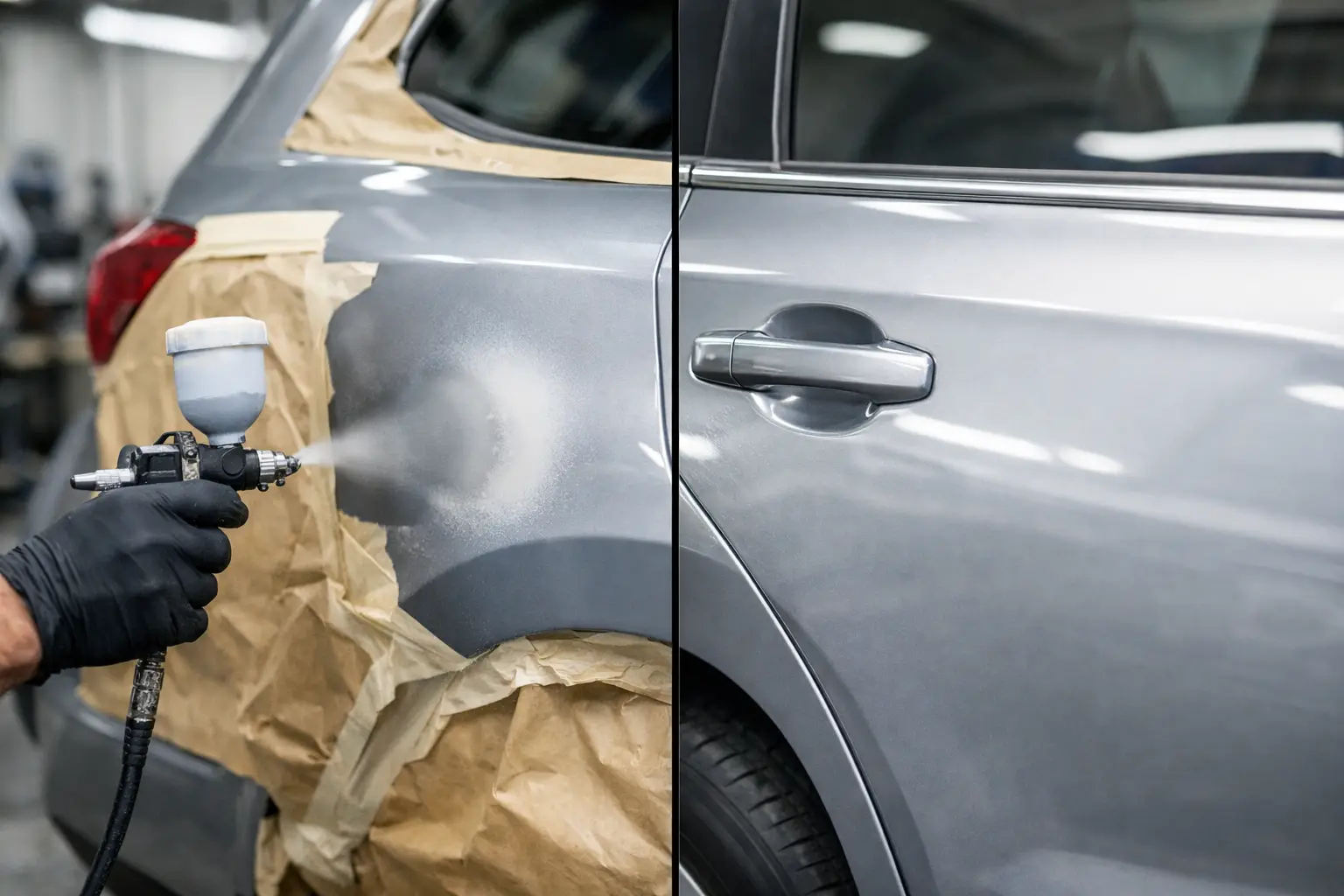
A small scrape on one door can turn into a bigger decision than most drivers expect. When you are comparing spot paint vs full panel paint, the right choice depends on the size of the damage, where it sits on the vehicle, how noticeable the area is, and how clean the final color match needs to be.
For Lakeland drivers dealing with scratches, scuffs, chips, or collision-related paint damage, this is not just a cosmetic question. The paint process affects how well the repair blends, how long it holds up, and whether the damage still catches your eye every time you walk up to the car.
What spot paint means
Spot paint is a localized refinishing method. Instead of repainting an entire fender, door, or bumper, the technician repairs and paints only the damaged section and blends the new color into the surrounding finish.
This approach is often used for minor scratches, small gouges, limited surface damage, and isolated cosmetic flaws. If the problem is contained to a tight area and the surrounding paint is still in good condition, spot paint can be an efficient repair.
The main advantage is that less of the panel is refinished. That can reduce labor time, material use, and overall repair cost. It may also mean a faster turnaround, which matters if you rely on your vehicle every day.
What full panel paint means
Full panel paint means refinishing the entire affected panel, even if the visible damage only covers part of it. For example, a scratch near the middle of a door might lead to painting the whole door rather than only the scratched section.
This method creates a more uniform finish across that part of the vehicle. Instead of blending into old paint within the same panel, the repair covers the complete surface from edge to edge. That can improve consistency in color, gloss, and texture.
Full panel paint is often the better option when damage is larger, when the panel has multiple flaws, or when the location makes a spot repair easier to notice. It is also common after body repair work where filler, straightening, or surface correction extends beyond one small area.
Spot paint vs full panel paint: the real difference
The biggest difference in spot paint vs full panel paint is how much of the vehicle gets refinished and how the repair is visually managed.
With spot paint, the technician is trying to hide the transition between the new finish and the existing finish in a smaller area. That takes skill and works best when the damage is limited and the surrounding paint still gives the technician a good surface to blend into.
With full panel paint, the transition happens at the edges of the panel instead of within the middle of it. That usually gives the repair more room to look even and complete, especially on panels that are flat, highly visible, or exposed to a lot of light.
Neither method is automatically better in every case. The right choice depends on the panel, the paint color, the condition of the surrounding finish, and the repair standard you want.
When spot paint makes sense
Spot paint is usually worth considering when the damage is truly minor and isolated. A small scratch near the lower section of a bumper, a chip that turned into a localized paint failure, or a light scrape that did not spread far across the panel may be a good fit.
It also makes sense when preserving as much of the original factory finish as possible is a priority. Factory paint is valuable, and in some cases a limited repair is the most practical way to correct a defect without refinishing more of the vehicle than necessary.
That said, spot paint works best when expectations are realistic. If the area is large, centered at eye level, or located where reflections are strong, even a technically good spot repair may be easier to detect than a full panel refinish.
When full panel paint is the better repair
Full panel paint is often the stronger choice when the damage extends across a wider area or when bodywork is already being performed on that panel. It is also a smart option for panels that draw attention, such as doors, hoods, and front fenders, where a mismatch in texture or blend line can stand out.
Dark colors, metallic finishes, and pearl paints can push the repair toward full panel painting because they are harder to blend invisibly in a tight spot. Sun exposure matters too. If the original paint has faded over time, matching only one small area can become more difficult.
For customers who want the most uniform appearance possible, full panel paint often delivers a cleaner visual result. It usually costs more than spot paint, but it can reduce the chance of seeing a repaired area later.
Color match is where the decision often changes
Many drivers assume paint matching is only about finding the correct paint code. In reality, paint code is just the starting point. Age, weather, oxidation, and previous repairs all affect how the current finish looks on the vehicle.
That is why color match plays such a big role in the spot paint vs full panel paint decision. A white daily driver with minor damage may allow more flexibility. A black truck, bright red car, or metallic silver SUV may show even slight differences in shade or flake orientation.
If a repair needs to disappear as much as possible, the shop has to consider not just the color itself but also gloss level, texture, and how light moves across the panel. In many cases, repainting the full panel gives the technician better control over the final appearance.
Cost matters, but value matters more
Spot paint is usually less expensive because it uses less material and involves less refinishing area. For minor cosmetic damage, that can make it a practical option.
But lower cost does not always mean better value. If a spot repair leaves a visible edge, slight mismatch, or finish difference that bothers you later, the savings may not feel worthwhile. On the other hand, paying for full panel paint on a tiny flaw that could have been handled properly with a localized repair may be unnecessary.
This is why a proper estimate matters. A good shop should explain not only the price difference but also the likely visual result of each option. The best recommendation is the one that fits both the damage and your expectations.
Panel location changes everything
Where the damage sits on the vehicle has a major impact on the repair strategy. Lower sections of bumpers and rocker areas can sometimes hide a spot repair better because they are less visible in normal viewing angles.
The center of a door or the upper section of a quarter panel is different. Those broad, open areas catch sunlight and reflections, which makes color and texture differences easier to spot. Curved body lines can sometimes help disguise a blend, while large flat panels can do the opposite.
Plastic bumpers also behave differently than metal panels. Flexibility, surface condition, and how the paint lays on the substrate all affect the final finish. That is another reason the same size damage may call for different repair methods on different parts of the vehicle.
Insurance repairs and customer-pay repairs are not always approached the same way
If the damage came from a collision claim, the repair plan may already lean toward full panel refinishing depending on the extent of body damage and insurer-approved procedures. If you are paying out of pocket for a small cosmetic issue, spot paint may come up more often as a cost-conscious option.
Still, the method should be driven by repair quality first. The goal is not simply to paint the cheapest area possible. The goal is to restore the vehicle so the finish looks right and the repair lasts.
At a full-service shop that handles both body repair and painting, the recommendation can be based on the entire condition of the panel, not just the visible scratch. That gives you a clearer path if the damage is more than surface deep.
How to decide what is right for your vehicle
The best decision starts with an in-person inspection. Photos help, but they do not always show depth, panel distortion, prior repairs, sun fade, or clear coat condition.
Ask the shop a few direct questions. Can this damage be blended cleanly with spot paint? Will the repair be noticeable in daylight? Is the panel’s age or color making full panel paint the safer choice? Those answers tell you more than a generic estimate ever will.
For drivers in Lakeland, Florida, the climate also matters. Strong sun and heat are tough on automotive paint over time, so the repair method should account for long-term appearance, not just how the vehicle looks the day it leaves the shop.
New Age Auto Painting works with customers who need practical answers, not guesswork. Sometimes a localized paint repair is the right move. Sometimes repainting the full panel is the better investment.
If you are looking at a scratch, scrape, or repaired body panel and wondering which route makes more sense, focus on the finish you want to live with after the repair is done. The right paint job is the one that looks right every time you see your vehicle in the parking lot.