New Age Auto Painting Blog · June 18, 2026
Sun Damaged Car Paint Repair Options
Learn when sun damaged car paint repair can be polished, repainted, or fully restored, and how Florida heat affects your vehicle's finish.
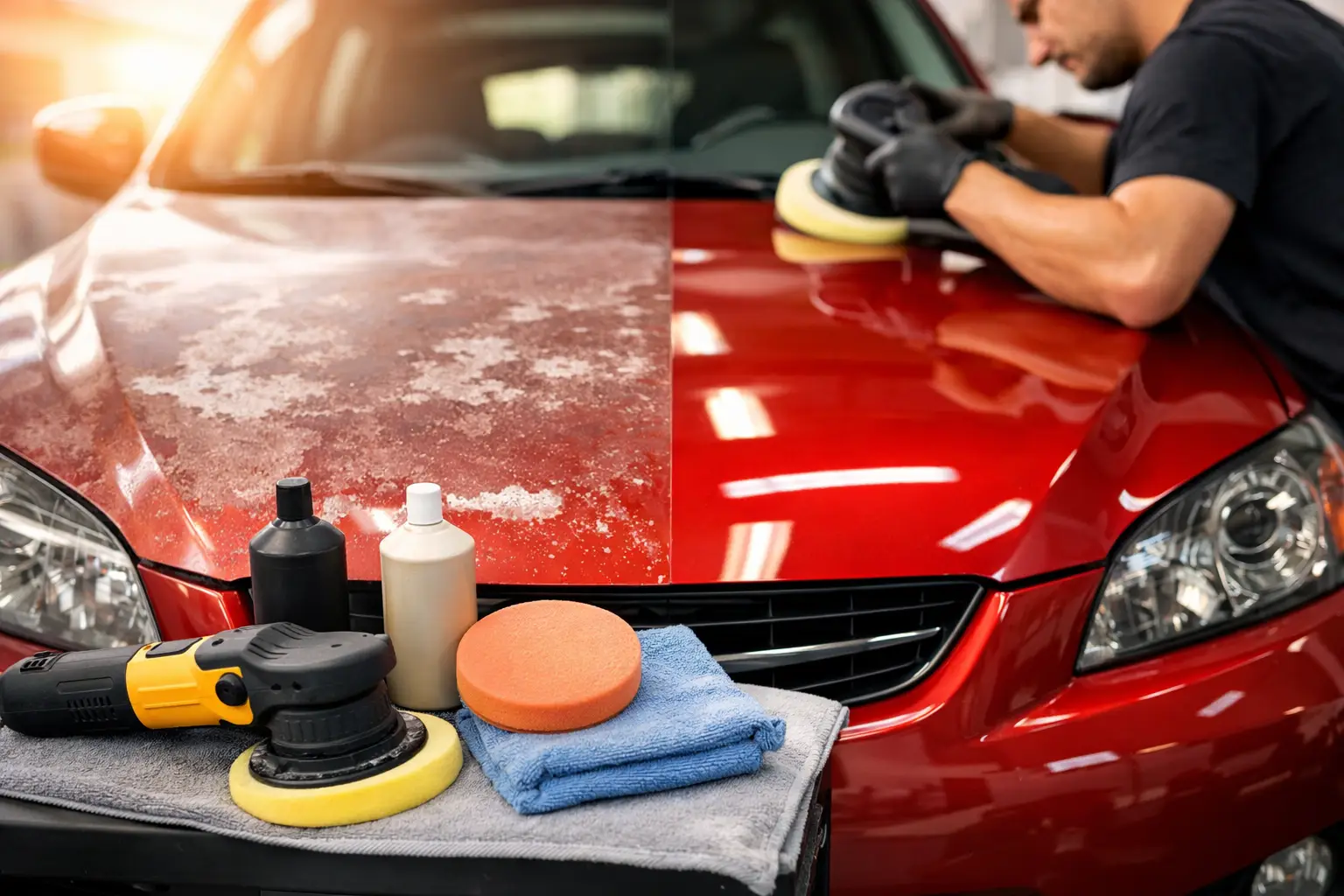
Florida sun does not take long to show up on a vehicle. If your hood, roof, trunk lid, or mirrors look dull, faded, chalky, or rough to the touch, sun damaged car paint repair may already be necessary. In Lakeland, where heat and UV exposure are part of daily driving, paint damage can move from a cosmetic issue to a more expensive refinishing problem faster than many owners expect.
The main reason is simple. Automotive paint is built in layers, and the top clear coat takes the first hit from the sun. Once that protective layer starts to break down, the color underneath is exposed to oxidation, fading, and surface failure. At that point, washing and waxing usually stop helping. The right repair depends on how far the damage has progressed.
What sun damage does to car paint
Most modern vehicles have a base coat for color and a clear coat on top for protection and gloss. Constant UV exposure slowly dries out and weakens that clear layer. In Florida, high heat, direct sunlight, humidity, and outdoor parking speed the process up.
Early damage often looks like lost shine. The paint may seem flat even after a wash. As the problem gets worse, you may see cloudy patches, white haze, uneven color, or peeling clear coat. Dark-colored vehicles usually show fading sooner, but any paint color can be affected.
This matters because sun damage is rarely just sitting on the surface. Once oxidation sets in or the clear coat begins to fail, the finish is no longer fully sealed. That can leave the paint more vulnerable to additional wear, moisture intrusion, and surface breakdown.
Signs you may need sun damaged car paint repair
A quick visual check can tell you a lot. If the paint still feels smooth and the color looks mostly consistent, the damage may be limited to surface oxidation. If the finish feels rough, looks patchy, or has edges where the clear coat is lifting, the repair is usually more involved.
Common signs include faded panels, chalky residue when you wipe the surface, dull areas that do not improve after washing, peeling or flaking clear coat, and visible differences between horizontal surfaces and the sides of the vehicle. The hood, roof, and trunk are usually affected first because they take the most direct sun.
It also helps to look at whether the damage is isolated or spread across several panels. A small worn section may allow for more targeted refinishing. Widespread failure often points to a larger repainting job for a uniform result.
When polishing can help and when it cannot
There is a point where professional polishing or paint correction can improve the finish. That is usually when the paint has light oxidation, minor haze, or superficial dullness, but the clear coat is still intact. In that stage, machine polishing can remove a thin layer of surface oxidation and restore some gloss.
The trade-off is that polishing is not a cure for clear coat failure. If the clear coat is peeling, cracked, or missing, buffing will not rebuild protection. In some cases, aggressive polishing can even expose more of the damaged area because there is not enough healthy material left on the panel.
This is where honest assessment matters. A vehicle owner may hope for a quick shine-up, but if the surface has already failed, repainting is the proper repair. A short-term cosmetic improvement is not the same as a durable finish.
Repair options for sun damaged paint
The best repair depends on the condition of the affected panels. There is no single fix that works for every vehicle.
Surface oxidation correction
If the sun damage is still mild, the paint may respond to professional decontamination, compounding, and polishing. This works best when the clear coat remains stable and the issue is mostly loss of gloss. It can improve appearance, but results vary based on paint age and exposure level.
Spot refinishing on isolated panels
If one or two panels have visible fading or early clear coat failure, refinishing those specific areas may make sense. The damaged finish is sanded down, the panel is properly prepared, and new color and clear coat are applied. This is often a practical option when the rest of the vehicle is still in good condition.
Full panel repainting
When clear coat is peeling or the paint has severe oxidation, full panel repainting is often the right approach. This is common on hoods, roofs, and trunk lids. The damaged coating must be removed and the panel refinished correctly so the new paint can bond and hold up.
Multi-panel color restoration
Some vehicles have widespread fading across several areas. In those cases, repairing one panel at a time may create a mismatch. A broader refinishing plan can help restore a more even appearance across the vehicle. This is especially important if sun damage has altered the original color significantly.
Why DIY fixes usually fall short
Many off-the-shelf products promise to restore faded paint, but they usually offer temporary improvement at best. A glaze, wax, or trim dressing may darken the finish for a short time, but it does not reverse clear coat failure. Once the protective layer is gone, the paint system needs actual refinishing work.
DIY sanding and aerosol paint are also risky. Matching automotive color, blending edges, and applying clear coat evenly take the right materials and spray equipment. Poor prep work can lead to peeling, uneven texture, or visible repair lines. What starts as an attempt to save money can make the panel harder and more expensive to repair later.
For vehicle owners who want the paint to look right and last, proper body shop prep and professional paint application make a major difference.
What professional sun damaged car paint repair involves
A proper repair process starts with inspection. The shop needs to determine whether the issue is oxidation, clear coat breakdown, previous low-quality refinishing, or a combination of problems. From there, the damaged area is cleaned, evaluated, and prepped based on the level of failure.
If repainting is needed, the failed material must be sanded away. Any imperfections in the panel are corrected before primer, color, and clear coat are applied. Matching the surrounding finish matters, especially on vehicles where only some panels are being repaired.
This is also why working with a shop that handles both body repair and paint work can be helpful. If sun damage is paired with dents, scratches, or edge damage around moldings and trim, those issues can be addressed as part of the same repair plan instead of sending the car to multiple places.
Cost depends on severity, panel count, and finish condition
Owners often ask whether sun damage is a minor cosmetic fix or a major repainting expense. The honest answer is that it depends. A lightly oxidized hood that can be corrected is very different from a roof with widespread peeling clear coat.
Cost is affected by how many panels are involved, whether the damage is only in the clear coat or deeper into the base coat, how much prep work is required, and how closely the repaired area needs to blend with adjacent panels. Vehicles with heavy oxidation across multiple surfaces generally require more labor and materials.
That is why an in-person estimate is the best way to understand the scope. Photos can help, but they do not always show texture, clear coat lift, or prior repair work accurately.
How to slow future paint damage in Florida
After the finish is restored, prevention matters. Florida conditions are hard on automotive paint, but a few habits can help extend the life of the repair.
Covered parking helps most. If that is not available, regular washing removes contaminants that can sit on the surface and trap heat. Quality wax or paint sealant adds a sacrificial layer, although it is not a substitute for healthy clear coat. Promptly removing bird droppings, tree sap, and bug residue also reduces added stress on the finish.
The biggest factor is timing. Catching fading early gives you more repair options. Waiting until the clear coat is actively peeling usually means a more involved refinish.
When to bring your vehicle in
If your vehicle has lost gloss on the top surfaces, shows patchy fading, or has clear coat peeling, it is time to have it looked at. The longer sun damage sits, the fewer corrective options remain. For drivers in Lakeland and surrounding areas, professional evaluation can tell you whether the finish can be corrected, needs panel repainting, or would benefit from a larger restoration approach.
New Age Auto Painting works with vehicle owners who need practical answers and professional refinishing results, especially when paint damage is affecting both appearance and long-term finish protection.
If your paint has started to give up under the Florida sun, getting ahead of it now is usually the difference between a targeted repair and a much bigger job later.