New Age Auto Painting Blog · August 3, 2026
Touch Up Paint vs Repaint: What Your Car Needs
Touch up paint vs repaint: learn when a small repair will blend in and when professional refinishing is the better choice for your Lakeland vehicle today.
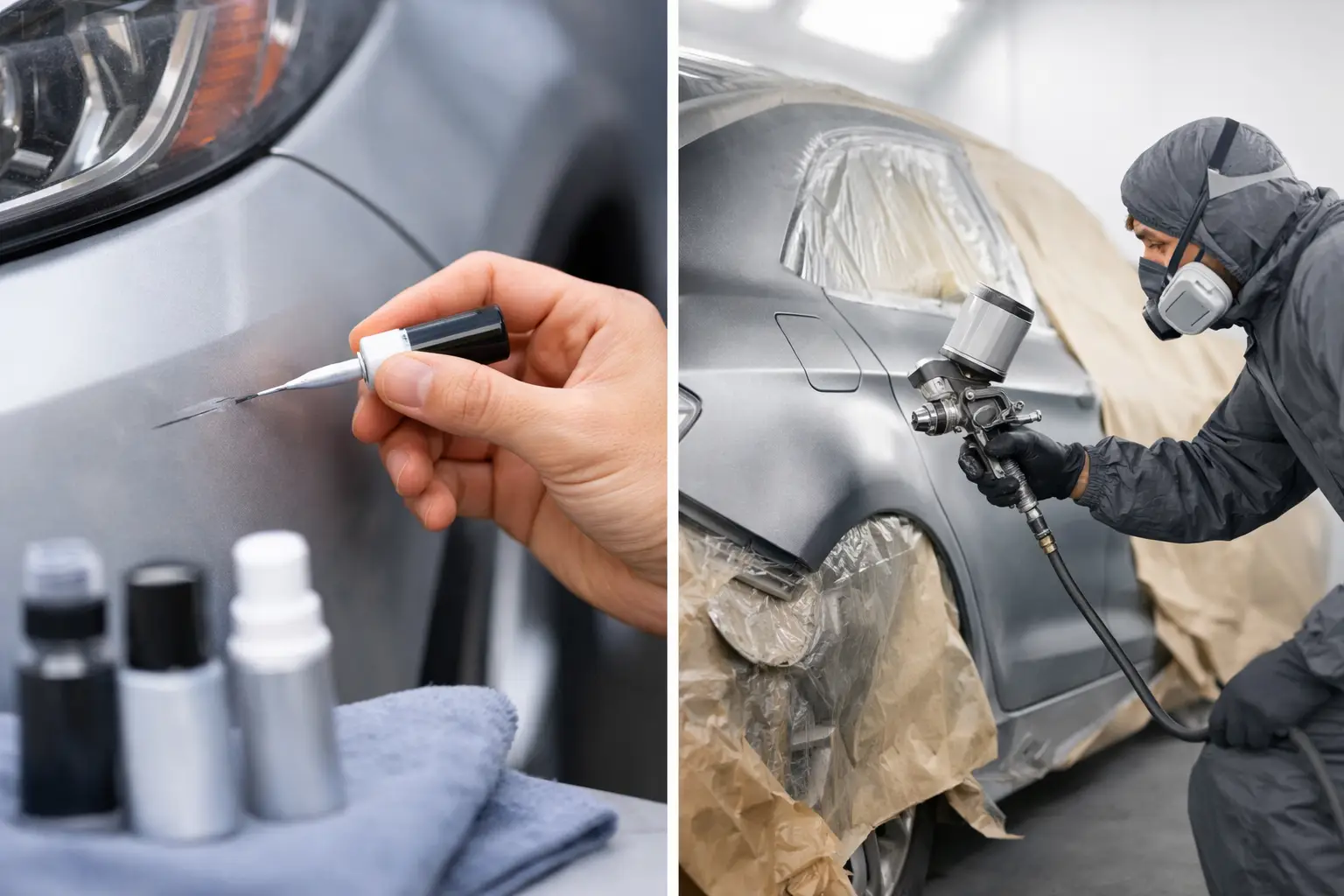
A shopping cart scrape, a rock chip on the hood, or faded clear coat can make an otherwise reliable vehicle look neglected. The touch up paint vs repaint decision comes down to more than the size of the mark. The depth of the damage, the vehicle's paint condition, its color, and where the damage sits all affect whether a minor correction will look acceptable or a professional repaint is the smarter investment.
For Lakeland drivers, Florida sun, heat, rain, and road debris can turn small paint problems into larger ones over time. Choosing the right repair early can protect the body panel underneath and help your car maintain a clean, presentable appearance.
Touch Up Paint vs Repaint: The Core Difference
Touch up paint is a localized repair. It is designed to cover small chips, nicks, and narrow scratches where paint has been lost but the surrounding finish remains in good condition. The goal is protection first and appearance second. A careful touch-up can make damage less noticeable and seal exposed metal or primer from moisture.
Repainting is a refinishing process for a larger area, usually an entire panel or a carefully blended section of adjacent panels. Before color is applied, a body shop may sand damaged material, repair dents, remove corrosion, apply primer, match the color, spray base coat, and apply clear coat. This approach produces a more uniform result when the damage or paint failure is too extensive for a small spot repair.
Neither option is automatically better. A high-quality repaint is not necessary for every rock chip, and a touch-up pen cannot correct every scratch simply because the damaged area is small.
When Touch Up Paint Is a Reasonable Choice
Touch-up paint generally makes sense when damage is isolated, shallow, and located where a slight variation in texture or color will not be highly visible. Small stone chips on the front bumper or hood are common examples. Narrow scratches that have not cut through to bare metal may also be good candidates.
It can be especially practical for a daily driver with a few minor imperfections. If your main concern is preventing corrosion and improving the appearance without the cost of refinishing a full panel, touch-up work may be the right level of repair.
The condition around the chip matters. A clean, stable finish gives touch-up paint the best chance of adhering properly. The area should be free of peeling clear coat, rust, wax residue, and loose paint. If corrosion has started below the paint, simply adding color over the spot will not stop the problem for long. The affected material needs to be cleaned and treated first.
Expect a touch-up to reduce the visual impact of damage, not make it disappear completely. Even paint mixed to a factory color code can look slightly different once applied in a tiny area. Metallic and pearl colors are particularly difficult to duplicate with a brush or pen because the metallic flakes must lie in a consistent direction to reflect light evenly.
Signs a Panel Should Be Repainted
A repaint is usually the better option when damage covers a wider section of a panel or when the finish has failed beyond one isolated spot. This includes multiple scratches, widespread chips, peeling clear coat, oxidation, heavy fading, or damage that reaches bare metal across a noticeable area.
Deep scratches deserve close attention. If a scratch catches your fingernail, it may have cut through the clear coat and color coat. If you see gray primer, exposed metal, or plastic beneath the finish, the panel may need more than a surface polish. A technician can determine whether the damage can be spot repaired, whether the panel needs paintwork, or whether body repair is required first.
Dents and creases are another reason to consider professional refinishing. Paint will not level out a dent, and applying touch-up paint over distorted metal can make the flaw more obvious. The panel should be repaired to its proper shape before it is primed and refinished.
Paint failure caused by age and Florida weather also calls for more than a quick touch-up. When clear coat is peeling or the surface has become chalky and dull, the problem often extends across the panel. A small painted patch will not blend into failing clear coat. Proper refinishing removes the damaged material and restores a protected finish.
Color Matching Is Where the Difference Shows
Vehicle paint changes over time. Sun exposure, washing habits, oxidation, and previous repairs can alter how a factory color looks years after the car was built. That is why using a paint code alone does not guarantee an invisible match.
Professional auto painting accounts for these variables. A shop can compare the vehicle's current finish, make color adjustments when needed, and blend new color into the surrounding area. Blending gradually transitions the new paint into the existing finish so the repair is less likely to show in direct sunlight or at different viewing angles.
This matters most with bright red, black, white, silver, metallic, pearl, and tri-coat finishes. Solid colors can be more forgiving, but panel position still matters. A noticeable spot on a door, hood, or quarter panel is harder to overlook than the same flaw low on a bumper.
Consider the Cost Beyond Today's Repair
Touch-up paint costs less because it uses less material and labor. For minor cosmetic damage, that can be a sensible decision. But the lowest initial cost is not always the best value if the area will continue to deteriorate or if the repair is highly visible every time you approach the vehicle.
A professional repaint costs more because proper preparation takes time. Bodywork, sanding, masking, priming, color application, clear coat, and curing are all part of achieving a durable result. When done correctly, refinishing can restore the appearance of the panel and provide a level of protection that a basic touch-up cannot match.
Resale value may also affect your choice. If you plan to trade in, sell, or return a leased vehicle soon, obvious paint damage can reduce its appeal. A well-finished repair may make financial sense for a newer vehicle, a vehicle in otherwise excellent condition, or a car with damage in a prominent location. For an older work vehicle with scattered wear, a neat touch-up may be entirely appropriate.
Do Not Ignore Rust or Collision Damage
Paint is a protective barrier, not just a cosmetic layer. When bare steel is exposed, moisture can reach the metal and corrosion can begin. Central Florida's humidity and frequent rain make it wise to address exposed metal promptly, even if you decide against a full repaint.
If the paint damage followed an accident, look beyond the surface. A cracked bumper cover, misaligned panel, broken mounting tab, or dent near a door edge may indicate damage that needs body repair before any paintwork begins. Repainting over an unrepaired panel does not restore fit, structure, or proper operation.
This is where a full-service body and paint shop is useful. New Age Auto Painting can evaluate both the condition of the panel and the finish, rather than treating paint as a separate issue from the underlying repair.
How to Make the Right Choice
Start by looking at the damaged area in bright, natural light. Check whether the scratch is only in the clear coat, whether paint is missing, and whether the surface is dented, cracked, rusty, faded, or peeling. Also consider how visible the area is and how long you plan to keep the vehicle.
For a few small, stable chips, touch-up paint can be a practical protective fix. For broad damage, deep scratches, panel distortion, color mismatch, or failing clear coat, professional repainting usually delivers the cleaner and longer-lasting result. An in-person estimate is the most reliable way to determine how far the repair needs to go.
A small chip does not always need a full panel repaint, but a quick paint dab is not a cure for every flaw. Address the damage at the level it requires, and your vehicle will be better protected and easier to feel good about every time you drive it.