New Age Auto Painting Blog · August 1, 2026
Used Parts vs OEM Body Parts: What Fits?
Compare used parts vs OEM body parts after a collision. Learn when each option makes sense for safe, quality auto body repairs in Lakeland, Florida drivers.
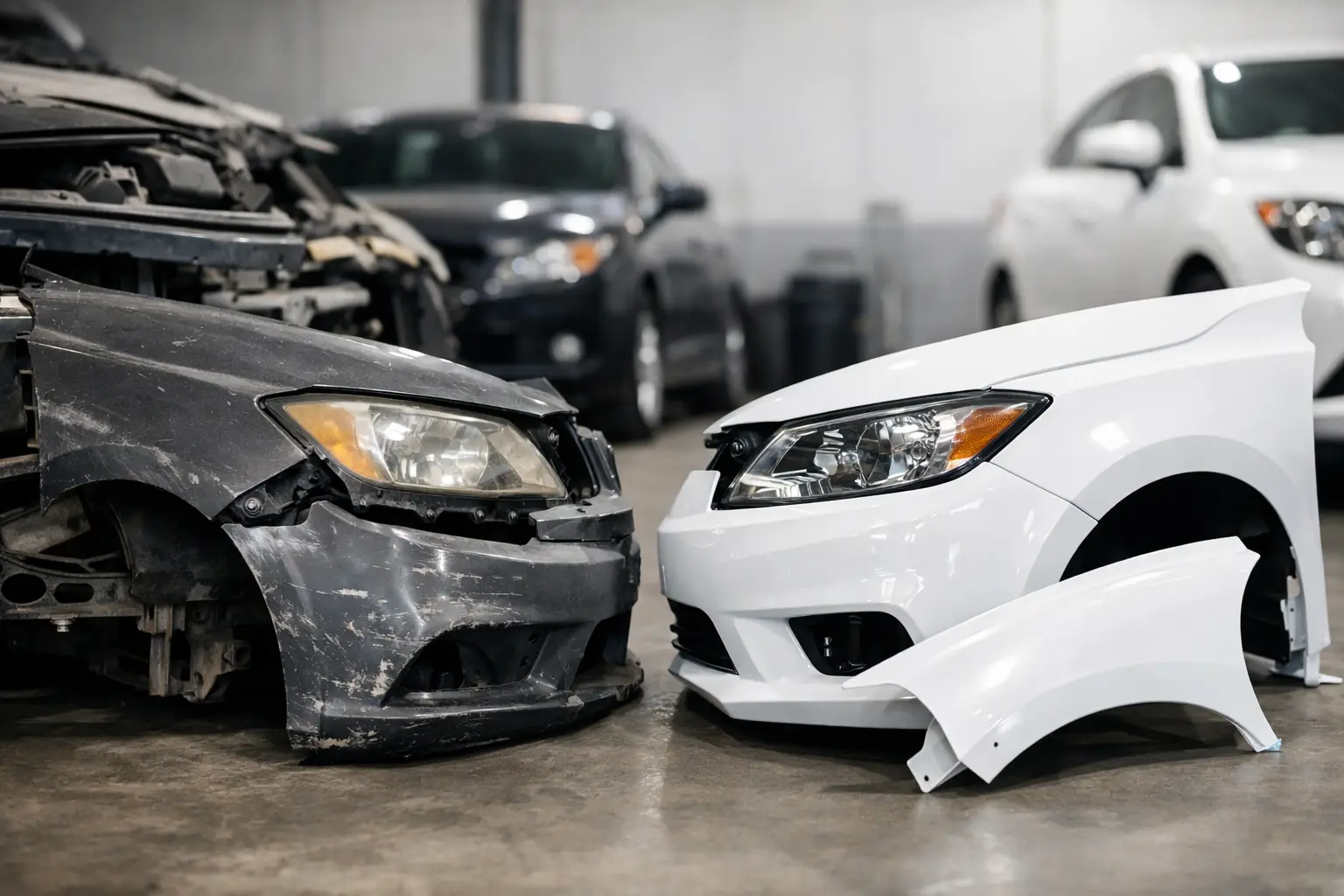
A damaged bumper, fender, door, or hood can leave you with a decision that affects more than the final repair bill. When considering used parts vs OEM body parts, the right choice depends on the vehicle, the location and severity of the damage, the condition of available parts, and the standard needed to restore proper fit and appearance.
For Lakeland drivers, there is no one answer that fits every collision repair. A quality repair starts with an accurate inspection, then uses parts that support safe operation, correct panel alignment, and a finish that looks right once the paint work is complete.
Used Parts vs OEM Body Parts: The Basic Difference
OEM means Original Equipment Manufacturer. An OEM body part is made by, or made to the specifications of, the vehicle manufacturer. For example, an OEM bumper cover for a specific model is designed around that model's mounting points, body lines, sensors, lighting, and trim.
Used body parts are original parts removed from another vehicle, usually through a reputable automotive recycler. A used OEM door, hood, trunk lid, or fender may be the same factory component that came on the vehicle when it was new, but it has already been installed and exposed to normal road use, weather, or prior damage.
This distinction matters: used does not automatically mean poor quality, and OEM does not automatically mean the only appropriate choice. The condition, compatibility, and intended repair all matter.
When OEM Body Parts Are the Better Choice
OEM body parts are often the strongest option when precise fit is critical. Modern vehicles have tightly controlled panel gaps, integrated sensors, cameras, radar units, active grille shutters, brackets, and trim pieces. A part that is slightly off in shape or mounting position can create problems that are not obvious until the vehicle is reassembled.
OEM parts can be especially appropriate for newer vehicles, late-model luxury vehicles, and repairs involving areas with safety-related equipment. A bumper assembly may look like a cosmetic component, but it can also support parking sensors, collision warning hardware, energy absorbers, lights, and reinforcement pieces. Proper placement matters.
They are also a practical choice when a panel must match adjacent body lines with minimal adjustment. Factory parts generally provide predictable mounting locations and contours, which can help the repair process move forward efficiently. That does not eliminate the need for skilled body work and paint preparation, but it reduces uncertainty compared with a part of unknown history.
For owners who plan to keep their vehicle for years, OEM parts may provide added confidence. They are designed for the vehicle and often come with manufacturer-backed coverage when purchased new. The trade-off is cost. New OEM panels, assemblies, trim, and hardware can be more expensive than used alternatives, particularly for vehicles with limited parts availability.
Paint still determines the finished appearance
A new OEM panel does not arrive color-matched to your vehicle in most cases. It still needs proper preparation, priming when required, color matching, blending, and clear-coat application. Sun exposure and age can change the appearance of factory paint, so an experienced paint process matters whether the panel is new, used, or repaired.
When Used Body Parts Make Sense
A good used OEM body part can be a sensible solution for the right repair. It may offer factory fit at a lower cost than a new replacement, which can help when insurance limits, vehicle value, or personal budget are major factors.
Used parts are commonly considered for bolt-on components such as doors, hoods, deck lids, fenders, mirrors, lamps, and certain trim pieces. If the part is verified for the exact vehicle and inspected carefully, it can provide an effective foundation for body repair and refinishing.
For an older vehicle, choosing a used OEM panel may be the most practical way to make a quality repair without putting more money into the vehicle than its market value supports. A clean used door shell, for instance, can be a better option than attempting to repair extensive outer-skin damage. The shop can inspect it, transfer necessary components, repair minor imperfections, and refinish it to match the vehicle.
Availability is the biggest variable. A popular vehicle may have several suitable recycled parts available nearby. A newer or less common model may have limited options, and shipping a large panel can add expense and increase the chance of damage before installation.
Inspecting condition is not optional
The value of a used part comes down to its actual condition, not just its description. A panel can appear acceptable from a distance while hiding rust, stretched metal, prior body filler, cracked mounting tabs, bent edges, or damage near hinges and latch points.
Before installation, a shop should confirm part numbers and options, check mounting points, inspect for corrosion, and compare the part against the damaged vehicle. Color is not the deciding factor because repainting may be necessary, but the panel's structure and fit are essential.
Cost Is Only One Part of the Decision
It is easy to compare the sticker price of a used panel with a new OEM panel. The more useful comparison includes the labor required to make each choice work. A lower-cost used part that needs major correction, extensive preparation, or replacement hardware may not be a better value than a new component that fits properly from the start.
The same is true when a damaged original panel is repairable. Repairing the existing part can sometimes preserve factory seams and avoid replacement costs. In other situations, corrosion, sharp creases, torn metal, or damaged mounting areas make replacement the more reliable route.
Insurance repair plans can influence the options. Depending on the policy, vehicle age, insurer guidelines, and availability, an estimate may allow OEM, recycled, or other approved replacement parts. Vehicle owners should ask what type of part is listed on the estimate and why it was selected. A clear conversation before repairs begin helps prevent surprises later.
Fit, Safety Systems, and Calibration Matter
Body repair is not limited to making a vehicle look straight again. The repaired area must support the vehicle's systems and components as intended. This is especially relevant around bumpers, front-end assemblies, doors, quarter panels, and liftgates.
A replacement part may need to accommodate blind-spot monitors, cameras, radar sensors, lane-assist equipment, wiring harnesses, lamps, weatherstrips, and impact components. If collision damage affects sensor locations or mounting brackets, the vehicle may require scanning or calibration after repairs. The need depends on the vehicle and the work performed.
A part that fits poorly can also create water leaks, wind noise, uneven gaps, premature paint wear, or difficulty opening and closing a door, hood, or trunk. These issues are avoidable when the part choice is made carefully and the installation is handled by trained collision repair professionals.
How to Make the Right Choice for Your Vehicle
Start with the repair objective. If the goal is to restore a newer vehicle with advanced equipment to manufacturer-level fit, a new OEM part may be the most appropriate recommendation. If the vehicle is older and a clean, verified recycled OEM panel is available, a used part may provide excellent value without compromising the repair.
Ask the shop whether the part is new OEM or used OEM, whether it has been inspected, and how it will affect the repair process. It is also reasonable to ask if the damaged original part can be repaired safely, what paint work is required, and whether any sensor or system checks are needed after reassembly.
At New Age Auto Painting, the focus is on selecting a repair approach that supports proper body alignment, durable refinishing, and a clean final appearance. The best part is not simply the cheapest or newest option. It is the one that suits the vehicle, the damage, and the standard of repair needed to put you back on Lakeland roads with confidence.