New Age Auto Painting Blog · August 19, 2026
When Is Car Frame Damage Dangerous to Drive?
Learn when is car frame damage dangerous, the warning signs to watch for, and why a Lakeland collision inspection can protect your safety and value too.
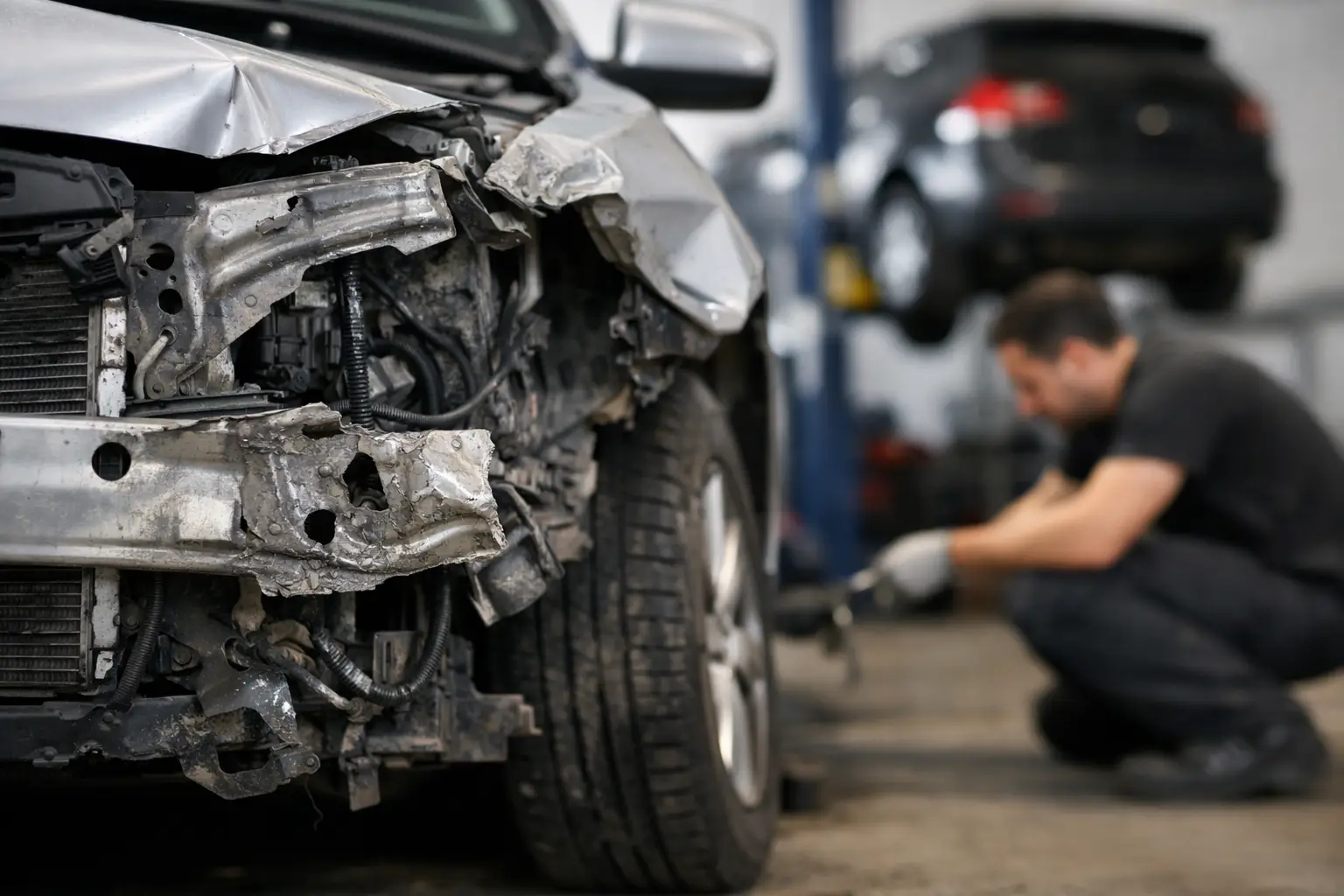
A low-speed crash can leave a vehicle looking almost normal while damage sits behind the bumper, under the body, or around a suspension mounting point. That is why the question of when is car frame damage dangerous cannot be answered by appearance alone. If the vehicle’s structure has shifted, cracked, or weakened, continuing to drive can affect how it steers, brakes, tracks, and protects occupants in another collision.
For Lakeland drivers, the right next step after a collision is not guessing whether the car feels “good enough.” It is having the damage inspected by a qualified collision repair professional who can measure the structure and identify what needs repair.
What “Frame Damage” Means on Modern Cars
Many older trucks and some SUVs use a body-on-frame design, where the body sits on a separate steel frame. A bent rail, crossmember, or mounting point on that frame can create serious safety and handling concerns.
Most passenger cars, crossovers, and minivans use unibody construction. In these vehicles, the body and structural frame are integrated. Damage may involve frame rails, rocker panels, pillars, floor sections, strut towers, radiator supports, or crumple zones. A damaged unibody can be every bit as serious as a bent traditional frame, even when it is not visible from outside the vehicle.
The key issue is whether the impact changed the vehicle’s structural dimensions or compromised metal that is designed to manage crash energy. A dented bumper cover is often cosmetic. A pushed-in bumper reinforcement, shifted rail, or distorted suspension mount is not merely cosmetic.
When Is Car Frame Damage Dangerous?
Car frame damage is dangerous when it affects the vehicle’s ability to drive predictably, maintain alignment, support critical components, or protect passengers in a future crash. The risk rises when damage reaches structural rails, suspension mounting areas, steering components, seat belt anchor points, roof pillars, or airbag sensor locations.
A vehicle may be unsafe to drive immediately if it pulls sharply to one side, has a wheel rubbing against the body, leaks fluid, makes unusual metal-on-metal noises, or has a visibly bent wheel or suspension part. Those symptoms can indicate damage beyond the exterior panels.
It can also be dangerous when the vehicle seems to drive normally. Modern cars are engineered with precise measurements. A small structural shift can change wheel alignment angles, create uneven tire wear, or place stress on components that were not designed to carry it. That is especially relevant after an impact to a front or rear corner, a curb strike, a side collision, or a collision that deployed airbags.
Damage Near Suspension and Steering Points
Suspension and steering components rely on solid, correctly positioned mounting points. If a strut tower, control arm mount, subframe area, or frame rail has moved, the wheels may no longer sit at the angles intended by the manufacturer.
Warning signs include a steering wheel that is off-center, a vehicle that drifts or pulls, vibration at speed, clunking over bumps, or tires wearing faster on one edge. An alignment adjustment may help only if the underlying structure is sound. If a shop cannot bring the alignment back within specification, structural damage may be the reason.
Cracks, Kinks, and Buckled Metal
A hard crease or kink in a frame rail is more concerning than a shallow dent. Kinked metal has already yielded under force, which can reduce its strength and change how it responds in another collision. Cracks around welds, mounting points, or structural seams also require prompt attention.
Rust adds another complication. Florida humidity and heavy rain can accelerate corrosion where paint or protective coatings were damaged in a crash. A small crack or scrape that exposes bare metal may become a larger structural issue if it is left untreated.
Airbags, Seat Belts, and Safety Systems
After a significant impact, frame damage may exist alongside damage to airbags, seat belt pretensioners, sensors, and wiring. These systems work together with the vehicle structure. Repairing visible body damage while overlooking structural measurements or restraint-system faults can leave a vehicle less prepared for another accident.
If an airbag warning light remains on, a seat belt does not retract normally, or a collision caused airbag deployment, do not treat the vehicle as fully repaired until the restraint and structural systems have been inspected and repaired correctly.
Signs You Should Stop Driving and Arrange an Inspection
Not every dent requires a tow truck, but some conditions justify taking the vehicle off the road until it is checked. Stop driving if you notice any of the following:
- A wheel is bent, tilted, rubbing, or sitting farther forward or backward in the wheel opening than the other side.
- The car pulls strongly, wanders, shakes, or requires constant steering correction.
- There is a fluid leak, burning smell, scraping sound, or loose part beneath the vehicle.
- Doors, hood, trunk, or liftgate no longer latch or line up properly after the impact.
- The airbag, ABS, traction control, or other safety warning light is illuminated.
- You can see wrinkled metal, cracked seams, damaged rails, or a bent suspension component.
Misaligned doors and body gaps do not prove that the frame is damaged, but they are worth taking seriously after a collision. They can show that the body opening has moved or that a nearby structural section absorbed more force than it should have.
Why a Visual Check Is Not Enough
Exterior panels can hide important damage. Bumpers are designed with covers, absorbers, reinforcements, brackets, and structural components behind them. A vehicle can have only light paint scuffs on the outside while the reinforcement bar or rail extension behind it has shifted.
A proper collision inspection may include a visual assessment, diagnostic scan, suspension review, and computerized measuring of structural points. The goal is to compare the vehicle’s current dimensions with manufacturer specifications. This helps determine whether the structure can be repaired, whether parts need replacement, and whether the car can be returned to proper alignment.
This is also why a quick alignment at a general service shop is not always the complete answer after an accident. Alignment angles tell part of the story. Structural measurement helps explain why those angles are out and whether the suspension mounting locations are correct.
Can Frame Damage Be Repaired Safely?
Yes, many types of frame and unibody damage can be repaired safely when the damage is within repairable limits and the work is completed with the correct equipment, procedures, and replacement parts. Modern collision repair often involves electronic measuring systems, controlled pulling equipment, weld procedures, corrosion protection, and refinishing work.
The trade-off is that repairability depends on the location and severity of the damage. A repair to a measured structural section may be appropriate. Severe crushing, multiple compromised areas, extensive corrosion, or damage that cannot be returned to specification may make repair impractical or lead an insurer to declare the vehicle a total loss.
Price should not be the only deciding factor. A cheaper repair that leaves the vehicle out of specification can lead to tire wear, handling issues, lower resale value, and unresolved safety concerns. The repair plan should address both the structural condition and the finished appearance of the vehicle.
What to Do After a Collision in Lakeland
Take photos of the damage, note any warning lights or changes in how the vehicle drives, and avoid forcing damaged doors, hoods, or trunks closed. If the car is unstable, leaking fluids, or handling poorly, arrange a tow rather than driving it across Lakeland or on I-4.
Then schedule a collision inspection. Ask whether the shop will check structural measurements, suspension alignment, safety-system codes, and hidden damage behind the affected panels. A complete repair should restore more than paint and panel fit. It should address the vehicle’s road manners, safety systems, and corrosion protection as well.
New Age Auto Painting helps Lakeland-area drivers address collision-related body damage and refinishing needs with a practical focus on restoring a clean, road-ready vehicle. If an accident changed the way your car drives or left you unsure about hidden damage, getting it inspected early is the best way to protect both the vehicle and the people riding in it.