New Age Auto Painting Blog · June 6, 2026
Why Does Car Paint Peel?
Why does car paint peel? Learn the common causes, warning signs, and when peeling paint needs professional repair for lasting results.
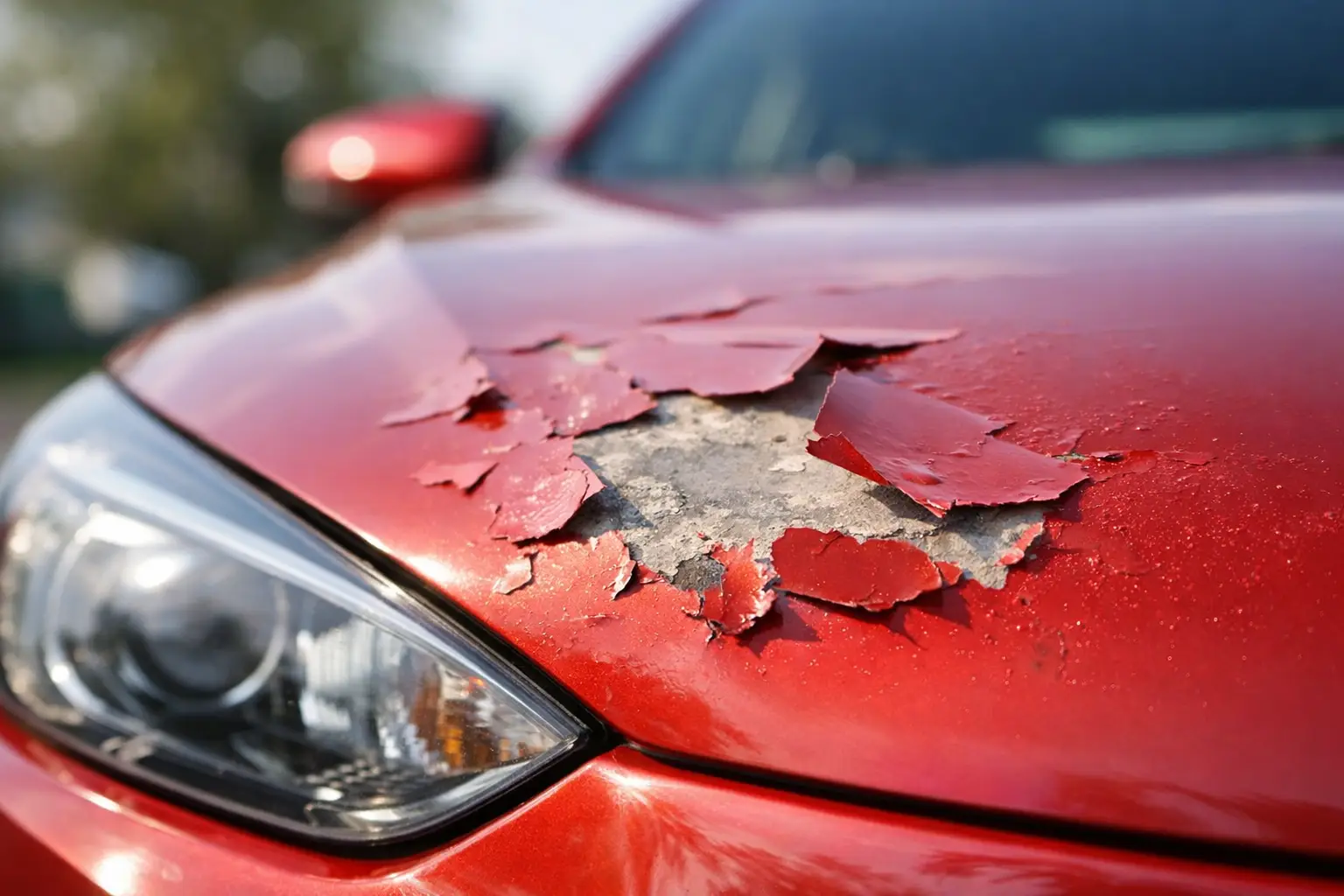
A car’s paint usually does not start peeling all at once. It often begins with a small rough spot on the hood, roof, or trunk, then spreads when sun, rain, and road exposure keep working on the surface. If you are asking why does car paint peel, the short answer is that the bond between the paint layers and the vehicle surface has failed.
That failure can happen for several reasons. Age, UV exposure, poor prep work, low-quality materials, factory defects, and previous repair issues can all play a role. In Florida, the heat, humidity, and strong sun can speed the process up, especially on vehicles that spend most of their time parked outside.
Why does car paint peel on some vehicles?
Car paint is not just one layer. A properly finished vehicle usually has primer, basecoat, and clear coat working together. Each layer has a job. The primer helps the paint adhere to the metal or panel surface, the basecoat provides the color, and the clear coat protects the finish from sunlight, moisture, and everyday wear.
Peeling starts when one of those layers stops bonding correctly to the layer under it. In many cases, the clear coat is the first part to fail. That can look like flaking, fading, chalkiness, or thin sheets of finish lifting from the panel. In other cases, the color coat and clear coat both separate, exposing primer or even bare material underneath.
The reason one vehicle peels while another holds up for years often comes down to a mix of environment, maintenance, and previous paint history. A car that has had body work done before may peel because the original surface was not prepared correctly. A vehicle with original paint may peel because years of UV damage have weakened the finish beyond the point of repair.
The most common causes of peeling paint
Sun damage is one of the biggest reasons paint fails in Florida. Constant UV exposure breaks down the clear coat over time. Once that top layer becomes brittle or thin, it can no longer protect the color underneath. The finish starts to oxidize, lose gloss, and eventually peel.
Poor surface preparation is another major cause. When a panel is repainted, the old finish has to be cleaned, sanded, and properly prepped so the new materials can stick. If wax, grease, dirt, rust, or moisture remains on the surface, the new paint may look fine at first but fail later. Peeling after a repaint often traces back to prep issues.
Low-quality paint products can also shorten the life of a finish. Automotive paint systems are designed to work as a matched process. When lower-grade materials are used, or when products are mixed incorrectly, the finished surface may not have the durability needed for long-term exposure.
Moisture intrusion can create problems under the paint film as well. Water can get into stone chips, scratches, or poorly sealed repair areas. Once moisture reaches the lower layers, adhesion weakens. That is one reason peeling often starts around damaged edges, trim lines, or repaired panels.
Factory paint defects are less common, but they do happen. Some vehicles have known issues where the original finish did not bond as it should. In those cases, peeling can begin even if the owner kept the vehicle clean and protected.
Clear coat failure vs. full paint failure
People often use the term peeling paint for several different problems. That matters because the right repair depends on what is actually failing.
Clear coat failure usually starts on horizontal surfaces like the hood, roof, and trunk lid. You may notice dull patches, cloudy areas, or peeling that looks almost transparent around the edges. The color may still be there, but the protective layer is gone or separating.
Full paint failure is more serious. That means the color coat is also lifting, cracking, or coming off the panel. You might see primer underneath, uneven edges, or bare spots. When paint failure reaches this stage, simple touch-up work rarely lasts.
There is also a difference between peeling and chipping. Chips usually happen from impact, such as rocks or road debris. Peeling is more about adhesion loss over time. Both can expose the surface underneath, but they are not caused by the same thing.
Can weather in Lakeland make peeling worse?
Yes. Central Florida conditions are hard on vehicle finishes. Intense sun, high temperatures, heavy rain, and humidity all add stress to painted surfaces. The sun is usually the biggest factor because UV exposure slowly dries out and degrades the clear coat.
Heat also causes expansion and contraction in the materials on the vehicle. Over time, that movement can worsen weak areas in older or poorly applied paint. Add in moisture and contaminants from daily driving, and small failures can spread faster than many owners expect.
A garage-kept vehicle generally holds up better than one parked outdoors every day, but storage alone does not solve existing paint damage. Once peeling has begun, environmental exposure tends to accelerate it.
Signs the problem is getting worse
Peeling paint rarely stays limited to one tiny area for long. If the surface already feels rough, looks faded, or shows lifting at the edges, the finish is unstable. Washing the car, exposure to rain, and heat cycles can make that weak area expand.
You may also notice the panel losing its shine unevenly. One section may still look glossy while the area next to it turns dull or chalky. That usually means the clear coat is breaking down. If you wait too long, the damage can spread across the whole panel, making spot repairs less practical.
Once paint starts coming off near body damage, scratches, or prior repair work, the risk goes beyond appearance. Exposed surfaces are more vulnerable to corrosion and further deterioration, especially on steel panels.
Why peeling paint usually needs professional repair
A lot of vehicle owners hope there is a quick fix for peeling paint. Unfortunately, wax, polish, or over-the-counter touch-up products do not solve adhesion failure. If the layers underneath are no longer bonded, anything applied over the top is temporary.
Professional repair starts by identifying how deep the failure goes. If only one panel is affected, the damaged finish may need to be sanded down, feathered properly, primed, refinished, and cleared. If the peeling involves multiple panels or previous body work, the repair process can be more involved.
Color matching is another reason professional refinishing matters. Modern automotive paint is not just about getting close to the right shade. The finish has to match in color, gloss, and texture so the repaired area blends naturally with the rest of the vehicle.
Good paint work also depends on controlled application and curing conditions. That helps prevent the same problems from coming back due to contamination, poor adhesion, or uneven material coverage.
When repainting is the better option
If the peeling is isolated and caught early, a panel repair may be enough. But if the clear coat is failing across large sections of the vehicle, partial fixes often lead to an uneven appearance. In that situation, repainting affected panels is usually the better long-term decision.
It also depends on the age and condition of the existing finish. When surrounding paint is heavily oxidized or thin, trying to save small sections can cost more in the long run. A proper refinishing approach creates a more consistent result and better surface protection.
For drivers dealing with accident damage and paint failure at the same time, it often makes sense to handle body repair and refinishing together. That keeps the repair process more efficient and avoids piecing work out between different shops. For local drivers, a shop like New Age Auto Painting can evaluate both the body condition and the finish condition in one place.
How to slow paint failure before repair
You cannot reverse peeling once it starts, but you can reduce further damage while deciding on repairs. Keeping the vehicle clean helps remove contaminants that sit on failing paint. Parking under cover when possible limits more UV exposure. Gentle washing is better than aggressive scrubbing, especially where edges are already lifting.
Avoid trying to sand or spray over peeling areas without proper prep and materials. That usually creates a larger repair later. If bare metal is exposed, it is smart to have the damage assessed sooner rather than later to avoid rust development.
Paint problems tend to spread quietly. A small peeling spot today can turn into a much more visible and expensive issue after another Florida summer. If your vehicle’s finish is starting to fail, getting a professional inspection early gives you better repair options and a better-looking result.