New Age Auto Painting Blog · June 10, 2026
Why Is My Clear Coat Peeling?
Why is my clear coat peeling? Learn the common causes, early warning signs, and when professional repair is the best option for lasting results.
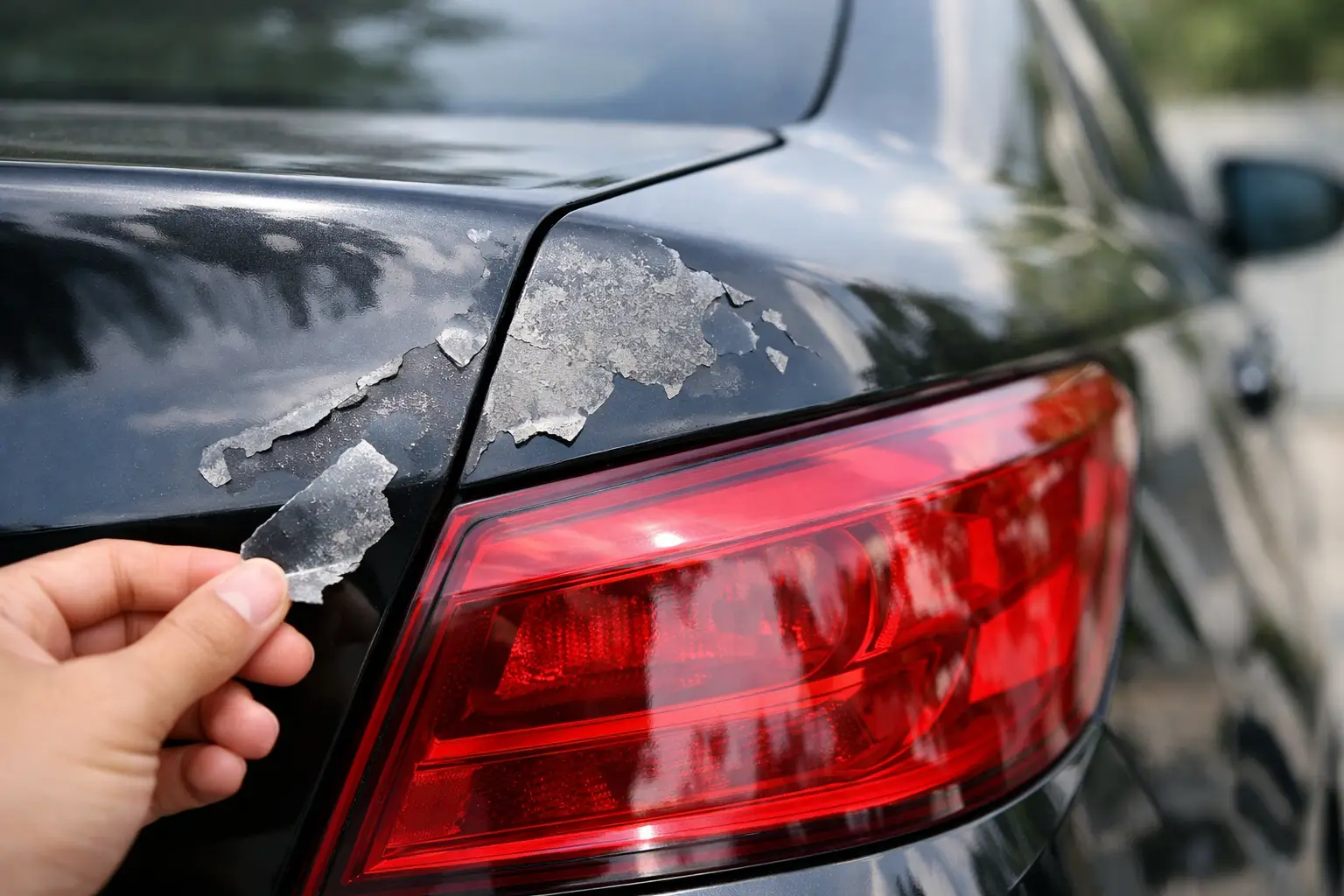
You wash the car, step back, and notice the paint looks like it is lifting in thin, flaky patches. If you are asking, "why is my clear coat peeling," the short answer is that the protective top layer of your paint has started to fail. Once that happens, the finish stops looking glossy and uniform, and the damage usually keeps spreading.
Clear coat is the transparent layer applied over your vehicle’s base color. Its job is to protect the paint from UV exposure, moisture, road grime, chemicals, and normal wear. When it begins to separate from the paint underneath, you are not looking at simple dirt or surface haze. You are looking at paint system failure.
Why is my clear coat peeling in the first place?
In most cases, clear coat peeling happens because the finish has been weakened over time or the original paint bond has failed. Sun exposure is one of the biggest causes, especially in Florida, where vehicles spend a lot of time under intense UV light and heat. That constant exposure slowly breaks down the clear coat until it becomes brittle, cloudy, and eventually starts to lift.
Age also matters. Even a factory finish has a lifespan, and older vehicles often show peeling on the roof, hood, trunk lid, and tops of doors first. Those panels take the most direct sunlight and weather exposure, so they usually fail before the rest of the vehicle.
Poor previous paintwork is another common reason. If a panel was repainted after an accident or cosmetic repair and the surface was not prepared correctly, the new clear coat may never have bonded the way it should. That can lead to early peeling, often in a more localized area rather than across the whole vehicle.
Sometimes the issue starts with contamination during the painting process. Wax, oil, silicone, dust, or moisture trapped between layers can weaken adhesion. In that case, the clear coat may look fine at first, then begin failing months or years later.
The most common causes of peeling clear coat
Sun damage is at the top of the list for most daily drivers in Lakeland and surrounding areas. UV rays gradually dry out and degrade the clear coat. Once oxidation sets in, the surface loses gloss, then turns dull or chalky before it starts coming apart.
Heat works together with UV exposure. Constant expansion and contraction of the panels can stress the finish, especially if the vehicle lives outdoors year-round. Add humidity, rain, and airborne contaminants, and the paint system has even more to fight against.
Automatic car washes can also contribute, though they are usually not the root cause by themselves. If the clear coat is already weakened, repeated contact with aggressive brushes can speed up visible peeling. The same goes for harsh chemicals or improper cleaning products.
Low-quality refinishing materials or rushed paint application can create a shorter lifespan. If the clear coat was applied too thin, cured improperly, or sprayed over a poorly prepped surface, failure can show up sooner than expected. That is one reason peeling is sometimes limited to one repaired fender, door, or quarter panel.
Early warning signs before clear coat starts flaking
Peeling rarely happens overnight. The finish usually gives warnings first.
The first sign is often loss of gloss. One section of the vehicle may look faded even after washing. You might also notice cloudy patches, a milky appearance, or roughness that does not polish away. These are signs that the clear coat is oxidizing and breaking down.
As the damage gets worse, the surface can look cracked, blistered, or uneven around the edges. Eventually, thin sheets or small flakes begin to lift. Once you see that stage, polishing will not fix it. The top protective layer is already failing.
A lot of drivers mistake this for a problem that wax or buffing can solve. If the clear coat is truly peeling, there is no product that can restore the missing bond. At that point, the repair moves from detailing into repainting.
Can peeling clear coat spread?
Yes. That is one of the main reasons not to ignore it.
When the clear coat starts separating, the exposed paint underneath loses protection. More UV light, moisture, and contaminants reach the base coat, which speeds up fading and deterioration. What starts as a small patch on the hood can expand across the panel and eventually affect adjacent areas.
The rate depends on the age of the finish, how much exposure the vehicle gets, and whether the damage came from a broader paint failure or one isolated repair. Still, peeling generally does not stop on its own. It usually gets larger, more visible, and more expensive to correct later.
Why DIY fixes usually fall short
This is where a lot of vehicle owners lose time and money. Peeling clear coat is not like a scratch that can be touched up with a small bottle and a brush. Once the finish is lifting, the failed material has to be removed, the panel has to be properly prepped, and new paint layers have to be applied under controlled conditions.
Spray-can clear coat repairs often create uneven texture, poor adhesion, or visible edge lines. In some cases, they make professional correction harder because the panel has to be stripped back further to remove the failed DIY material.
There is also a difference between treating a small isolated area and repairing a full panel the right way. Even if the peeling looks minor, the surrounding clear coat may already be weak. Spot repairs can sometimes leave a mismatch in gloss or durability if the failure is more widespread than it first appears.
What proper repair usually involves
A professional repair starts with evaluating how far the failure goes. If only the clear coat is damaged and the base color is still in good condition, the panel may still need sanding, refinishing, and reclearing to restore a uniform finish. If the base coat has also deteriorated, the repair usually requires repainting the panel completely.
Surface prep matters just as much as the paint itself. The damaged layers have to be removed cleanly, the panel has to be smoothed and cleaned, and the new finish has to be applied with the right materials and curing process. That is what creates the bond and durability the original failed finish no longer has.
Color match also matters. On many vehicles, especially older ones with sun fading, the visible issue may be on one panel, but blending may be needed for the best visual result. That depends on the vehicle’s age, color, condition, and where the peeling is located.
When it makes sense to bring the vehicle to a body and paint shop
If the clear coat is visibly flaking, if the paint looks dull and chalky across horizontal panels, or if a previously repaired area is starting to fail, it is time for a professional inspection. The same is true if you are planning to keep the vehicle and want to protect its appearance and resale value.
A body and paint shop can tell you whether the damage is limited to one area or whether the finish is failing more broadly. That matters because the right repair on a hood is different from the right repair on a roof, and both are different from a full repaint strategy.
For local drivers dealing with sun-damaged finishes, accident-related repaint issues, or cosmetic deterioration, a shop like New Age Auto Painting can evaluate both the paint failure and any underlying bodywork concerns at the same time. That is helpful when a vehicle needs more than a cosmetic patch.
How to help prevent clear coat failure going forward
No paint finish lasts forever, but you can slow the process down. Parking under cover when possible helps reduce UV exposure. Regular washing removes contaminants that sit on the paint and wear down the finish over time. Using paint-safe products instead of harsh cleaners also makes a difference.
If the vehicle already shows oxidation or fading, getting it checked early gives you more options. Once clear coat starts peeling, the repair becomes more involved. Catching deterioration before full separation can help you plan the right refinishing work before the damage spreads.
If you have been asking why is my clear coat peeling, the real question is usually what caused the paint system to fail and how far that failure has gone. The sooner you get a clear answer, the easier it is to protect the rest of the finish and get your vehicle looking right again.